
why such huge veneration of science?



 28 Dec 2014, 9:28 am

eric76 wrote:
tomato wrote:
I mentioned that I think corruption is enlightenment. And I compared science and technology to Christianity and socialism/liberalism. I think there is a lot to this comparison of science and technology to Christianity and socialism/liberalism. One example. Feminism vs smartphones and social networks such as facebook. Very much in common. Both lead to alienation, neurosis, introversion and mental inhibition. I have read about Judaism and the path of pain vs the path of truth. This is in Gospel of Thomas:
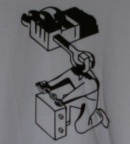
Feminism creates a lot of frustrated lonely men, among other things. Their interest in women is likely to decrease. And men and women will become more or less androgynous and asexual over time. Or take something like information technology. I think we will become so interconnected that basically every thought will be revealed. If you've done anything in private that you wouldn't be fine with telling everybody about you'll suffer. Doesn't that sound a lot like "judgment day"? I think judgment day is not a day but a gradual process. So what I'm getting at here is that I don't know what science really is in the greater picture, but I think it is a spiritual thing and that suffering is a big part of it, suffering that will enlighten people. Is it painting yourself into a corner, the Chinese finger trap, or is it something else, I don't know. But my view of it is different from the view most people have. And I still think that people have blind veneration for science. They claim to be open-minded and questioning, but can't see the forest for all the trees. It's not different from how it was in the past, there's still very much an outermost exoteric layer of a religion and a hierarchy of enlightenment.
Quote:
Jesus said to them, "When you make the two into one, and when you make the inner like the outer and the outer like the inner, and the upper like the lower, and when you make male and female into a single one, so that the male will not be male nor the female be female, when you make eyes in place of an eye, a hand in place of a hand, a foot in place of a foot, an image in place of an image, then you will enter [the kingdom]."
Feminism creates a lot of frustrated lonely men, among other things. Their interest in women is likely to decrease. And men and women will become more or less androgynous and asexual over time. Or take something like information technology. I think we will become so interconnected that basically every thought will be revealed. If you've done anything in private that you wouldn't be fine with telling everybody about you'll suffer. Doesn't that sound a lot like "judgment day"? I think judgment day is not a day but a gradual process. So what I'm getting at here is that I don't know what science really is in the greater picture, but I think it is a spiritual thing and that suffering is a big part of it, suffering that will enlighten people. Is it painting yourself into a corner, the Chinese finger trap, or is it something else, I don't know. But my view of it is different from the view most people have. And I still think that people have blind veneration for science. They claim to be open-minded and questioning, but can't see the forest for all the trees. It's not different from how it was in the past, there's still very much an outermost exoteric layer of a religion and a hierarchy of enlightenment.
I'm really starting to think that you are trolling.
Wow, it's amazing to me that a person who makes a deep thoughtFUL insight about life that many OTHERS have validated as TRUTH THROUGHOUT HUMAN HISTORY, in many philosophical AREAS OF opinions, IF one moves out a little in fuller EDUCATION OF HUMAN PHILOSOPHY, PER real IN the REALEST LIFE THAT EXISTS FOR ANY HUMAN THAT IS AN EMOTIONAL LIFE, IS TROLLING.
JUST BECAUSE you do NOT understand something does not mean someone else is a troll.
With A LITTLE more experience in life, perhaps one day you too, will understand this insight as well.
MANY OTHERS already have and can understand this as easy as 1 plus 1.
And OMG, even science is catching up at least a little bit on this Human evolved TRUTH, with all due respect.
_________________
KATiE MiA FredericK!iI
Gravatar is one of the coolest things ever!! !
http://en.gravatar.com/katiemiafrederick
28 Dec 2014, 10:00 am
Narrator wrote:
LoveNotHate wrote:
eric76 wrote:
LoveNotHate wrote:
Janissy wrote:
Science is a process, not a result.
In practice, scientists do not maintain this humility. In many areas of science, scientists are sure that they have the answers.
Which areas are those?
Nearly every area: medicine, climatology, technology ..
A scientist tells us we have global warming, and another says it's global cooling, however, both are wrong, because if science is a process, then proper answer is "we don't know for sure".
In medicine, doctors are still very hostile to LGBT people. They forgot science is a process, and rather, they make early conclusions based on minimal evidence.
I cited early the speculation that quantum superposition is physics - though widely taught as science in textbooks, and has much research - seems to be a farce to me. This is taught as theories, yet as it is preached as known to be true.
In my life time I have seen scientists say oat bran is good for people because it lowers cholesterol, then reverse and say it has too much fat so it is bad for you, then reverse again, however, these scientists fail to realize that science is a process and so the proper answer is "we don't know for sure".
Look at the evolutionists, have you heard one say, "we don't know for sure". Yet, they are making an inductive argument. Inductive arguments by definition can be wrong. Obviously they can't possibly be certain what happened throughout time.
So, this is big problem in science. Start with making up your own truth, have no evidence or only seek out evidence that backs up what you think, and spread your ignorance to others, and don't qualify your "truth" with "we don't know for sure".
Science, where possible, should have a practical end. Unlike poetry, science should at some point become useful, to bring about a solution, to act as a guide, to enlighten us.
There was a time when I too thought that poetry does not have a practical end, but truly I did understand what practicality even was then, as my experience of life was a highly restricted one in ways of mechanical cognition only thinking.
Science now shows that there are two pathways of the brain.
One pathway is that of mechanical cognition and solving mechanical problems which is one and almost the same as science.
One pathway is that of social cognition and human empathy/emotions which is one and almost the same as the human expression of ART.
So a math equation is science and mechanical cognition; and a poem is art and social cognition.
The problem with science is it has a very limited capacity to measure either Quantum Physics or human ART.
Science now IS JUST beginning to suggest that physical intelligence through THE ART, NOT SCIENCE, OF MOVEMENT aka Physical Intelligence IS WHAT DRIVES Human Emotional Regulation and Sensory Integration.
Eastern Philosophies have understood and practiced this HUMAN TRUTH FOR LITERALLY THOUSANDS OF YEARS, WITH REAL LIFE results that no one who practices these arts of human movement denies who benefits from them.
Poetry connects human language with emotion and fires human action, as scientists understand now that emotions are the core of what drives most all human rational decisions.
The word emotion means to motivate physical action for good reason.
And the FACT NOW, that the ART of physical movement aka Physical Intelligence drives both emotional regulation and sensory integration IS perhaps the greatest fact that science has ever come to finally know as HUMAN TRUTH, as the folks who denied the importance of it in their ivory towers may one day become more fully human too, if they get to read the research. :)
And not only that science shows that emotions are the glue of human memory, so with the repression, oppression, or subjugation of emotions through illusory fears also comes deficits in human executive functioning, and with that in combination of the loss of emotional regulation and sensory integration it's no wonder fundamentalist literalists in all ways of life from religion to school to parents, told children to sit still so they COULD BE CONTROLLED.
TO TAKE away physical intelligence or poetry from FULLER HUMAN BEINGS IS TO LITERALLY KILL PART OF THEIR BRAIN AND LIFE, AS SCIENCE NOW SHOWS, PER THE social cognition pathway of the brain.
And the fact IS STRESS KILLS, AS SCIENCE SHOWS NOW TOO, AND an overall 'best' AFFECTIVE/EFFECTIVE way to increase stress is to repress, oppress, and or subjugate human emotions through illusory fears.
And it's what manipulators for greed have done throughout history whether behind the pulpit, school, or parenting.
To not understand THAT POETRY RESULTS IN MOVING HUMANS TO ACTION, IS to neither understand the importance of human emotion or poetry, in affect and effect, in my opinion.
But No, I too, was once almost totally in the dark about this, but am TRULY ENLIGHTENED NOW IN WAYS OF ART AND SCIENCE, AND TRULY THE ART OF PHYSICAL INTELLIGENCE AND POETRY IS SCIENCE TOO, to me at least, AS I can provide the evidence in terms of flesh and blood of the difference it makes in fuller human being.
Those ARE RESULTS THAT REALLY COUNT in human being, in my opinion.
Most of the other 'stuff' is basically 'clothes', in my opinion, TG NOW. :)
_________________
KATiE MiA FredericK!iI
Gravatar is one of the coolest things ever!! !
http://en.gravatar.com/katiemiafrederick
 28 Dec 2014, 10:59 am
LoveNotHate wrote:
1401b wrote:
The first problem with science is that you gotta keep changing your mind every damn time you learn something.
This is the biggest problem with science.
In the meantime, fools speak like they know something, because they claim "science has proven it". Evolution is proven ! How many times have we seen that? Science enables foolishness
In the past, doctors laughed at the idea of "germs". Doctors would wipe their scapels on their shoes to mock the idea of "invisible bugs". Who could challenge the venerable scientists?
In the past, science labeled LGBT people as mentally ill. Doctors would do unspeakable stuff to these people to get them to change. Who could challenge the venerable scientists?
I think superposition in quantum theory as well as indeterminism in Heisenberg Uncertainty Principal seems to be clear farce. Which is why D-Wave quantum computers do not perform any better than generic computers.
It's a pattern, a "venerable scientist" proclaims foolishness, and the public largely believes it, and much later we find out the scientist was wrong and what the truth is. The foolishness of science can last for a long time and do much damage. Science has the effect of closing off people's minds to possibilities.
Problem number one
Mr. 1401 was likely being sarcastic. He was actually praising science- and praising it for a very important virtue. The virtue that disciplines such as religion don't have- which is the virtue of being self-correcting.
Problem number two
You fell for his sarcasm and took it as a straight statement.
Problem number three
You not only took it straight, but you proceded to heartily agree with him about what he was NOT saying. Lol!
Problem number four
In agreeing with what he was NOT saying you expose a huge lack of awareness of the irony in what you yourself are saying. AND...unwittingly- you are lampooning yourself and are lampooning what 1401 pretends to be saying- and are in fact agreeing with what 1401 is REALLY saying! Irony wrapped in irony.
Let me explain number four.
He is pointing out that science is self correcting.
Your examples of how scientists of the past were just human - and can make errors- but how those errors were later overturned-and overturned BY OTHER SCIENTISTS- shows that... science is self correcting. which is a virtue of science. Which is the very point 1401 was making.
But for some odd reason you think that being self correcting is bad.
 28 Dec 2014, 12:01 pm
140lb did this so well that I had to go back to some of his older PPR posts to be absolutely sure.
Poe's Law is in effect.
Quote:
Poe's law, named after its author Nathan Poe,[1] is an Internet adage reflecting the idea that, without a clear indication of the author's intent, it is difficult or impossible to tell the difference between an expression of sincere extremism and a parody of extremism.[2]
 28 Dec 2014, 12:30 pm
The_Walrus wrote:
I don't really see your point.
If post-publication peer review can't find fault in a paper, and it coincides with the consensus, then nobody needs to be saved. Even if they got lucky, what they found is indistinguishable from the truth.
If you have a better system for getting at the truth than the rest of the world trying to pick holes in an idea, then I would like to hear it.
If post-publication peer review can't find fault in a paper, and it coincides with the consensus, then nobody needs to be saved. Even if they got lucky, what they found is indistinguishable from the truth.
If you have a better system for getting at the truth than the rest of the world trying to pick holes in an idea, then I would like to hear it.
1: You're talking about mode of operation; I'm talking about failure mode.
2: You don't have "the rest of the world" looking for holes in your ideas. We made that mistake with opensource software (which was modeled on peer-review) and got burned (see heartbleed, etc.). I've looked at tons of code, but I haven't done a security audit on a single application. Most people read academic papers in the same way.
3: Something that's "indistinguishable from the truth" to you might not be to the people using the data in the field. I can be killed if something goes wrong. I'd rather have uncertainty (which tells me to watch out) than false certainty (which might lead me to walk right into something that I won't walk out of).
You seem to treat this like a sport in which there's always a winner. In the real world, its entirely possible that nobody will win. Reality is pass/fail and it isn't graded on a curve.
 28 Dec 2014, 12:31 pm
I have not read everything in this thread. Might read it later, but I kind of lost interest when few people seemed to care about what I said. It remains my view that the core of this subject is that many people are unaware to what degree their minds are molded by others.
Quote:
The conscious and intelligent manipulation of the organized habits and opinions of the masses is an important element in democratic society. Those who manipulate this unseen mechanism of society constitute an invisible government which is the true ruling power of our country. We are governed, our minds are molded, our tastes formed, our ideas suggested, largely by men we have never heard of.
Propaganda, Edward BernaysAs I said, there is science and the scientific method, but then there is the system, the world view, the religion if you will, which to a degree is separate, but related.
I already mentioned Brave New World. Nineteen Eighty-Four is good also, and A Scanner Darkly.
A lot of people in the West think of themselves as relatively free people, and they think that they can go online, or elsewhere, and find almost anything they desire to find information wise. I find this naive or ignorant or lacking insight and I personally have a very strong feeling that there is a lot that is kept in the dark for me, and that I am being manipulated, more or less my entire perceived universe is molded and shaped and has been from an early age.
Quote:
drops of liquid sealing-wax, drops that adhere, incrust, incorporate themselves with what they fall on, till finally the rock is all one scarlet blob.
"Till at last the child's mind is these suggestions, and the sum of the suggestions is the child's mind. And not the child's mind only. The adult's mind too - all his life long. The mind that judges and desires and decides - made up of these suggestions. But all these suggestions are our suggestions!" The Director almost shouted in his triumph. "Suggestions from the State."
Brave New World"Till at last the child's mind is these suggestions, and the sum of the suggestions is the child's mind. And not the child's mind only. The adult's mind too - all his life long. The mind that judges and desires and decides - made up of these suggestions. But all these suggestions are our suggestions!" The Director almost shouted in his triumph. "Suggestions from the State."
I have created two allegories for this feeling:
Quote:
I have this strong feeling that there is a very clear line of what the masses are allowed to know and what they aren't allowed to know. It feels like whatever I read and watch it's as if I'm walking around in a landscape and you have a map like those in video games, and if you scroll around the map it just ends suddenly. Anything outside of that is just unavailable.
Quote:
Imagine that you were born in North Korea and nobody had a clue about anything in the outside world other than what their state TV says, and nobody had been outside the country themself, then imagine you walk around and talk to these people trying to get an understanding of what the outside world is like.
This guy knows what I'm talking about:
Quote:
It's not widely known, but The Cold War was lost, the West lost The Cold War, culturally. It won it geopolitically, when the Soviet Union collapsed from 1989 through to the early nineties. We won that sort of objective geopolitical level of Cold War but we lost the cultural Cold War. And the reason we don't talk about it is that those who would be talking about it are the children of the victors. It's a message that is met with a blank stare. People just don't know what to make of it. And it's difficult because we are all influenced by that defeat. But the thing is our houses are not heard, our daily routines are not heard. What's heard is our minds, our consciousnesses. So the way we look at the world, the prison through which we view reality and society, has been altered. And we carry that prison around with us. So we're caged, as Max Faber called it, we're caged by mere concepts. But these are powerful concepts. We lost the cultural Cold War and somehow we have to find ourselves, we have to find our way back to viewing reality as it is. It's really interesting, so you can see that this question you asked leads to profound questions about how we think.
source: http://www.redicecreations.com/radio/2014/06/RIR-140604.phpAlready back in the days of Rumi he had the same sense, and even Plato back in his day.
Quote:
Rumi has nothing but pity and disdain for those who look at the world around and within themselves and do not understand that what they are seeing is a veil over reality. The world is a dream, a prison, a trap, foam thrown up from the ocean, dust kicked up by a passing horse. But it is not what it appears to be. If everything that appears to us were just as it appears, the Prophet, who was endowed with such penetrating vision, both illuminated and illuminating, would never have cried out, "Oh Lord, show us things as they are!" Rumi draws a fundamental distinction between "form" (surat) and "meaning" (ma`na). Form is a thing's outward appearance, meaning its inward and unseen reality.
source: The Sufi Path of Love : The Spiritual Teachings of Rumi by William C. ChittickI believe that this illusory world that so many take for real is what in Gnosticism is referred to as the creation of the Demiurge. The Gnostics are those who have this sense of the world around them as being fake, and are striving for that which lies behind the veils, whereas the ignorant multitudes take that fake world for real.
Just think about Google and what enormous power that company has over people's minds.
I personally think that there is a deliberate effort in the world to make people as robotic as you possibly can. I think this might be a good thing because I think that when this development progresses you get a portion of people who begin to feel this, and this is something spiritual. This scene illustrates this:

Kraichgauer
Veteran


Joined: 12 Apr 2010
Gender: Male
Posts: 49,751
Location: Spokane area, Washington state.
28 Dec 2014, 2:52 pm
The_Walrus wrote:
Those Red Ice people are not to be trusted. They are pathological liars, running articles from InfoWars, David Icke and the Daily Mail, and claiming that salt cures cancer and cold fusion is real. There's an awful lot of nasty racism and green-baiting too.
They say salt is supposed to cure cancer?

_________________
-Bill, otherwise known as Kraichgauer
28 Dec 2014, 3:24 pm
The_Walrus wrote:
Those Red Ice people are not to be trusted. They are pathological liars, running articles from InfoWars, David Icke and the Daily Mail, and claiming that salt cures cancer and cold fusion is real. There's an awful lot of nasty racism and green-baiting too.
Do you mean me? I am skeptical of a lot of stuff on red ice, but I think there are some good things too. InfoWars, I take that with a grain of salt too. I'm not a fan of David Icke, although I think some things he has said probably have some truth to them, but I personally think a huge portion of what David Icke says is BS. Daily Mail, no don't read that. Might have seen some article from there, don't remember, but I wasn't aware that was an especially suspicious source, perhaps because I don't live in a country that has English as the first language, so thanks for the info. Racism, yes there's a fair share of that going around, I'm skeptical of that as much as I am of egalitarianism. Green-baiting, let me look that word up in a dictionary. Anti-environmentalism, hmmm, I'm not much of a political activist. If you are talking about me I think you are being somewhat intolerant. I do realize that most of what I talked about perhaps might require some kind of intuition or personal spiritual experience to be able to grasp, which is why it's probably pointless to try to talk about it to those who don't have that. They try to kill Neo in The Matrix. Plato talked about this too:
Quote:
"Platonism" is a term coined by scholars to refer to the intellectual consequences of denying, as Plato's Socrates often does, the reality of the material world. In several dialogues, most notably the Republic, Socrates inverts the common man's intuition about what is knowable and what is real. While most people take the objects of their senses to be real if anything is, Socrates is contemptuous of people who think that something has to be graspable in the hands to be real. In the Theaetetus, he says such people are eu amousoi (εὖ ἄμουσοι), an expression that means literally, "happily without the muses" (Theaetetus 156a). In other words, such people live without the divine inspiration that gives him, and people like him, access to higher insights about reality.
Socrates's idea that reality is unavailable to those who use their senses is what puts him at odds with the common man, and with common sense. Socrates says that he who sees with his eyes is blind, and this idea is most famously captured in his allegory of the cave, and more explicitly in his description of the divided line. The allegory of the cave (begins Republic 7.514a) is a paradoxical analogy wherein Socrates argues that the invisible world is the most intelligible ("noeton") and that the visible world ("(h)oraton") is the least knowable, and the most obscure.
Socrates says in the Republic that people who take the sun-lit world of the senses to be good and real are living pitifully in a den of evil and ignorance. Socrates admits that few climb out of the den, or cave of ignorance, and those who do, not only have a terrible struggle to attain the heights, but when they go back down for a visit or to help other people up, they find themselves objects of scorn and ridicule.
According to Socrates, physical objects and physical events are "shadows" of their ideal or perfect forms, and exist only to the extent that they instantiate the perfect versions of themselves. Just as shadows are temporary, inconsequential epiphenomena produced by physical objects, physical objects are themselves fleeting phenomena caused by more substantial causes, the ideals of which they are mere instances.
source: http://en.wikipedia.org/wiki/Plato#Metaphysics
Socrates's idea that reality is unavailable to those who use their senses is what puts him at odds with the common man, and with common sense. Socrates says that he who sees with his eyes is blind, and this idea is most famously captured in his allegory of the cave, and more explicitly in his description of the divided line. The allegory of the cave (begins Republic 7.514a) is a paradoxical analogy wherein Socrates argues that the invisible world is the most intelligible ("noeton") and that the visible world ("(h)oraton") is the least knowable, and the most obscure.
Socrates says in the Republic that people who take the sun-lit world of the senses to be good and real are living pitifully in a den of evil and ignorance. Socrates admits that few climb out of the den, or cave of ignorance, and those who do, not only have a terrible struggle to attain the heights, but when they go back down for a visit or to help other people up, they find themselves objects of scorn and ridicule.
According to Socrates, physical objects and physical events are "shadows" of their ideal or perfect forms, and exist only to the extent that they instantiate the perfect versions of themselves. Just as shadows are temporary, inconsequential epiphenomena produced by physical objects, physical objects are themselves fleeting phenomena caused by more substantial causes, the ideals of which they are mere instances.
 28 Dec 2014, 4:37 pm
Humanaut wrote:
eric76 wrote:
If I remember correctly, Richard Feynman described his disgust with one field, I think psychology, for people in the field thinking that there is no need to repeat experiments because the results are already known.
Maybe you are referring to the following clip?
Possibly. I very rarely watch video clips so I haven't looked to see what that one says. He did an interview in the late 1970s or early 1980s that I should still have on a VHS tape. In fact, I had just gotten my first recorder and it was actually the first thing I ever recorded on it. I wonder if that might be from that interview.
28 Dec 2014, 4:55 pm
LoveNotHate wrote:
eric76 wrote:
LoveNotHate wrote:
Janissy wrote:
Science is a process, not a result.
In practice, scientists do not maintain this humility. In many areas of science, scientists are sure that they have the answers.
Which areas are those?
Nearly every area: medicine, climatology, technology ..
A scientist tells us we have global warming, and another says it's global cooling, however, both are wrong, because if science is a process, then proper answer is "we don't know for sure".
I would agree that in the case of Global Warming, it has almost become a religion for some. Much of that does see bogus, but I suspect that most of that bogosity is not from the actual researchers, but from flunkies who read into it more than what is there.
LoveNotHate wrote:
In medicine, doctors are still very hostile to LGBT people. They forgot science is a process, and rather, they make early conclusions based on minimal evidence.
I'm not a doctor and aren't aware of the hostility of which you speak.
LoveNotHate wrote:
I cited early the speculation that quantum superposition is physics - though widely taught as science in textbooks, and has much research - seems to be a farce to me. This is taught as theories, yet as it is preached as known to be true.
Perhaps you don't understand the terms.
What laymen call a "theory" is anything but that in science. At best, what a layman might call a theory would be a conjecture. At worst, an hallucination.
A theory is an explanation that has stood the test of time. The scientific evidence overwhelmingly supports it, and that may be an understatement.
LoveNotHate wrote:
In my life time I have seen scientists say oat bran is good for people because it lowers cholesterol, then reverse and say it has too much fat so it is bad for you, then reverse again, however, these scientists fail to realize that science is a process and so the proper answer is "we don't know for sure".
Keep in mind that science writers are often not scientists. If you want to know what the science says, look at the research papers, not newspaper or internet articles.
LoveNotHate wrote:
Look at the evolutionists, have you heard one say, "we don't know for sure". Yet, they are making an inductive argument. Inductive arguments by definition can be wrong. Obviously they can't possibly be certain what happened throughout time.
Because we cannot experiment directly on evolutionary processes to a large degree, inductive arguments do play a legitimate purpose. While those arguments might possibly be wrong, that possibility is quite low.
There is no doubt whatsoever that evolution has happened. The open questions are about the precise mechanisms of evolution, not the existence of evolution itself. The only way to deny that evolution has indeed happened and is always happening, even now, is to come up with some magical explanation for which there is no evidence of any kind.
Magic is ignorance, not science.
28 Dec 2014, 6:08 pm
tomato wrote:
The_Walrus wrote:
Those Red Ice people are not to be trusted. They are pathological liars, running articles from InfoWars, David Icke and the Daily Mail, and claiming that salt cures cancer and cold fusion is real. There's an awful lot of nasty racism and green-baiting too.
Do you mean me? I am skeptical of a lot of stuff on red ice, but I think there are some good things too.
To clarify, I was responding to a bit of your post, but I was attacking Red Ice, not you.
 28 Dec 2014, 6:24 pm
tomato wrote:
Feminism creates a lot of frustrated lonely men, among other things.
Depends. There is a strain of feminism that holds the view that women should take predatory pride in their sexual exploits just as men do, which would create something more like a cougar epidemic than anything...if it suddenly caught on, anyhow.Quote:
Their interest in women is likely to decrease.
Well, I think it would be beneficial if men were only showing an interest in becoming fathers. There are too many fathers now who have little or no interaction with their kids, and I think the world would be a little happier if the only men conceiving children were those who actually were happier with rugrats to care for. I think the inclination to parent is the most important qualification for the job, before intelligence, health or any other trait. A willing and engaged father is very meaningful to a child, in my way of thinking.
28 Dec 2014, 6:57 pm
The_Walrus wrote:
To clarify, I was responding to a bit of your post, but I was attacking Red Ice, not you.
Ok. I am quite critical and skeptical of that site too, and I have become increasingly so over time. Maybe part of that is my conspiratorial nature but I certainly have my suspicions about that site. You have to do a lot of sifting, and even then I find that the primary use is for finding ideas, books etc. talked about and then do your own research on that. It's kind of like reading a forum in that way, lots of people who don't know all that much but you can still get bits and pieces from them if you know how to sift. And there are some quite knowledgeable people on there too from time to time that seem somewhat sincere. I found the book Economics In One Lesson through listening to that show for example, so it's not all mumbo jumbo. I do feel tired of red ice sometimes though. Can be a bit one-sided and narrow-minded. But as for that quote about the cold war that I posted, I think that it's a good illustration of what I was talking about, and I think that the psychological aspect of what he talked about is quite accurate. Here's a video that I think is very fitting with that quote:
 28 Dec 2014, 8:10 pm
aghogday wrote:
Narrator wrote:
Science, where possible, should have a practical end. Unlike poetry, science should at some point become useful, to bring about a solution, to act as a guide, to enlighten us.
There was a time when I too thought that poetry does not have a practical end
No.. it's not an either/or.. Unlike science, poetry doesn't NEED to have a practical end, but very often it has one anyway. Sometimes, poetry does for the soul what massage does for the body. Other times poetry helps get at a notion quicker than a long winded explanation. It has many uses. And sometimes it's just there and that's all it needs to be.
_________________
I'm not blind to your facial expression - but it may take me a few minutes to comprehend it.
A smile is not always a smile.
A frown is not always a frown.
And a blank look rarely means a blank mind.
28 Dec 2014, 8:15 pm
Janissy wrote:
140lb did this so well that I had to go back to some of his older PPR posts to be absolutely sure.
Poe's Law is in effect.
Poe's Law is in effect.
Quote:
Poe's law, named after its author Nathan Poe,[1] is an Internet adage reflecting the idea that, without a clear indication of the author's intent, it is difficult or impossible to tell the difference between an expression of sincere extremism and a parody of extremism.[2]
And me being relatively new and not knowing his previous posts... I fell for it....
.....at first. lol
Well parodied, I say!
_________________
I'm not blind to your facial expression - but it may take me a few minutes to comprehend it.
A smile is not always a smile.
A frown is not always a frown.
And a blank look rarely means a blank mind.


