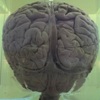
Whole-Body Transplants
It wouldn't bother me in the slightest, actually.
0_equals_true, I can't view the YouTube link you posted, so I'm not sure if you are referring to the same thing, but, yes - it is essentially just keeping the brain alive. That said, still a significant first step.
It was actually monkeys in that clip. If there was a chimp one I've not found it.
I'm more interested in the repairing brain and also the spinal cord. They are doing some trials in the UK with stem cells on humans who have had aneurysm/stroke. I look forward to the results.
As for full body, you would have to relearn a whole load of stuff like motor control. It won't just come naturally. It is the same when they are hooking up man made technology to the peripheral nervous system. New body needs to be understood by the brain and that takes time. There may well be permanent limitations to this.
Not everything we develop can be changed later on. There are parts of the brain that are fused after a certain age, and it is thought that these functions are not really learnt but acquired. However they do require the input to be useful. E.g. syntax/grammar ability is thought to be acquired. This is because they know that if a (feral child) has not learnt language by the age of roughly 8 their ability to learn sentence structure goes down to nothing. There have not been able to teach feral children how to speak in their teens.
Before sentence structure, is word/sound associations and also understanding the basic significance of order of words. Dolphins and African grey parrots, etc can achieve this and even slightly more advanced stuff but not a complete language. I had an African grey parrot in the family so I personally witnessed this. Feral children like above are basically at this level.
So it tells you that human developed this ability to talk, and it is acquired from previous generations, however it needs to be stimulated with language or it cannot be used at all.
There specific development in early childhood may apply to many other functions of the brain and may only apply to one body and not another. In other words hard coded functionality.
Automation and semi automation of the brain tasks is important. We take it for granted but that is a large part of our capabilities. Some of this can be reprogrammed time and time again and some cannot.

Which is where neuroscience, artificial fibers and nanotechnology comes into play.
If a natural part of the brain will not perform; make an artifical one that can!
Though, it does conjure up images of a brain riddled with microchips...
_________________
Oh, well, fancy that! Isn't that neat, eh?
I dont see the need for more then one. With our current BCI(Brain Computer Interface) I don't see why we couldn't give them robotic arms/legs/whatever... Although, I guess that could very well defeat the purpose.
_________________
2101729 Kalantir-Bar-Orc-Mal-Cha escaped the dungeon
Could it be scientifically viable in the near future?
You'd have to remove the brain from the body it's in, keep it alive while hooking it up to the circulatory system of the new body, then connect all the nerves. Look only at the spinal cord. Reconnecting the spinal cord is what you need to do to fix paraplegia. At present, treatments are experimental, and the best I've seen published is that something partly works in rats. Now remember that the brain sends out a lot of information to tell the body how to keep going. You can't just take your own sweet time to connect up, unless you have a way to keep the body alive until the brain can take over.
Whether this could be viable in the near future depends on whether you assume linear or exponential growth of capabilities. If linear, count on centuries. If exponential, with a fast enough growth rate, I would expect within 50 to 100 years. That's what's known as a WAG (wild-assed guess).
One major question would be where you get the body from. If you cloned yourself, how could the body grow up without a brain to steer it? If you let the body develop with a brain, you'll have to kill someone to get a new body. To avoid that, you could try to build a body of the desired age from scratch, instead of letting it grow. If it will become possible to make replacement organs from stem cells and biodegradable scaffolds, then that might be possible. But then the brain transplant would be unnecessary, because you could just replace the body one part at a time, instead of doing it all at once.
Just keep it in the head..transplant that
_________________
Pwning the threads with my mad 1337 skillz.
I dont see the need for more then one. With our current BCI(Brain Computer Interface) I don't see why we couldn't give them robotic arms/legs/whatever... Although, I guess that could very well defeat the purpose.
I think I explained it quite well.
Different parts of the brain work quite differently, and have varying ability to learn to adapt. That is the point.
The “chips” needn’t be in the brain proper at all in all cases. There we can help decode the signal at the peripheral nervous system for thing like motor. Some things will be more difficult to decipher than others.
Kajjie
Velociraptor
Joined: 12 Aug 2008
Age: 35
Gender: Female
Posts: 495
Location: Sometimes London, sometimes Coventry
It's a frightening concept. It's difficult - I am very interested in medical advances, but the ethics of it all frightens me.
Not neccasrily, plus the ethics is the same as a transplant.
_________________
Pwning the threads with my mad 1337 skillz.
In some ways this would seem to ba a waste of time and energy since we can simply transplate the entire mind of a person into a computer chip and use a robotic vessel (body) if need be. It is thought a chip with a memory capacity of 10 to the 80th is more than capable for such an operation.
_________________
I am one of those people who your mother used to warn you about.
If there's any truth to the Quantum Brain Theory then that might be much more difficult. Every brain is unique in some ways (which we all know; after all, some brains are more 'unique' than others...); if the contents of the brain will not function outside of the brain or an exact to the atomic structure replica of it because they cannot be deciphered or otherwise used, well... we might still be able to do something like that, garyww, but quite possibly not in our lifetimes (or maybe even our grandchildren's lifetimes).
And don't forget the brain does gradually deteriorate with age, too.
_________________
Stuart "Sslaxx" Moore.
Automation and semi automation of the brain tasks is important. We take it for granted but that is a large part of our capabilities. Some of this can be reprogrammed time and time again and some cannot.
Why transplant the whole brain? If you look at a 'body transplant' like a heart transplant, and the donor body like a donor heart, would it not make more sense to leave the 'lower animal' functional parts of the brain in the donor body? I mean, the parts that control autonomic functions (breathing, heartrate), even parts which control hearing, balance, etc. What makes us human? What makes us us? It's our memories, things we learned, that's all 'higher' brain functions. Would we need to transplant more than that?
(too grisly?)
goat