
God does nor exist nor do gods exist!


 30 Nov 2014, 7:28 am


 01 Dec 2014, 5:28 am
How easily does that proof coexist with the evidence for ghosts? 
And with the easily proved impossibility of an end point to experienced time? Because the happening of any time instant is a change into a resultant state, the state where that instant's events have happened, but this resultant state itself is another later instant?
 09 Dec 2014, 8:19 pm
1. וַיִּבְרָא אֱלֹהִים אֶת-הָאָדָם בְּצַלְמוֹ, בְּצֶלֶם אֱלֹהִים בָּרָא אֹתוֹ: זָכָר וּנְקֵבָה, בָּרָא אֹתָם.
?ō·ṯām. bā·rā ū·nə·qê·ḇāh zā·ḵār ?ō·ṯōw; bā·rā ?ĕ·lō·hîm bə·ṣe·lem bə·ṣal·mōw,
Therefore "El" would simply mean "My kindly lord."
Mem refers to a body of water, theoretically.
The yodh serves as a prefix to the mem, modifying it to the third-person singular. This suggests that "My kindly lord" is not composed of water but does something "with" water.
Assuming we understand he to mean "that" or something similar, we could render the translation of it thus possibly:
"My kindly lord that rules over water."
Which tends to support my own view that this tale might have been descended from an ancient ruler who engineered an irrigation system that was relatively advanced for the time.
This is also what makes the linkage of Enki with El Shaddai so plausible, since Enki is also a god tied to water and has similar myths associated with him. It's all postulation and guesswork, but it's a step up from w*king, I figure.
1. You're using cognates in language to say that the two are the same difference. My main issue with that is that you won't find me a single lexicon or concordance that will render the literal meaning of elohim that way. I'm basing my own understanding of it from concordances like Smith's, Thayer and Vine's, Strong's, etc. so I'd like to see if you have a decent source of your own.
2. The entire OT goes out to establish that this is a culture of people whose most prominent literature is vehemently against syncretism. Every example of syncretism is bemoaned and you expect us to believe your interpretation? You're trying to insert ideas into and draw comparisons from a polytheistic to a monotheistic religion.
_________________
There is no wealth like knowledge, no poverty like ignorance.
Nahj ul-Balāgha by Ali bin Abu-Talib
 09 Dec 2014, 9:36 pm
God?
I don't believe there is -
A being significantly more powerful than us (humans),
That is significantly interested in us.
That leaves just us with the responsibility for everything in our *area, without ANY indication of a SafetyNet in case we f*ck up or give up this responsibility.
No one has Given us this responsibility, no one will apparently do anything about how we handle it.
We will either continue as a species, or die.
Possibly everything else local as well, more or less.
To live, it is clear we must solve our own problems. All of them.
*which kinda makes us the gods, therefore gods do exist.
_________________
(14.01.b) cogito ergo sum confusus
09 Dec 2014, 9:49 pm
1. וַיִּבְרָא אֱלֹהִים אֶת-הָאָדָם בְּצַלְמוֹ, בְּצֶלֶם אֱלֹהִים בָּרָא אֹתוֹ: זָכָר וּנְקֵבָה, בָּרָא אֹתָם.
?ō·ṯām. bā·rā ū·nə·qê·ḇāh zā·ḵār ?ō·ṯōw; bā·rā ?ĕ·lō·hîm bə·ṣe·lem bə·ṣal·mōw,
Therefore "El" would simply mean "My kindly lord."
Mem refers to a body of water, theoretically.
The yodh serves as a prefix to the mem, modifying it to the third-person singular. This suggests that "My kindly lord" is not composed of water but does something "with" water.
Assuming we understand he to mean "that" or something similar, we could render the translation of it thus possibly:
"My kindly lord that rules over water."
Which tends to support my own view that this tale might have been descended from an ancient ruler who engineered an irrigation system that was relatively advanced for the time.
This is also what makes the linkage of Enki with El Shaddai so plausible, since Enki is also a god tied to water and has similar myths associated with him. It's all postulation and guesswork, but it's a step up from w*king, I figure.
1. You're using cognates in language to say that the two are the same difference. My main issue with that is that you won't find me a single lexicon or concordance that will render the literal meaning of elohim that way. I'm basing my own understanding of it from concordances like Smith's, Thayer and Vine's, Strong's, etc. so I'd like to see if you have a decent source of your own.
2. The entire OT goes out to establish that this is a culture of people whose most prominent literature is vehemently against syncretism. Every example of syncretism is bemoaned and you expect us to believe your interpretation? You're trying to insert ideas into and draw comparisons from a polytheistic to a monotheistic religion.
wut?
btw, Persimmonpudding, love that bit about ..
"My kindly lord that rules over water."
Which tends to support my own view that this tale might have been descended from an ancient ruler who engineered an irrigation system that was relatively advanced for the time.
That's brilliant and insightful, unfortunately it was also Open-Minded which means you're a HERETIC!!!11!1
_________________
(14.01.b) cogito ergo sum confusus
09 Dec 2014, 11:08 pm
1. וַיִּבְרָא אֱלֹהִים אֶת-הָאָדָם בְּצַלְמוֹ, בְּצֶלֶם אֱלֹהִים בָּרָא אֹתוֹ: זָכָר וּנְקֵבָה, בָּרָא אֹתָם.
?ō·ṯām. bā·rā ū·nə·qê·ḇāh zā·ḵār ?ō·ṯōw; bā·rā ?ĕ·lō·hîm bə·ṣe·lem bə·ṣal·mōw,
Therefore "El" would simply mean "My kindly lord."
Mem refers to a body of water, theoretically.
The yodh serves as a prefix to the mem, modifying it to the third-person singular. This suggests that "My kindly lord" is not composed of water but does something "with" water.
Assuming we understand he to mean "that" or something similar, we could render the translation of it thus possibly:
"My kindly lord that rules over water."
Which tends to support my own view that this tale might have been descended from an ancient ruler who engineered an irrigation system that was relatively advanced for the time.
This is also what makes the linkage of Enki with El Shaddai so plausible, since Enki is also a god tied to water and has similar myths associated with him. It's all postulation and guesswork, but it's a step up from w*king, I figure.
1. You're using cognates in language to say that the two are the same difference. My main issue with that is that you won't find me a single lexicon or concordance that will render the literal meaning of elohim that way. I'm basing my own understanding of it from concordances like Smith's, Thayer and Vine's, Strong's, etc. so I'd like to see if you have a decent source of your own.
2. The entire OT goes out to establish that this is a culture of people whose most prominent literature is vehemently against syncretism. Every example of syncretism is bemoaned and you expect us to believe your interpretation? You're trying to insert ideas into and draw comparisons from a polytheistic to a monotheistic religion.
wut?
btw, Persimmonpudding, love that bit about ..
"My kindly lord that rules over water."
Which tends to support my own view that this tale might have been descended from an ancient ruler who engineered an irrigation system that was relatively advanced for the time.
That's brilliant and insightful, unfortunately it was also Open-Minded which means you're a HERETIC!!!11!1
The only problem with that is that however brilliant and insightful it seems, in the real world facts matter and he doesn't seem to be in agreement with the majority of linguistic scholars. Some of his grammatical observations weren't even correct, let alone his definitions.
_________________
There is no wealth like knowledge, no poverty like ignorance.
Nahj ul-Balāgha by Ali bin Abu-Talib
12 Dec 2014, 4:15 pm
The existence of God (the uncaused First Cause) can be proved to be a logical necessity by the observation of the physical Universe and its operation (science) and simple and inevitable deduction.
It's a fact that's been known and well understood for millennia by astute observers and rational thinkers.
It was defined as an article of Faith at the First Vatican Council in the statement (as I recall off the top of my head) "If anyone shall say that the existence of God cannot be known with certainty by the light of natural reason alone... anathema sit". (Anathema sit means colloquially "you are dead wrong and not one of us").
I am astonished at the arrogance and ignorance of contemporary Materialism.
Perhaps that will be enough to get this thread locked too.
DentArthurDent
Veteran

Joined: 26 Jul 2008
Age: 61
Gender: Male
Posts: 3,884
Location: Victoria, Australia
12 Dec 2014, 4:51 pm
FIrstly the previous thread was locked because you broke the rules regarding personal attacks. Secondly I am astonished by your simple assertion that because we do not understand the nature of causation in relation to the universe/universes,you automatically ascribe A priori the existence of a creator God. The arrogance does not lie with those who as a starting point look for a naturalistic cause, rather it lies with those who by demanding the existence of a creator God effectively say "we know all there is to know". Not only this but people who hold this view also claim, once again A priori to know what lies beyond the Universe, which to my mind is positively ridiculous.
If, as the religious believe there is matter of some kind beyond our universe, then it is more than reasonable to dismiss the idea of an all powerful god for non mystical forces of causation.
_________________
"I'd take the awe of understanding over the awe of ignorance anyday"
Douglas Adams
"Religion is the impotence of the human mind to deal with occurrences it cannot understand" Karl Marx
12 Dec 2014, 5:40 pm
If, as the religious believe there is matter of some kind beyond our universe, then it is more than reasonable to dismiss the idea of an all powerful god for non mystical forces of causation.
It's Materialists who pretentiously claim they know "all there is to know". If you think you know all there is to know I'll be happy to start a new thread and thrash it to death.
Perhaps you missed the post that said I'm not new to this argument. I have been arguing with Materialists ever since I argued myself out of that dungeon.
 12 Dec 2014, 7:10 pm
I agree totally with that. But you do not limit yourself to ridiculing a point of view.
_________________
I'm not blind to your facial expression - but it may take me a few minutes to comprehend it.
A smile is not always a smile.
A frown is not always a frown.
And a blank look rarely means a blank mind.
12 Dec 2014, 7:20 pm
I would dispute the colour - more of a reddish ochre.
_________________
I'm not blind to your facial expression - but it may take me a few minutes to comprehend it.
A smile is not always a smile.
A frown is not always a frown.
And a blank look rarely means a blank mind.
12 Dec 2014, 7:24 pm
I would dispute the colour - more of a reddish ochre.
 12 Dec 2014, 8:15 pm
A) If there were a deity, there would be nothing that I could do to stop that deity from existing, whether or not I found that deity to be agreeable.
B) If there be no deity at all, then there is no amount of wishful thinking that could cause such a thing to exist.
C) There is no more proof for a deity that demands your belief than there is for a deity that demands your disbelief. In fact, considering how convincingly the world has been "crafted" to look very much like it must be billions of years old, I could almost say that I would rather go on being convinced of the "illusion" to keep from insulting the artist! Perhaps those of us who obediently follow what empirical evidence has to tell us, rather than superimposing our own ideals, are the real "chosen people." There is plenty of evidence for this in the world: most countries where "belief in a supreme being" is relatively low tend to do fairly well. Surely, atheists must have divine favor!
D) And nor is there anymore or any less proof for a deity that gives EVERYBODY the same afterlife but maybe groups like-minded people together, so all the people who value power and force have to deal with each other for eternity and all us relatively tolerant people have to spend eternity hanging out with other tolerant people. The evidence for such constructs is equivalent to any other deity that could be named.
E) I could also believe that, if there were any REAL divine being of any kind, then her wrath would surely be aimed at those who argue needlessly with those to whom evidence and syllogisms have no meaning. Therefore, just to be careful, I will just nod agreeably from this point on unless you are saying something either racist or homophobic, and we'll figure the rest out later.
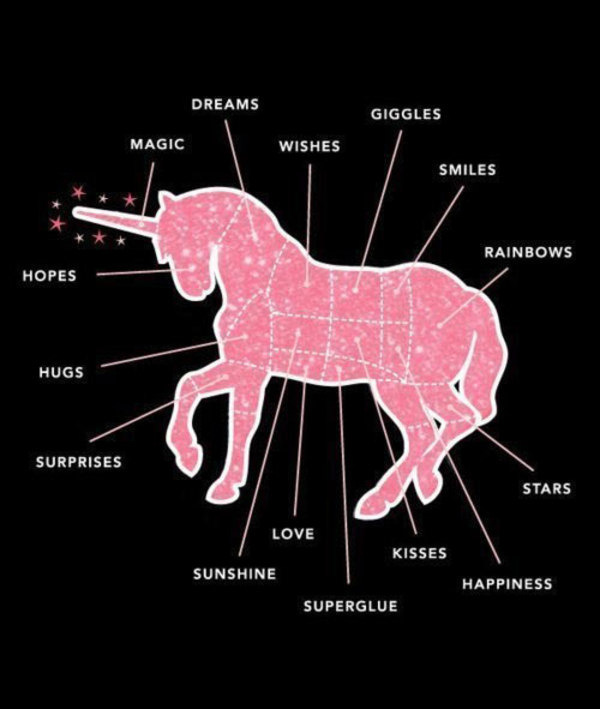
Yes, the last one was it. All hail Her Pinkess! Blessed be her Holy Hooves!
12 Dec 2014, 9:01 pm
Every religious person is an atheist.
The majority of religions believe that only they have the goods on God, god or the gods. And even the anti-religious who believe in the supernatural think the same thing - only they have the truth about the gods. Regardless of the existence of god question itself, the elephant in the room is that each disagrees with the other on who or what the true deity or deities is or are.
Oh yes, they can be ecumenically polite and tolerant to the point of high-fives and backslaps, but the moment the back is turned, the reality is, the other guy is lost because he believes in the wrong deity.
I can imagine the cartoon.
Frame one: "Hello again, Yusef." "Hello again, Paul." Smiles and hugs.
Frame two: Each looking away, and each with the same thought bubble, "What a fool."
There is something in the order of 2,500 gods in the current beliefs around the world. It does not surprise me that the human imagination can invent such a rich tapestry of supernatural topography.
Yet, every one of you who believes in a god or gods is an atheist to all of those gods but your own.
_________________
I'm not blind to your facial expression - but it may take me a few minutes to comprehend it.
A smile is not always a smile.
A frown is not always a frown.
And a blank look rarely means a blank mind.
12 Dec 2014, 10:54 pm
The majority of religions believe that only they have the goods on God, god or the gods. And even the anti-religious who believe in the supernatural think the same thing - only they have the truth about the gods. Regardless of the existence of god question itself, the elephant in the room is that each disagrees with the other on who or what the true deity or deities is or are.
Yet, every one of you who believes in a god or gods is an atheist to all of those gods but your own.
[quote=ODD]The existence of God (the uncaused First Cause) can be proved to be a logical necessity by the observation of the physical Universe and its operation (science) and simple and inevitable deduction.
It's a fact that's been known and well understood for millennia by astute observers and rational thinkers.
It was defined as an article of Faith at the First Vatican Council in the statement (as I recall off the top of my head) "If anyone shall say that the existence of God cannot be known with certainty by the light of natural reason alone... anathema sit". (Anathema sit means colloquially "you are dead wrong and not one of us").
I am astonished at the arrogance and ignorance of contemporary Materialism. [/quote]
I am arguing that God (the uncaused First Cause) is a logical and scientific necessity to the existence of anything and everything that is changeable. Only after that is established can we begin to argue about His shape, size, personality etc.
I am directly opposing and contradicting the thread title and opening post.
I will add further that Materialism is a superstitious ideology that cannot be justified by any honest observation of reality.
I can't make the quote box work for some reason.


