
Colonization of uninhabited planets


 26 Mar 2011, 4:03 pm

You expect to terraform Mars? We can't even terraform Earth.
ruveyn
iamnotaparakeet
Veteran

Joined: 31 Jul 2007
Age: 40
Gender: Male
Posts: 25,091
Location: 0.5 Galactic radius
 26 Mar 2011, 5:09 pm
I think you mean terraform away.
I think he means either one, the other, or both.
Even domed cities might contaminate a planet with terrestrial bacteria.
Indeed our probes may already have contaminated mars.
Terraforming might not even be possible, and if it is it would take thousands of years and involve alot of colonizing to attempt it.
**********
Dyson spheres are quite easy to detect.
Though they block the star's light they themselves give off infared light ( as does any room temperature heat source). Dimmer than the star per acre the have a much bigger surface area than the star they enclose so they would be detectable as infared sources from our telescopes- or thats the theory.
iamnotaparakeet
Veteran
Joined: 31 Jul 2007
Age: 40
Gender: Male
Posts: 25,091
Location: 0.5 Galactic radius
26 Mar 2011, 5:17 pm
For Mars, and perhaps other uninhabited worlds, high impact methods of terraforming could be done prior to landing colonists. Redirecting asteroids to strike where they may most likely cause volcanic eruption, allowing for an atmosphere to work with. Redirecting comets and ice in orbit of Saturn to burn up in the new Martian atmosphere, allowing for there to be more water to work with. Going to the moons of Jupiter, some of which may possess ammonia from which nitrogen could be extracted to be shipped to Mars. ETC.
Oodain
Veteran

Joined: 30 Jan 2011
Age: 36
Gender: Male
Posts: 5,022
Location: in my own little tamarillo jungle,
26 Mar 2011, 5:50 pm
For Mars, and perhaps other uninhabited worlds, high impact methods of terraforming could be done prior to landing colonists. Redirecting asteroids to strike where they may most likely cause volcanic eruption, allowing for an atmosphere to work with. Redirecting comets and ice in orbit of Saturn to burn up in the new Martian atmosphere, allowing for there to be more water to work with. Going to the moons of Jupiter, some of which may possess ammonia from which nitrogen could be extracted to be shipped to Mars. ETC.
or do what we humans do best, send huge polluting factories that fabricate the colony and infrastructure before we even arrive, in the process they free up a lot of the natural gasses found in most soil types, even mars, you can make oxygen out of moon sand for example.
using a direct aproach like ianap suggested above, though just with normal asteroids to heat up the soil, freeing huge amounts of gas, followed by (semi)autonomous fabrication units, then you wait till the atmospheric pressure and many of the more noxious gasses have stabilized and select or design a bacteria suited for that enviroment, there are a lot of bacteria that can sustain themseles without oxygen, the bacteria will then work away at the atmosphere is habitable.
it would take some hundreds of years but not thousands, we are pretty good at polluting after all.
unfortunately i know nothing of how long it would take before martian soil could sustain complex organisms like moss(as it requires organic nutrients in the ground or water in which it grows).
this will leave you with the problem of bringing enough nutrients to sustain any base ooperating before terraforming has reached habitable levels.
however the prospect of not having to ship the heaviest pieces of the habitat(depending on fabrication tech of course) will save a lot of fuel, making it a lot more economical in the long run even if you have to ship dozens of factories.
_________________
//through chaos comes complexity//
the scent of the tamarillo is pungent and powerfull,
woe be to the nose who nears it.
 26 Mar 2011, 6:24 pm
There are several methods of speeding the process of terraforming I have read about. A seminal work on the subject is probably The Case for Mars by Dr Robert Zubrin, who is a very brilliant man. Anyways:
-As a few people mentioned, asteroids and comets would expedite the process, and provide multiple benefits. Should definitely be done before any human inhabitants
-After this step, introduce bacteria and archaea into the regolith, preferably using genetic engineering to make them expedient in turning the regolith into nutrient-rich soil that lichen and eventually grasses, then ultimately larger plants could colonize. This could be done by small groups of people traveling in self-sufficient modules, with the help of small guided or unguided robots (to minimize radiation exposure) who essentially 'pre-farm' sections of the geography with the progenitors of soil
-During this process some small scale stellar engineering could be done, constructing focused mirrors above the poles to help in melting them and adding gases to the atmosphere
-Eventually what would probably happen is large 'ice seas' would form which would actually not be beneficial to warming the planet as their albedo would reflect back a lot of sunlight. So a possible step would be to introduce dark lichen to the surface of the ice seas that could help absorb some of this and counteract the albedo, in addition to producing oxygen
-During the post-bombardment period there would also be some heavy industry transplanted from Earth pumping GHGs into the atmosphere, from calculated regions of Mars that are of great significance to the global climate system. Outside of that, hundreds of thousands of small and cheap solar powered heating elements attached to Sabatier reactors could add to the global heat level by imitating urban heat island effects
-As Mars gets a thicker atmosphere, the extraordinary wind speeds that were once harmless will become dangerous. Asides from that, it would probably lift up unheard of amounts of dust from the surface, possibly leading to a global dust storm far worse then any in Mars' known history. This would probably be an obstacle as it could lead to global cooling but so long as efforts to transform the regolith into soil are continued, eventually it will begin to become weathered and attached together by dead plant matter, and such dust storms will become isolated to certain region. Anyways, dust storms are actually beneficial to a global ecological system (though not to people attempting to colonize the originating region, as the 'Dust Bowl' Americans and Canadians once observed... ), so it would be unwise to work to completely prevent them
-One technique I thought seemed novel would be to drill deep holes into Mars' crust in order to let internal heat add to the atmosphere. If they were strategically placed in such a way that they were all in low elevation areas (aka: the areas eventually to be covered by water) they could heat the water, preventing it from freezing over, thus adding water vapor to the atmospheric mix- a potent GHG
-The subject of water: while there is obvious water resources in the poles (especially the North one, if I am not mistaken) there is also some evidence that Mars' has many extensive aquifers. When the atmosphere is thickened enough it would be wise to burst all of them (after extensive ground-penetrating radar mapping; the water industry on Mars could be similar to the oil industry on Earth- not in ethics! but in methodology  ) and provide the surface with open water
-Another idea I thought was interesting, and addressed both the problems of the decreased sunlight and lack of magnetic field, involved constructing a mega-structure, at a certain distance from Mars, where it would eclipse the sun. This would be an ultra-light construction consisting of massive sheets of Mylar-like material acting to focus sunlight towards Mars in such a way that it would be equal to Earth sunlight. This would be beneficial to plants, and require us to genetically engineer them a little bit less extensively. A powerful laser beam from Mars would be fired at this structure to prevent the Sun from pushing it away from its position, thus providing a counter force to the solar wind (as it would be similar to a gigantic, slatted solar sail). One issue I do have with this is that if it were to be damaged, it could hallmark an extinction event for the new Mars biosphere that is dependent upon a giant sheet of foil for light and heat, essentially... Anyways, additionally there was the idea that a bunch of powerful electromagnets would be built into the mega-structure and used to reflect away some of the Solar wind, reducing Mars' regular bathing by at least 50%
-Once it is warm and pressurized enough for plants, it is only a matter of time before they do the rest of the work oxygenating the atmosphere for us. Eventually animals could be introduced. I imagine it would only take a few thousand years before the Mars life started becoming truly alien, as the lower gravity and slightly different atmospheric gas composition/pressure would push evolution in a definitely un-Terran direction. This goes for Humans living there too
There are a lot of other ideas but these came to mind for me just now. We are very fortunate to have Mars next door, chances are there aren't many Earth-like planets, but it is likely we will find many Mars-analogs out there. Thus when we decide to start spreading, we can look not just for Earths but for Mars, as we could prove that it is possible to build an Earth from a Mars-like planet.
_________________
Opportunities multiply as they are seized. -Sun Tzu
Nature creates few men brave, industry and training makes many -Machiavelli
You can safely assume that you've created God in your own image when it turns out that God hates all the same people you do
Last edited by Vigilans on 26 Mar 2011, 6:34 pm, edited 1 time in total.
Oodain
Veteran
Joined: 30 Jan 2011
Age: 36
Gender: Male
Posts: 5,022
Location: in my own little tamarillo jungle,
26 Mar 2011, 6:32 pm
vigilans that is some amazing ideas!
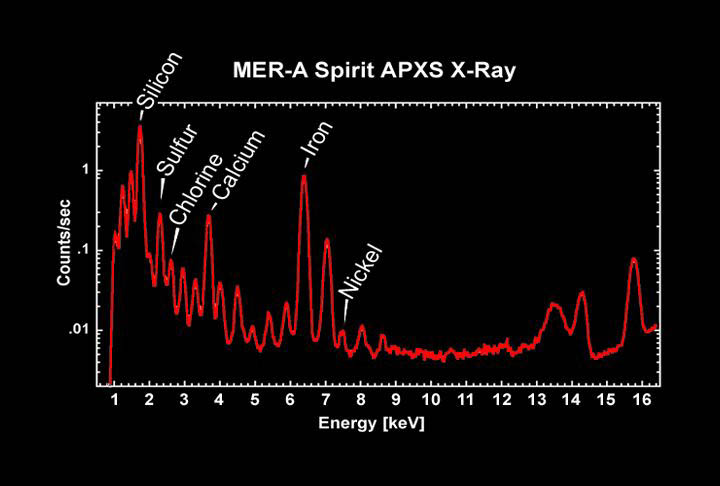
from what i can glance here there would even be the possibility of producing large amounts of steel and silicon(and its derivatives).
basically anything needed for large scale construction, now that i think of it i barely know what the arths soil is made off, now i know what to spend my evening on.
_________________
//through chaos comes complexity//
the scent of the tamarillo is pungent and powerfull,
woe be to the nose who nears it.
 26 Mar 2011, 7:32 pm
Finding any life whatsoever on a planet means there is a good chance of encountering an organism which can completely destroy us. I'd suggest quarantining it unless one has a method of utterly sterilizing the entire planet.
Actually, unless you're a believer in panspermia, James White made a convincing argument in his Sector General stories that alien microbes shouldn't even be able to infect humans. After all, we're products of completely different evolutionary patterns - to steal a comparison from Niven, I'm more closely related to an ear of corn than to a hypothetical native of the equally hypothetical Tau Ceti IV. And I can't catch Southern rust, or red ear rot, or Stewart's leaf blight, or anything, nor can corn catch my cold, or influenza, or pneumonic plague...
I'd say that if a planet has native bacteria, we should catalog them as best we can, and even save samples - but if the planet is otherwise uninhabited, and useful to us, terraform away! If there is an actual flourishing ecosystem, do our best to understand it, and learn about it, and try very very hard not to let any native species go extinct because of us - but if there's something there we can eat, or use, and nobody else is using it, why not?
Of course, if there is a native species that even might be sapient or pre-sapient, hands off. It may be permissible to try to communicate with them, assuming that such communication would not be detrimental to them - but it's their planet, and they get to keep it. And I sincerely hope that any intelligent aliens that stumble across our world would feel the same way...
(Incidentally, I wouldn't want to build domes on Luna - too much chance of getting hit by some piece of space debris - but according to Dr. David Brin's blog, research has recently uncovered indications of a massive cave under the lunar surface. Inflate a thick balloon in there, and you have a shirtsleeve environment on the cheap!)
_________________
Sodium is a metal that reacts explosively when exposed to water. Chlorine is a gas that'll kill you dead in moments. Together they make my fries taste good.
 26 Mar 2011, 7:34 pm
It's worthwhile to look at http://science.nasa.gov/science-news/sc ... st31jan_1/
Mars has no magnetosphere and is unprotected from bombardment by solar particles that blew away its atmosphere.No amount of terraforming will counter these deadly forces.
26 Mar 2011, 7:49 pm
Mars has no magnetosphere and is unprotected from bombardment by solar particles that blew away its atmosphere.No amount of terraforming will counter these deadly forces.
Enclosed domes or living underground on mars. But maintaining a human sustainable environment on Mars would be frightfully expensive.
ruveyn
Oodain
Veteran
Joined: 30 Jan 2011
Age: 36
Gender: Male
Posts: 5,022
Location: in my own little tamarillo jungle,
26 Mar 2011, 7:50 pm
Mars has no magnetosphere and is unprotected from bombardment by solar particles that blew away its atmosphere.No amount of terraforming will counter these deadly forces.
"If we extrapolate those Phobos measurements 4 billion years backwards in time, solar wind erosion can account for most of the planet's lost atmosphere."
if it took this long to be eroded, even if it only took 10 million years, it would still be possible to artificially boost the atmosphere more than it is eroded.
it is a lost battle however as it is only a question of time before the natural gasses already locked up in mars are gone, how long i dont dare guess at.
earth only has a finite amount of resources as well, only difference is i think the biosphere of earth act as a buffer, an intermediary between the locked up and free state of many of our chemical elements,
allowing for a huge efficiancy that i think will be very hard to manually recreate
the only alternative i can think of would be a way to re-melt the core, i cant think of anything right now though.
*edit*
to ruveyn:
yes the initial investment would be so large it aint even funny, but think of the real estate you would have at your disposal.
if you use fabricators then one would only need an initial investment at each stage, the rest would be done with martian resources.
all in all i think it is worth it, but we have so many more pressing issues on earth to take care of first, not to speak of all the technology that needs improving before it is a viable option at all
_________________
//through chaos comes complexity//
the scent of the tamarillo is pungent and powerfull,
woe be to the nose who nears it.
 26 Mar 2011, 7:54 pm
Just out of curiousity, have you read Ben Bova's Mars novels? Thats exactly the sort of natural history that he speculates Mars could have.
26 Mar 2011, 8:02 pm
Just out of curiousity, have you read Ben Bova's Mars novels? Thats exactly the sort of natural history that he speculates Mars could have.
No, but I will look for them at the local library next chance I get! Thank you good sir

Anything Mars related, I try and read. It has been an almost life-long obsession
_________________
Opportunities multiply as they are seized. -Sun Tzu
Nature creates few men brave, industry and training makes many -Machiavelli
You can safely assume that you've created God in your own image when it turns out that God hates all the same people you do
26 Mar 2011, 8:05 pm
Personally, I doubt terraforming (of Mars) is ever going to be practical. Solar wind, low gravity... you just aren't going to be able to keep a substantial atmosphere there for any length of time. I suppose you could continue to maintain it, but that would be expensive. And really, why bother? There are more efficient ways to colonize space.
I really don't see Mars as a great place to set up a colony. It doesn't have enough resources to sell back to Earth, meaning that there is no real business reason to go there. And without that I doubt we will ever get beyond scientific bases like those on Antarctica. In any case, even if you could export something, why on (off?) Earth would you go to the bottom of a decent sized gravity well? Far better to find a nice asteroid and start hollowing it out. Smelt it for metals for use on Earth and in space, and for volatiles to supply space colonies. Then set the asteroid spinning and use that big hole you've made to be a chamber for a biosphere. This would be home to workers as they continued mining the asteroid. Once you've gotten all you can for it, the asteroid can serve as a base for 0g construction facilities. It would be a big job, but I bet you could make a profit.
ZeroGravitas
Velociraptor


Joined: 22 Mar 2011
Age: 41
Gender: Male
Posts: 499
Location: 40,075 kilometers from where I am
26 Mar 2011, 8:13 pm
DeaconBlues: You have a point. Yet "infection" can be very broad. Consider a native organism already came close to destroying much of our biosphere. Imagine now, if instead of Klebsiella, it were a photosynthetic organism like plankton.
An alien microbe need not infect us. All it would have to do is prove extremely resistant to our efforts to destroy it while it releases, say, dioxygen difluouride.
While as you say, we should not have to worry too greatly about "space flu," I think we should still worry about the introduction into our biospheres (the ships and Earth) of organisms that could have inimical side-effects.
_________________
This sentance contains three erors.
http://www.wrongplanet.net/postt156929.html - How to annoy me
26 Mar 2011, 8:14 pm
I really don't see Mars as a great place to set up a colony. It doesn't have enough resources to sell back to Earth, meaning that there is no real business reason to go there. And without that I doubt we will ever get beyond scientific bases like those on Antarctica. In any case, even if you could export something, why on (off?) Earth would you go to the bottom of a decent sized gravity well? Far better to find a nice asteroid and start hollowing it out. Smelt it for metals for use on Earth and in space, and for volatiles to supply space colonies. Then set the asteroid spinning and use that big hole you've made to be a chamber for a biosphere. This would be home to workers as they continued mining the asteroid. Once you've gotten all you can for it, the asteroid can serve as a base for 0g construction facilities. It would be a big job, but I bet you could make a profit.
Mars would be a handy place to base asteroid mining operations. Or it would be if it were not so difficult to make the place livable for humans.
ruveyn
Last edited by ruveyn on 26 Mar 2011, 8:24 pm, edited 1 time in total.


