
Celtic and Irish mythology and history


Kraichgauer
Veteran


Joined: 12 Apr 2010
Gender: Male
Posts: 49,751
Location: Spokane area, Washington state.
 13 Aug 2011, 2:38 pm

The shift *p > 0 is diagnostic for Celtic.
The evidence for the linguistic affinities of thre Picts - even their identificatin as Celts - is by no means conclusive. It does not help that the practice of body decoration was by no means limited to the Picts, making their actual borders unclear.
Actually, Celtic and Italic had a very common origin. In fact, there is good evidence that many ancestors of the Romans were Proto-Celts from the Black Forest. The Germanic tribes, while an Indo-European people, spoke a language closer to that of the Slavs and Balts, though the Italio-Celts had had a significant influence on Germanic.
-Bill, otherwise known as Kraichgauer
Thats an old school theory. I read that the concensus has gone back to what Philogos is saying: that Celtic is a branch about equidistant between the Italic and Germanic branches of the IE family tree.
IE does not in fact tree very well - few language families do when you look at them closely. Language is too malleable, too dependent on contact and features spreading across already "separated" linguistic groups.
The first approximation was the centum / satem major split, roughly West / East. But that really does not hold up well. Best guess at present is that Indic / Iranian and Baltic / Slavic are likely valid branchings, but that Greek, Albanian, BaltoSlavic, Italic, Celtic, Germanic operated as a cluster [IndoIranian and Tocharian probably off to one side and not interacting] mutually influencing, sending and receiving innovations. The very close contact in Italy between Italic and Celtic, across the Alps between Celtic and Germanic, and of course the wide ranging Slavic / Germanic interaction make it harder to distinguiish inheritance from borrowing - nature / nurture. if you will.
I have still not made up my own mind on the Hittite issue - it is a lumper / splitter thing.
Couldn't have said it better.
-Bill, otherwise known as Kraichgauer
 13 Aug 2011, 4:33 pm
The shift *p > 0 is diagnostic for Celtic.
The evidence for the linguistic affinities of thre Picts - even their identificatin as Celts - is by no means conclusive. It does not help that the practice of body decoration was by no means limited to the Picts, making their actual borders unclear.
Actually, Celtic and Italic had a very common origin. In fact, there is good evidence that many ancestors of the Romans were Proto-Celts from the Black Forest. The Germanic tribes, while an Indo-European people, spoke a language closer to that of the Slavs and Balts, though the Italio-Celts had had a significant influence on Germanic.
-Bill, otherwise known as Kraichgauer
Thats an old school theory. I read that the concensus has gone back to what Philogos is saying: that Celtic is a branch about equidistant between the Italic and Germanic branches of the IE family tree.
IE does not in fact tree very well - few language families do when you look at them closely. Language is too malleable, too dependent on contact and features spreading across already "separated" linguistic groups.
The first approximation was the centum / satem major split, roughly West / East. But that really does not hold up well. Best guess at present is that Indic / Iranian and Baltic / Slavic are likely valid branchings, but that Greek, Albanian, BaltoSlavic, Italic, Celtic, Germanic operated as a cluster [IndoIranian and Tocharian probably off to one side and not interacting] mutually influencing, sending and receiving innovations. The very close contact in Italy between Italic and Celtic, across the Alps between Celtic and Germanic, and of course the wide ranging Slavic / Germanic interaction make it harder to distinguiish inheritance from borrowing - nature / nurture. if you will.
I have still not made up my own mind on the Hittite issue - it is a lumper / splitter thing.
I was oversimplifying for brevity.
The ancestrial IE speakers didnt really branch off into neat branches(( with some exceptions like the Tocharians who migrated off to an isolated oasis in the desert of Northwest China), but spread out like an ever growing ameoba across the map with the outer parts of the cell maintaining influence by and upon its neighbors. The point being that the Italic psuedopod was related to the celtic psuedopod nieghbor, and that to it germanic neighbor. The celts werent really proveably closer to one than the other but intermediate between the two
sartresue
Veteran
Joined: 18 Dec 2007
Age: 71
Gender: Female
Posts: 6,313
Location: The Castle of Shock and Awe-tism
13 Aug 2011, 4:41 pm
A CELTIC CHRONOLOGY
- Detailed chronology from about 3000BC/7001HE to the present.
Celtic chronologue topci
Excellent resource!
_________________
Radiant Aspergian
Awe-Tistic Whirlwind
Phuture Phounder of the Philosophy Phactory
NOT a believer of Mystic Woo-Woo
Kraichgauer
Veteran
Joined: 12 Apr 2010
Gender: Male
Posts: 49,751
Location: Spokane area, Washington state.
13 Aug 2011, 5:30 pm
The shift *p > 0 is diagnostic for Celtic.
The evidence for the linguistic affinities of thre Picts - even their identificatin as Celts - is by no means conclusive. It does not help that the practice of body decoration was by no means limited to the Picts, making their actual borders unclear.
Actually, Celtic and Italic had a very common origin. In fact, there is good evidence that many ancestors of the Romans were Proto-Celts from the Black Forest. The Germanic tribes, while an Indo-European people, spoke a language closer to that of the Slavs and Balts, though the Italio-Celts had had a significant influence on Germanic.
-Bill, otherwise known as Kraichgauer
Thats an old school theory. I read that the concensus has gone back to what Philogos is saying: that Celtic is a branch about equidistant between the Italic and Germanic branches of the IE family tree.
IE does not in fact tree very well - few language families do when you look at them closely. Language is too malleable, too dependent on contact and features spreading across already "separated" linguistic groups.
The first approximation was the centum / satem major split, roughly West / East. But that really does not hold up well. Best guess at present is that Indic / Iranian and Baltic / Slavic are likely valid branchings, but that Greek, Albanian, BaltoSlavic, Italic, Celtic, Germanic operated as a cluster [IndoIranian and Tocharian probably off to one side and not interacting] mutually influencing, sending and receiving innovations. The very close contact in Italy between Italic and Celtic, across the Alps between Celtic and Germanic, and of course the wide ranging Slavic / Germanic interaction make it harder to distinguiish inheritance from borrowing - nature / nurture. if you will.
I have still not made up my own mind on the Hittite issue - it is a lumper / splitter thing.
I was oversimplifying for brevity.
The ancestrial IE speakers didnt really branch off into neat branches(( with some exceptions like the Tocharians who migrated off to an isolated oasis in the desert of Northwest China), but spread out like an ever growing ameoba across the map with the outer parts of the cell maintaining influence by and upon its neighbors. The point being that the Italic psuedopod was related to the celtic psuedopod nieghbor, and that to it germanic neighbor. The celts werent really proveably closer to one than the other but intermediate between the two
But the fact remains, many of the ancestors of the Romans had come out of the Black forest region, and thus were of the same lineage as the Alpine Celts of that part of continental Europe.
-Bill, otherwise known as Kraichgauer
 13 Aug 2011, 7:37 pm
Nae doot.
People tend to forget that we are not born talking. Mr Obama's linguistic ancestry is essentially the same as mine - a good basis of West Gernanic plus a soupcon of Scandinavian, add in two cups of Romance, stir in a tablespoon of Celtic and season tro taste with exotic herbs and spices.
Genetically we are rather differently routed.
That a pile or Roman ethnicity comes out of the north is by no means unlikely.
 14 Aug 2011, 7:28 am
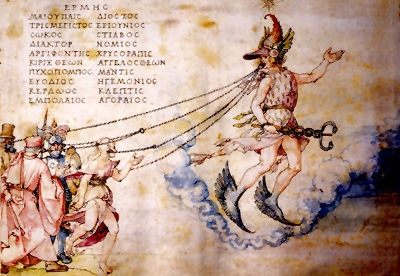
Granted, the only reason I know about him is because I read a book called Conversations with Nostradamus that mentioned him.
The hecks he doing in that picture?
Pullng a chain with his teeth- and the chains attached to people's ears?
Looks painful for everyone involved!
Oberoth
Veteran
Joined: 18 Oct 2010
Age: 35
Gender: Male
Posts: 890
Location: The part of Ireland with fields
14 Aug 2011, 8:54 am
The annals of the four masters might be an interesting source to read if you are interested in irish mythology.
http://www.ucc.ie/celt/online/T100005A/
 14 Aug 2011, 1:13 pm
http://www.ucc.ie/celt/online/T100005A/
I read it. Tolkien is better.
ruveyn
Kraichgauer
Veteran
Joined: 12 Apr 2010
Gender: Male
Posts: 49,751
Location: Spokane area, Washington state.
14 Aug 2011, 1:19 pm
http://www.ucc.ie/celt/online/T100005A/
I read it. Tolkien is better.
ruveyn
Yes, but Tolkien was more influenced by Germanic mythology, than Celtic.
-Bill, otherwise known as Kraichgauer
14 Aug 2011, 1:38 pm
http://www.ucc.ie/celt/online/T100005A/
I read it. Tolkien is better.
ruveyn
Yes, but Tolkien was more influenced by Germanic mythology, than Celtic.
-Bill, otherwise known as Kraichgauer
Not Germanic. Finnish.
See:
http://en.wikipedia.org/wiki/J._R._R._T ... influences
ruveyh
14 Aug 2011, 1:44 pm
http://www.ucc.ie/celt/online/T100005A/
I read it. Tolkien is better.
ruveyn
Yes, but Tolkien was more influenced by Germanic mythology, than Celtic.
-Bill, otherwise known as Kraichgauer
With good reason. Apart from the linguistic bias - he was dealing publicly primarily with OE and Scandinavian, though his own languages draw almost equally on Germanic and Celtic trends - there is a mental factor. The early Celtic texts - and indeed the 18th and 19th Century records of Celtic folklore - have compared to their Germanic counterparts a quality I might loosely call undisciplined [to expand would get me into fairly complex discussions], beyond anything else in the West (though Romany lore can come close). The Celtic warrior running nude into battle, and Tir nan Og over the horizon. This appeals to certain types of head - very big in my father's youth. But Tolkien's head style biasses him toward a less wildly curlicued design, and the Germanic tales fit better.
I know he was influenced by the Kalevala, but through historic accidents I don't know how the thought patterns of the Swamp People compare with Teuton and Celt.
Kraichgauer
Veteran
Joined: 12 Apr 2010
Gender: Male
Posts: 49,751
Location: Spokane area, Washington state.
14 Aug 2011, 2:15 pm
http://www.ucc.ie/celt/online/T100005A/
I read it. Tolkien is better.
ruveyn
Yes, but Tolkien was more influenced by Germanic mythology, than Celtic.
-Bill, otherwise known as Kraichgauer
Not Germanic. Finnish.
See:
http://en.wikipedia.org/wiki/J._R._R._T ... influences
ruveyh
Actually, I did just look at the Wikipedia entry, and it did in fact say that he was largely influenced by Germanic mythology and literature, as well as Wagner's Ring Cycle operas, which were of course based on the German Nibelungenlied, as well as the Icelandic Volsunsaga.
-Bill, otherwise known as Kraichgauer
14 Aug 2011, 5:22 pm
Actually, I did just look at the Wikipedia entry, and it did in fact say that he was largely influenced by Germanic mythology and literature, as well as Wagner's Ring Cycle operas, which were of course based on the German Nibelungenlied, as well as the Icelandic Volsunsaga.
-Bill, otherwise known as Kraichgauer
And the Ring of Gyges goes back before the time of Plato.
ruveyn
Kraichgauer
Veteran
Joined: 12 Apr 2010
Gender: Male
Posts: 49,751
Location: Spokane area, Washington state.
14 Aug 2011, 7:23 pm
Actually, I did just look at the Wikipedia entry, and it did in fact say that he was largely influenced by Germanic mythology and literature, as well as Wagner's Ring Cycle operas, which were of course based on the German Nibelungenlied, as well as the Icelandic Volsunsaga.
-Bill, otherwise known as Kraichgauer
And the Ring of Gyges goes back before the time of Plato.
ruveyn
I'm sure the ring is a universal symbol. All I'm saying is that Tolkien borrowed mostly from northern myth.
-Bill, otherwise known as Kraichgauer
14 Aug 2011, 9:58 pm
Granted, the only reason I know about him is because I read a book called Conversations with Nostradamus that mentioned him.
The hecks he doing in that picture?
Pullng a chain with his teeth- and the chains attached to people's ears?
Looks painful for everyone involved!
It is a positive picture even though it might not look like it. It symbolizes eloquence of the word and it makes people follow him. Here is a description I found:


