
What helps and what doesn't help rebuild economy



 21 Mar 2020, 12:59 pm

Bradleigh.....how in the world would you conclude that I wouldn’t want firemen to put out my fire, and for the police to protect me? Why employ hyperbole? Of course, even most ultra-capitalist societies employ SOME sort of socialism.
All I’m saying is that Social Democracy seems to work better than the policies of the “Socialist” parties of various other nations.
That doesn’t clarify anything at all. What government policies? What pertinent distinctions would you draw between France and Sweden?
Bradleigh
Veteran


Joined: 25 May 2008
Age: 35
Gender: Non-binary
Posts: 6,669
Location: Brisbane, Australia
21 Mar 2020, 6:35 pm
Based on what I've seen, if there are large-scale shortages, you don't need to push anything, the shortages naturally pull the economy. All you need to do is not to block it and not let others block it.
Here you openly promote consumerism.
So you promote pretending nothing's going on and people should go on with their consumerist lifestyles?
Indeed I promote consumerism as an excellent tool to spread money across the people, or at least that is how an economy keeps its gears turning. But, I don't think that always relying on just deregulated markets will solve everything, these capitalist systems can lead to people taken advantage of and falling through the cracks. You need to ideally prevent the rich from accruing all the wealth to themselves, while meeting the basic of everyone who might not be able to afford it themselves normally. This includes things like socialized medicine, minimum wages that are above the cost of living, education that is reliant on more than what parents earned, and strong enough regulations against markets becoming monopolies or price gouging consumers.
If you don't have ways to keep wheels turning while industries are shut down from a disaster, such as short term travel bans from a pandemic, those industries are going to collapse and be hard to get going once even the bans are lifted. Either the workers of those industries are going bankrupt and unable to perform as consumers, or they will leave those industries entirely, saturating the workforces of other industries and making it hard to get them back to their industries and restart them back up. Thus why I think there can be government intervention of even finding short term government created positions to move people into when there is such a strong impact to particular industries. Of course you don't want people getting to comfortable or make it like the government is trying to control what is being produced for too long of a time as this is what usually is the folly of communist systems, rather than communism itself.
_________________
Through dream I travel, at lantern's call
To consume the flames of a kingdom's fall
Bradleigh
Veteran
Joined: 25 May 2008
Age: 35
Gender: Non-binary
Posts: 6,669
Location: Brisbane, Australia
21 Mar 2020, 6:59 pm
All I’m saying is that Social Democracy seems to work better than the policies of the “Socialist” parties of various other nations.
My point was that it seems ridiculous why someone would be so against socialised systems they would argue against things like police and firefighters. You have already internalised them as incredibly important, but this was not always the case. The USA is even behind the curve with the rest of the developed world by not including healthcare in that list, that a poor uni student could hurt their leg which would lead to them getting an ambulance and not be afraid of going bankrupt.
I think that it can largely be semantics where one could even draw the line of Social Democracy and plain Socialist, and the difference of outcome can caused by poor implementation, interferences by outside forces such as the CIA creating coups in countries that don't serve USA interests, and just plain bad luck from the crashing of markets that an economy may be built on top of.
I think that socialised policies can be fantastic as long as they cover the basic needs that should not be up to debate, which are things like fire, police, medicine, education, and even being able to have a minimum wage high enough to barely be able to pay for the cost of living. Even the dole to help support people who can't find work or suffer from disabilities, and may be left behind.
_________________
Through dream I travel, at lantern's call
To consume the flames of a kingdom's fall
 22 Mar 2020, 4:02 am
I don't promote endless deregulation.
That would ultimately end in unofficial regulation by the strongest players, not a good thing.
I promote deregulation as means for rebuilding after a disaster.
Later, when the market gets saturated with essential goods, gradual introduction of regulations makes sense.
At this stage, I'm much more into Scandinavian model than the consumerist debt culture. I see the latter as more damaging to the society.
If the crisis prolongs, there will be shortages in transport, delivery and disinfection services. Internet infrastructure would benefit from expansion. The best thing to do about it is to let people jump into these sectors.
_________________
Let's not confuse being normal with being mentally healthy.
<not moderating PPR stuff concerning East Europe>

 22 Mar 2020, 5:54 am
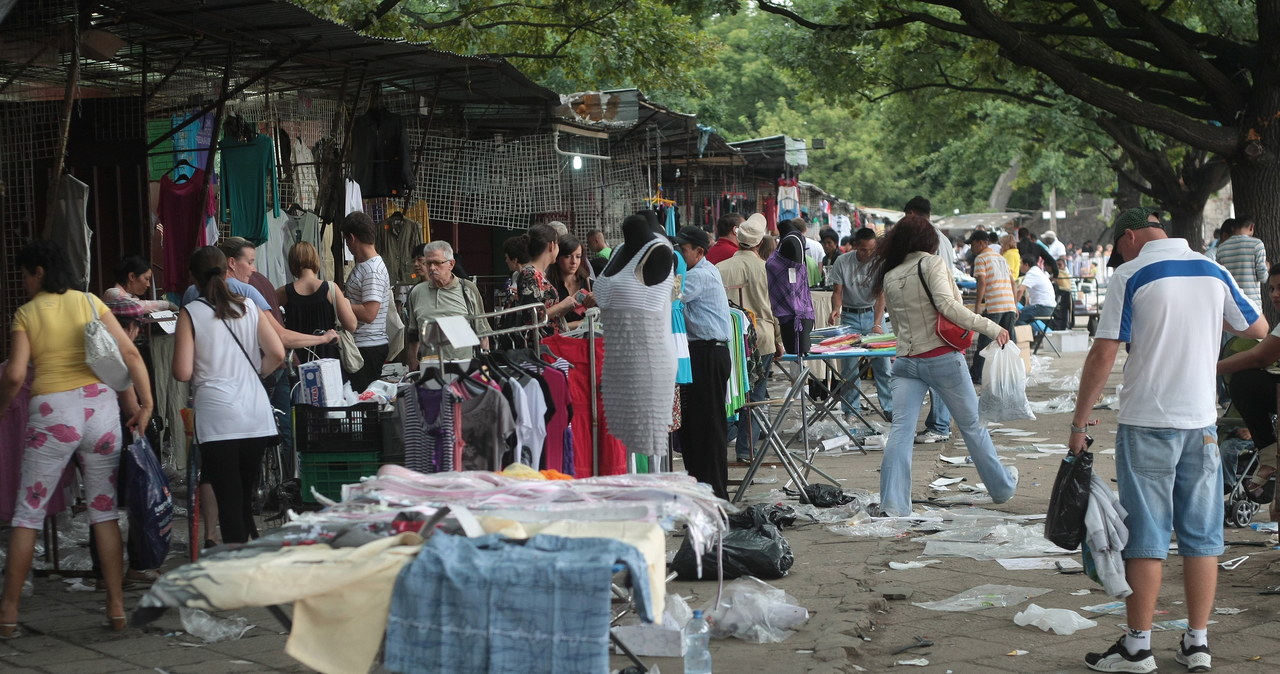
You probably can't skip that step.
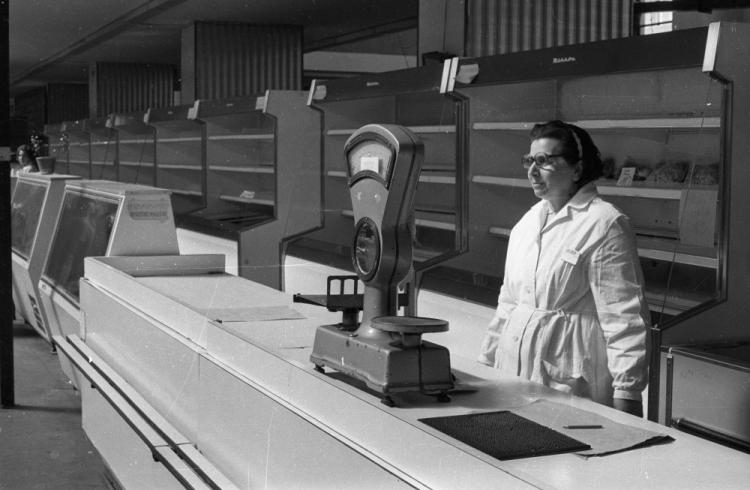
Which in a sense is what the soviet system in practice was trying failing to do...
(or at least that’s my hot take as of 10:47am this morning.)
Who knows? maybe I’ll be wanting to flame myself over that comment in three hours time

After making my post, I had a similar thought.
In general, my current opinion on socialism is: it's very inefficient in hepling with widespread poverty but quite useful for managing surplus wealth.
_________________
Let's not confuse being normal with being mentally healthy.
<not moderating PPR stuff concerning East Europe>
22 Mar 2020, 5:59 am
^ yes, it’s hard not to question and re-question your own judgement when discussing matters that are so contentious, and have involved, and continue to involve, so much suffering.
Yes: socialist theory in all its many forms includes the tacit assumption that it will only be applied to cultures that have already developed thriving markets and industrial production methods that generate abundant surplus wealth.
Socialist politicians are not always that good at recognising this and adapting their policies to take account of discrepancies between theoretical assumptions and the world as is.
Last edited by Karamazov on 22 Mar 2020, 6:05 am, edited 1 time in total.
Bradleigh
Veteran
Joined: 25 May 2008
Age: 35
Gender: Non-binary
Posts: 6,669
Location: Brisbane, Australia
22 Mar 2020, 6:04 am
But you can't just say to deregulate anything willy nilly even if you do say it won't be endless, such as go back consumer protection laws for things that could hurt a population already trying to heal from a disaster. Like here in Australia we had a lot of bushfires that destroyed a lot of homes, it would be irresponsible to suddenly deregulate everything to do with asbestos. After cyclones that destroyed infrastructure that was poorly built, you don't further deregulate building codes, rather you may actually increase the building codes so that concrete structures need to have reinforced steel to stand the next disaster. If you have areas destroyed by flooding you don further deregulate against protections against further flooding, just as if you have a financial disaster created by predatory practices you don't further deregulate those industries.
If we are talking about improvements through deregulation, you must have to mean some kind of targeted deregulation, and not just the kind that is put into place to protect the people from businesses that may take advantage of them. Could you give a bit more details of what you think are the kind of deregulation would help?
I think that there is some misunderstanding in regards to what I have said in regards to my position and whether it fits with the Nordic model. Indeed I have a keen interest in finance and talked a good deal about how consumption can push and pull the economy, I also share a strong belief in strong social programs like safety nets and free education, which as far as I know are traits Nordic economic model of encouraging free trade while keeping the market out of things like healthcare and education. Elements require higher taxes over some other systems, but free up the people to buy how and what they want.
_________________
Through dream I travel, at lantern's call
To consume the flames of a kingdom's fall
22 Mar 2020, 6:45 am
However, mixed systems currently available in my country work more efficiently than purely state-fund system that was here before. Supplementing universal healthcare with private practices greatly reduced e.g. corruption that used to be a serious problem in healthcare here. Still, private practices are supplements, you can choose them to skip waiting lists (instead of bribing someone to skip waiting lists...) in non-life-threatning situations but using them does not cancel your access to the public services, you can freely mix both.
Maybe some day we will be able to afford even universal income but based on what was happening a few years ago in Western Europe - we need to afford it worldwide to avoid even worse immigration crises.
_________________
Let's not confuse being normal with being mentally healthy.
<not moderating PPR stuff concerning East Europe>
22 Mar 2020, 7:27 am
And one more thing: During the crisis, additional regulations are often sensible. It's after the crisis, when the damage already has been done and external situation stabilised, when deregulation helps. Post-apo. Not earlier.
_________________
Let's not confuse being normal with being mentally healthy.
<not moderating PPR stuff concerning East Europe>


