
Successful communist village in Spain


thomas81
Veteran


Joined: 2 May 2012
Age: 45
Gender: Male
Posts: 5,147
Location: County Down, Northern Ireland
 24 Oct 2013, 5:02 pm

http://www.theguardian.com/world/2013/o ... age-utopia
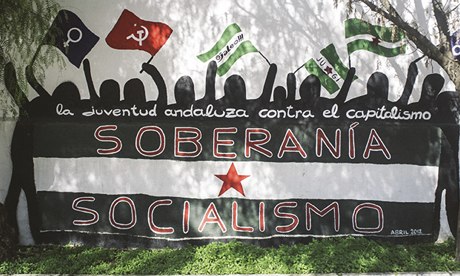
How many folks from the outside are trying to get in?
There is a an easy way to determine the best places to live. People vote with their feet.
ruveyn
I don't have the info for that, but its survived since 1978 and has the basis of a small government and media so it must be doing something right.
 27 Oct 2013, 3:32 pm
The computer was not brought to anyone by capitalism. The computer, like most inventions, came about in a state run institution. It was later passed over to the commercial sector where it was the private preserve of banks for many decades.
It wasn't until the 1970's that private profit making companies delivered the PC, that was years after the computer had been developed academically.
I think it is a great myth that only capitalism can bring about innovation. A lot of discoveries and inventions take place in publicly funded institutions.
crackedpleasures
Veteran

Joined: 13 Oct 2007
Age: 44
Gender: Male
Posts: 1,367
Location: currently Belgium, longing for the Middle East
27 Oct 2013, 3:55 pm
I'd love to visit Saint Helena. I'm told it's like nowhere else on Earth.
That place is heavily dependent on British aid for the overseas territories, and that whilst the island is lovely they're poor by UK standards.
The last bastion of empire, huh?
St Helena (+ Ascension Island + Tristan da Cunha ; both administered from St Helena)
Pitcairn Islands (smallest democracy in the world)
UK Virgin Islands (just next to the US Virgin Islands)
Montserrat
Falkland Islands
South Georgia & the South Sandwich Islands (even if they don't have any permanent population, it's British soil)
Gibraltar (tax haven)
Bermuda (tax haven)
Isle of Man (tax haven)
Jersey and Guernsey (tax havens)
Sark
Alderney
While they lost their last valuable overseas territory when Hong Kong was under Chinese control again, the UK still has a lot of overseas territories. Of course, the majority are small enclaves or remote islands with few citizens. Obviously they are happy to be British, except Bermuda and Gibraltar none of them would financially survive without the UK. Falklands neither ; their defense alone would swallow a huge sum of money and they'd be very vulnerable against Argentine invasion if the British would keep their hands off it.
And obviously places like St Helena, Pitcairn, etc are different worlds of their own: very very few people living on an island very far away from the outside world, with no airport, and ships visiting only very infrequently. They are almost worlds of their own.
_________________
Do what Thou wilt shal be the whole of the Law.
Love is the Law, Love under Will. And...
every man and every woman is a star
(excerpt from The Book of the Law - Aleister Crowley)
"Od lo avda tikvateinu" (excerpt from the Israeli hymn)
thomas81
Veteran
Joined: 2 May 2012
Age: 45
Gender: Male
Posts: 5,147
Location: County Down, Northern Ireland
27 Oct 2013, 5:00 pm
^
you left out Northern Ireland.
28 Oct 2013, 7:53 am
You forgot several of them and included some that aren't overseas territories.
There are 14 overseas territories:
Akrotiri and Dhekelia (British bases on Cyprus)
Anguilla
Bermuda
British Antarctic Territory
British Indian Ocean Territory
British Virgin Islands
Cayman Islands
Falkland Islands
Gibraltar
Montserrat
Pitcairn Islands
Saint Helena, Ascension and Tristan da Cunha
South Georgia and the South Sandwich Islands
Turks and Caicos Islands
Interestingly, I gather that the inhabitants of Montserrat were quite relieved to be living under British rule in the aftermath of the 1995 volcano eruption. Most of them came here.
Isle of Man and Channel Islands (i.e. Balliwicks of Jersey and Guernsey) are not overseas territories, they're Crown dependencies and have been under English/British rule for nearly a thousand years.
I wouldn't be so sure about that - some of the Caribbean islands are very prosperous. The Cayman Islands and Anguilla could more than manage. The Anguillans vociferiously rejected union with Jamaica and demanded that they be split off from any attempts to force independence as part of Jamaica.
The Pitcairn Islands are more looked after in a day-to-day sense from New Zealand than from the UK.
The FIs are self-sufficient in everything but defence. If oil is in fact discovered, I'm sure they'd be happy to contribute to their defence. If that were to happen, I'm sure that a free association agreement would not be entirely out of the equation. That said, the FIers are happy with the status quo.
As I remember rightly, it's Saint Helena that really needs lots of aid. It seems a very isolated place with nothing going on.
And in any case, France has a much bigger overseas areas than Britain, many of which are integral parts of that country. France has 2.7 million people living in its overseas departments and territories. Britain has about a tenth of that living in the BOTs, who actually have more rights than UK British. They can come to the UK to live any time they like... but we cannot go there any time we like, because in essence they have their own immigration policy and, apart from Gibraltar, are outside the EU.
As well you know, Northern Ireland is an integral part of the UK. It's not an overseas territory or a Crown dependency.
Personally, I would be in favour of a measure of integration regarding the overseas territories.

 28 Oct 2013, 12:52 pm
They should all have a vote for the British government.
It's not democracy only to have a vote for your local non-sovereign admin. This is what France got right. Its Caribbean possessions have stayed with it, with that full integration, while are surrounded by ex-British Caribbean possessions that without a vote for our government chose to secede from us.
28 Oct 2013, 5:06 pm
It's not democracy only to have a vote for your local non-sovereign admin.
I think the reason that, for example, Gibraltar doesn't want full integration with the UK is that it has a lot of privileges as an overseas territory that it fears that it would lose if it were to integrate with the UK.
It has successful financial, gaming and gambling industries for a start and a low-tax government that would end if it were to integrate with the UK entirely. Locals also fear that the Gibraltar Parliament would lose many of its effective powers if full integration with Britain was achieved. It would also deal a heavy blow to the low cost of cigarettes and spirits in the territory. A packet of 200 cigarettes would triple if HMRC were allowed to set tax rates. A 200 pack of cigarettes are currently about £20 in Gibraltar. Here they're well over £60. For example.
The UKIP idea is for all of the overseas territories to have a vote on whether they would like to be represented in the House of Commons.
The only problem is that almost all the overseas territories are far too small to have their own MP. The largest overseas territory, Bermuda, would elect a single MP. The Isle of Man, Guernsey and Jersey would each elect an MP. The other 13 overseas territories would have two MPs to serve all of them. See what I mean? It would be nearly impossible for an MP to serve his area efficiently because his constituency is grotesquely huge. How would you go from serving Tristan da Cunha to Gibraltar to Pitcairn Islands to... and so on?
thomas81
Veteran
Joined: 2 May 2012
Age: 45
Gender: Male
Posts: 5,147
Location: County Down, Northern Ireland
28 Oct 2013, 7:45 pm
Can you name any kind of strongly socialist national experiment that didn't brutally repress dissent?
Oooh, i nearly missed this one.
You could make a case for Chavez-era Venezuela, then there were various experiments at provincial levels that enjoyed some success. There was Catalonia in Spain, Bavaria in Germany. It little known but Limerick in Ireland went socialist for a couple of weeks in protest to the presence of British forces. They don't make Republicans like those anymore, those lads had real balls.
crackedpleasures
Veteran
Joined: 13 Oct 2007
Age: 44
Gender: Male
Posts: 1,367
Location: currently Belgium, longing for the Middle East
28 Oct 2013, 9:11 pm
Akrotiri and Dhekelia (British bases on Cyprus) - yes but only military staff lives there, no regular towns
Anguilla - has become independent state within the commonwealth
Bermuda
British Antarctic Territory - uninhabited so hard to classify this as a colony
British Indian Ocean Territory - uninhabited so hard to classify this as a colony
British Virgin Islands
Cayman Islands - has become independent state within the commonwealth
Falkland Islands
Gibraltar
Montserrat
Pitcairn Islands
Saint Helena, Ascension and Tristan da Cunha
South Georgia and the South Sandwich Islands - uninhabited so hard to classify this as a colony
Turks and Caicos Islands - has become independent state within the commonwealth
You could however add the Channel Islands and the Isle of Man.
Northern Ireland is one of the 4 "home nations" on par with England, Wales and Scotland.
By the way, France's nr of colonies is fading:
St Martin
Guadeloupe
Martinique
St Pierre & Miquelon
New Caledonia
French Polynesia + Tahiti
La Reunion
Clipperton Island *
The French Southern and Antarctic territories (of which Kerguelen is the biggest and most famous) *
French claims to Antarctic lands *
The * indicates no permanent population. In fact, it's been ages ago since a human being has set foot on Clipperton Island.
US overseas possessions:
Puerto Rico
US Virgin Islands
Guam
American Samoa
Wake Island (unpopulated)
previously also Panama Canal Zone (returned to Panama sovereignity) and Palau (chose full independence)
I'm pretty sure Australia has some colonies too, but most are very tiny islands with hardly any population.
Spain and Portugal used to colonise a lot, but lost all colonies they ever had (the last one being Spain leaving the Western Sahara and Portugal returning Macau to the Chinese)
_________________
Do what Thou wilt shal be the whole of the Law.
Love is the Law, Love under Will. And...
every man and every woman is a star
(excerpt from The Book of the Law - Aleister Crowley)
"Od lo avda tikvateinu" (excerpt from the Israeli hymn)

 30 Oct 2013, 2:58 am
Who was ordering anyone around here?
The guy who wants to arrest a homeless man for occupying 'his' unused land or building and refusing obey pretty much any command he chooses.
We have no evidence of any kind that anyone involved in this "seizure" was homeless.
If the people in the town are behaving anarchisticly, I have no reason to care if they call themselves Leninists.
I was commenting on the fact that the people in this village seem to be quite the fans of Che, and that Che was a big fan of Stalin. (He signed letters to relatives as "Stalin II," put flowers on Stalin's grave during the middle of Soviet de-Stalinization, doubtless some other associations I could remember given time.) I made this comment after someone else said there was no reason to bring up Stalin. Based upon whom these people admire, and who Che admired, I'd say bringing up Stalin is completely reasonable.
_________________
"The man who has fed the chicken every day throughout its life at last wrings its neck instead, showing that more refined views as to the uniformity of nature would have been useful to the chicken." ? Bertrand Russell
30 Oct 2013, 4:43 am
Can you name any kind of strongly socialist national experiment that didn't brutally repress dissent?
Oooh, i nearly missed this one.
You could make a case for Chavez-era Venezuela, then there were various experiments at provincial levels that enjoyed some success. There was Catalonia in Spain, Bavaria in Germany. It little known but Limerick in Ireland went socialist for a couple of weeks in protest to the presence of British forces. They don't make Republicans like those anymore, those lads had real balls.
I can't see how your examples amount to much. Two weeks in Limerick, three or four months in Bavaria (assuming you're referring to the "Munich Socialist Republic"?), and the rather grisly bloodbath that went on in Catalonia between the Anarchists and Communists 1936-39, who both seemed curiously more full of hate at each other than to the Nationalists...as best I can figure those two groups essentially did Franco's work for him.
Moreover, both in Catalonia and Bavaria it was hardly the case that dissent was tolerated. Possibly for reasonable cause, I won't argue that point, but you seem to be indicating that there was dissent from the regimes in power allowed. That I don't see at all.
_________________
"The man who has fed the chicken every day throughout its life at last wrings its neck instead, showing that more refined views as to the uniformity of nature would have been useful to the chicken." ? Bertrand Russell
30 Oct 2013, 5:44 am
It's not true that only military staff live there. There are some farmers and other people that are resident in the SBAs, but they are Cypriots and do not get British citizenship.
It enjoys self-government and has its own assembly but it hasn't attained independence yet and doesn't want to do so. It's within the Commonwealth of Nations (which is a separate body) by virtue of being a British Overseas Territory. Like Hong Kong was in the Commonwealth before 1 July 1997 because of its status as a British Dependent Territory.
It's again a BOT. That said, it's technically just Britain's clam to the Antarctic. There are no native inhabitants, that is correct.
It's a BOT as I've said. What happened to the native population of those islands shames us as a country. I say this as a flag-waving type.
We don't have colonies any more.
It's not independent - it's a self-governing British Overseas Territory. It's within the Commonwealth of Nations because it's UK territory.
There are some researchers there but yes, it's uninhabited. It's still an Overseas Territory, although it used to be governed as part of the Falkland Islands as "Falkland Islands Dependencies", as did the British Antarctic Territory.
Again, it's not independent. It's a self-governing British Overseas Territory with its own parliament.
You can't because the Isle of Man and the Channel Islands have separate constitutional arrangements with the UK. They're more integrated with the UK in a practical sense than, say, Bermuda or Anguilla are. The Isle of Man and the Channel Islands receive their own local TV services, are part of the UK postcode system (although they have their own postal services) and are generally much closer to Britain physically. When one goes to the Isle of Man for example, it feels as though I'm still in the UK even though I've actually left.
St Martin
It's a collectivity, which is more like a French overseas territory. It does not elect people to the national parliament of France, and has a degree of separation from the French state.
This isn't a colony. It's an integral part of France in the way that Paris or Bordeaux or Corsica is.
Again, it's a full part of France.
It's a self-governing territorial collectivity. It used to be a full part of France for a while, then decided on the collectivity status instead.
Actually, New Caledonia is a special collectivity (as distinct from a territorial collectivity) and I gather that it's much more along the way to independence than some of the others. Although it is not legally considered an integral part of France, it is represented in the French parliament by two deputies and two senators. It has its own parliament, flag, banknotes and passports.
Now, the French have designed yet another description for French Polynesia - that of "overseas country"!
It has autonomy and its own assembly and government. The French influence is mainly related to subsidies, education and security.
Part of French Polynesia.
Like Guadeloupe and Martinique, this is an overseas department and is such is a full part of France.
Yes, it's just considered a possession.
French claims to Antarctic lands *
Yup. The Antarctic claims by France.
You also forgot two very important areas that are completely integrated with France. They are French Guiana in South America and Mayotte in the Indian Ocean.
Spain does still have a few outer areas - consider the Canary Islands and the African cities of Ceuta and Melilla (with a whacking great big border fence around them!) They are full parts of Spain though.
crackedpleasures
Veteran
Joined: 13 Oct 2007
Age: 44
Gender: Male
Posts: 1,367
Location: currently Belgium, longing for the Middle East
30 Oct 2013, 7:14 am
That is great to meet another geography fan who knows so much about subjects like this! Great 
Yes, I didn't want to include any Spanish soil because the Canary Islands are a province with limited self government in the same way as the Balearic Islands, Catalonia, Valencian Community, etc are. They're fully part of Spain. So are Ceuta and Melilla, who are autonomous cities but fully part of Spain. Not colonies.
The Dutch situation is also very complex. Aruba and formerly the Dutch Antilles were considered countries within the Kingdom of the Netherlands. Now they further divided with Aruba, Bonaire and Curacao if I'm not wrong, being "countries" by their own right, but within the Kingdom of the Netherlands. St Maarten (the Dutch half of the island), Saba and a few other small islands became integral part of the Netherlands as "special towns". I am not sure in what way the Dutch government still is involved with ruling those "countries" like Curacao and Aruba. When the new King was inaugurated a few months ago, the islands all sent a representative though.
Denmark has a similar concept, calling Greenland and the Faroe Islands "countries" within the "Kingdom of Denmark".
And then the USA: while it is clear the Virgin Islands (US part), Guam and American Samoa are more or less overseas territories (the citizens holding American nationality but not considered US citizens, but I believe they have the right to settle in US proper whenever they want) while Puerto Rico seems to be a more or less sovereign nation in free association with the USA.
"in free association with..."
"overseas territory..."
"colony"
"dependency of..."
"country within the Kingdom of ..."
...
Nice that different countries all use different terminologies for how they call their depending overseas posessions. In reality there seems little difference to a colony, crown dependency, overseas territory, ... because de facto the citizens all receive passports of the country their place belongs to. As weird as it sounds given how far away it is from Europe, but citizens of the Falkland Islands are in fact holding British passports (even when on bottom the name Falkland Islands will be added, it's still a UK passport de facto)
I forgot Australia had some posessions too:
Howe Island
Cocos Islands (Keeling Islands)
Christmas Island
and New Zealand apparently is ruling Niue and Cook Islands although several books sate these have now become sovereign nations where New Zealand only offers limited attention to their own governments.
By the way, there was a Belgian travel TV show yesterday you'd probably have liked. They visited Transnistria, Abkhazia and South Ossetia. All unrecognised nations who function de facto as an independent nation. They issue their own passports, although most citizens have a Russian passport too as their own "country"s passports are unrecognised for international travelling. But all three had their own governments, their own laws. To cross from Moldova into Transnistria you even have to pass a true border control, even though purely in legal terms you are still in Moldova (but they do not control Transnistria de facto).
I believe similar things exist in Somalia (Somaliland, the only area which is peaceful, being a self proclaimed sovereign nation but not recognised by the UN yet), Kosovo (about 100 UN members recognising their independence), Nagorno Karabakh (de facto independent and predominantly Armenian, but technically part of Azerbaijan even though they have no control over it), Norhern Cyprus (who however are going more and more direction full independence as the outside world is trying to get them out of diplomatic isolation)
_________________
Do what Thou wilt shal be the whole of the Law.
Love is the Law, Love under Will. And...
every man and every woman is a star
(excerpt from The Book of the Law - Aleister Crowley)
"Od lo avda tikvateinu" (excerpt from the Israeli hymn)


