
If so many people hate the rich-why don't we get rid of the



 08 May 2011, 10:58 am

marshall wrote:
AceOfSpades wrote:
Noob wrote:
marshall wrote:
Noob wrote:
marshall wrote:
Neither can be guaranteed.
Are you confusing opportunity, ability and potential?
Define them however you want. Nothing is guaranteed in the real world. Not even your existence is guaranteed within 24 hours. You could never wake up tomorrow.
True. But you can significantly improve your chances. People who don't believe they can often never try and never succeed.
And (some of) the people that try and don't succeed, don't know where they went wrong and don't know how to improve their chances to try again. Many give up because 'they are not good enough' (or so they think).
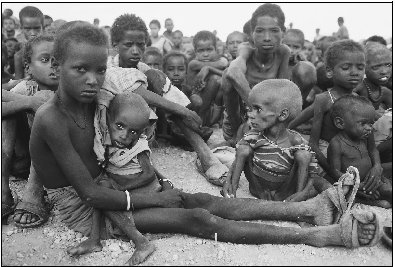
I would also say, there are people from third world countries that have done very well for themselves and have gone through a lot in order to achieve their goals. Even if they have to move to another country. Many more could, but don't.
Yea. These people are all the victims of their own learned helplessness.

 08 May 2011, 2:06 pm
AceOfSpades wrote:
I wasn't talking about people who live in third world countries. I was talking about the poor in developed countries. Obviously that is a result of political instability so nice try at insulting my intelligence cuz that's obvious to anyone.
The attitude is the same in developing countries. I bet if you talked to a lot of right-wing middle and upper class Mexicans many would likely tell you that their own poor, the ones living in shanties, have "equality of opportunity". It's the same everywhere. They repeat and repeat what clearly aint so. It's called the "Just World Hypothesis" (http://en.wikipedia.org/wiki/Just-world_phenomenon). The only difference between a third world country and here is a matter of degree. The poor in the US and Canada clearly have a lot more opportunities than the poor in third world countries, but it is still far from being equal.
08 May 2011, 2:15 pm
marshall wrote:
AceOfSpades wrote:
I wasn't talking about people who live in third world countries. I was talking about the poor in developed countries. Obviously that is a result of political instability so nice try at insulting my intelligence cuz that's obvious to anyone.
The attitude is the same in developing countries. I bet if you talked to a lot of right-wing middle and upper class Mexicans many would likely tell you that their own poor, the ones living in shanties, have "equality of opportunity". It's the same everywhere. They repeat and repeat what clearly aint so. It's called the "Just World Hypothesis" (http://en.wikipedia.org/wiki/Just-world_phenomenon). The only difference between a third world country and here is a matter of degree. The poor in the US and Canada clearly have a lot more opportunities than the poor in third world countries, but it is still far from being equal.
08 May 2011, 2:20 pm
Noob wrote:
I do care. I might help them. I may have a way to help them. Just some NTs standing in my way.
Don't pretend you know me.
Don't pretend you know me.
If you would give me and others the same benefit of the doubt. Don't accuse people you don't know who are working minimum wage or not working at all of "learned helplessness" if you yourself don't want to accused of things you know aren't true.
08 May 2011, 2:34 pm
AceOfSpades wrote:
marshall wrote:
AceOfSpades wrote:
I wasn't talking about people who live in third world countries. I was talking about the poor in developed countries. Obviously that is a result of political instability so nice try at insulting my intelligence cuz that's obvious to anyone.
The attitude is the same in developing countries. I bet if you talked to a lot of right-wing middle and upper class Mexicans many would likely tell you that their own poor, the ones living in shanties, have "equality of opportunity". It's the same everywhere. They repeat and repeat what clearly aint so. It's called the "Just World Hypothesis" (http://en.wikipedia.org/wiki/Just-world_phenomenon). The only difference between a third world country and here is a matter of degree. The poor in the US and Canada clearly have a lot more opportunities than the poor in third world countries, but it is still far from being equal.
I accept that certain subcultures are problematic and exacerbate the cycle of poverty. My problem is the black-and-white thinking and judgemental generalizations.

 08 May 2011, 3:13 pm
marshall wrote:
Noob wrote:
I do care. I might help them. I may have a way to help them. Just some NTs standing in my way.
Don't pretend you know me.
Don't pretend you know me.
If you would give me and others the same benefit of the doubt. Don't accuse people you don't know who are working minimum wage or not working at all of "learned helplessness" if you yourself don't want to accused of things you know aren't true.
A debate doesn't have to be an argument and we don't have to trade insults. But it's up to you what you do.
I thought I said 'lack of education' or at least that's what I meant. I think you are mixing opinions?
 08 May 2011, 3:14 pm
AceOfSpades wrote:
There's a reason wealth doesn't last past three generations. Anyone who solely inherits wealth and isn't willing to do all the hard work of overseeing production and maintaining quality control in their products isn't going to be able to sustain their company as well as someone who is willing to git r done (such as the self made first generation). Now, corporate welfare does capitalize gains and socialize losses, which is why I'm against all forms of corporate welfare. With that out of the equation, they are free to succeed and fail without the burden of progressive taxation and without the crutch of corporate welfare.
Even without corporate welfare (which really seems to be a logical consequence of a large concentration of wealth in few hands in any society), those who've inherited particularly large estates have immeasurable advantages. It doesn't require too much competence to maintain an estate - all it requires is the ability to hire good upper management. The social connections wealth gives you also has a perservation effect on said wealth.
AceOfSpades wrote:
Property rights are supposed to be proportionate? To what, average net worth? Property rights is all about the right to own property and the right to choose what type of property you wanna buy.
Property rights disportionately benefit those with lots of property. Enforcing the system isn't free - it makes perfect sense to require larger upkeep fees from those with more propery. Like so many economics textbooks, you seem to be ignoring that property rights are an institution that requires administration and enforcement.
AceOfSpades wrote:
If you wanna make more money than a janitor does, it makes sense not to be one. What does a millionaire owe to someone who chose to be a janitor?
A millionaire can afford to pay more upkeep for a society, in some senses he has gotten a sweeter deal (via work but also luck and protection from various institutions) in said society, and a dollar to him is worth less than a dollar to someone making 15K a year, so it makes sense to tax the richer man more.
AceOfSpades wrote:
Social capital is culturally/subculturally determined, and that's out of the Government's scope since the prevailing culture/subculture always trumps social engineering.
"Social engineering" is a word made to sound scary by people who fail to realize that almost all facets of society are the result of social engineering, either by parents or government (government law enforcement plays a crucial role in legitimizing or "socially engineering support for" the institution of private property).
And there are instances of municipial governments having an effect on social capital, the Mockus Mayoralty being such an example (although it wasn't an overly "bureaucratic" method, it still is an example of muncipial action effecting social change).
AceOfSpades wrote:
The only way social engineering works is through draconian measures. How do you enhance social capital through expanding the Government without violating the right to free association?
How does redistributing wealth or enforcing labour standards have anything to do with "violating free association"? I suppose you can claim that it inhibits poor and disadvantaged people from selling themselves into slavery on the basis of book-length contracts, but I hardly think that's the type of "free association" anyone longs for.
AceOfSpades wrote:
And how does wealth redistribution even pertain to social capital? Redistributing wealth will do nothing to impose cultural and subcultural change.
Wealth distribution and income inequality have a well known effect on social cohesion.
Robert Putnam wrote:
Community and equality are mutually reinforcing… Social capital and economic inequality moved in tandem through most of the twentieth century. In terms of the distribution of wealth and income, America in the 1950s and 1960s was more egalitarian than it had been in more than a century… [T]hose same decades were also the high point of social connectedness and civic engagement. Record highs in equality and social capital coincided. Conversely, the last third of the twentieth century was a time of growing inequality and eroding social capital… The timing of the two trends is striking: somewhere around 1965-70 America reversed course and started becoming both less just economically and less well connected socially and politically.
Putnam, Robert (2000) Bowling Alone: The Collapse and Revival of American
Community (New York: Simon and Schuster)., pg. 359
AceOfSpades wrote:
It's actually the other way around. Implementation of laws are a reflection of the current prevailing paradigms, not a cause of em.
I deny such an absolutist distinction. Legislative authorities ARE a cultural institution and key player in cultural change. While they are influenced by societal precepts, attitudes, and extraparliamentary action, they also influence the broader culture as well.


