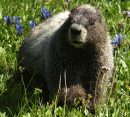
The moose example does not factor in hidden variables. An example of a hidden variable could be overpopulation. Perhaps the size of moose antlers is fine tuned to prevent overpopulation of the species, and halving the size of the antlers would result in too many moose surviving wolf attacks. This in turn would result in more wolves dying of starvation, causing a snowball effect. The seemingly perfect top-down approach would result in a catastrophe in this case.
The example of ice hockey players not wearing helmets does not factor in risk. Even if you ignore the fact that no ice hockey player in their right mind would play without a helmet, there are still economic risks involved. Not wearing helmets increases the risk of having to forfeit the match due to injury, which costs the team money. It increases the risk of players becoming permanently injured such that they can never again play ice hockey, resulting in costs for the individual player as well as the team, which must invest time and resources into finding a new player. Furthermore, you can apply the same argument to combat sports. If both contestants wear gloves, helmets, body armour, etc., then it should not (theoretically) confer an advantage to either contestant, and it provides a greater degree of safety. Why, then, does the UFC exist? Because it provides greater entertainment value, and the contestants are making the decision (of their own free will) to take a greater risk in order to reap the better rewards. Just as police and deep sea fishermen take up their occupation knowing full well the risks involved.
I would like to continue, but I am incredibly tired and it will probably affect my ability to make a coherent argument.