
Emergence of a Deadly Coronavirus



 15 Mar 2020, 10:52 am

Look at the timeline.It ramped up when it warmed up.
https://en.m.wikipedia.org/wiki/2009_fl ... c_timeline
_________________
I am the dust that dances in the light. - Rumi
ASPartOfMe
Veteran


Joined: 25 Aug 2013
Age: 68
Gender: Male
Posts: 39,637
Location: Long Island, New York
15 Mar 2020, 10:55 am
Warm weather and especially high humidity will sharply curtail most flu and virus type illnesses but not all. Manilla is in lockdown and Brazil has an outbreak also both hot and humid places.
This is a new variation of coronavirus. We have to let this play out before jumping to conclusions and we must try and avoid correlation implying causation conclusions. We won’t know for sure until after post pandemic studies are done.
_________________
“Self Acceptance is a process not a performance”
“You are autistic enough. And you always have been”
Professionally Identified and joined WP August 26, 2013
DSM 5: Autism Spectrum Disorder, DSM IV: Aspergers Moderate Severity.
 15 Mar 2020, 11:00 am
The other thing that needs to be factored in is the change in the way people live and work. In many countries people do not seal them up inside houses. They let the fresh air circulate within their homes and businesses constantly. I suspect most of the countryside in Vietnam and southeast Asia is an example. The fresh air is air that has been exposed to the outdoors. Sunlight has a way of destroying these viruses. So constant replacement of fresh air reduces the viral load within houses and buildings.
_________________
Author of Practical Preparations for a Coronavirus Pandemic.
A very unique plan. As Dr. Paul Thompson wrote, "This is the very best paper on the virus I have ever seen."
 15 Mar 2020, 11:11 am
https://en.m.wikipedia.org/wiki/2009_fl ... c_timeline
Warmed up? I'm in the UK. It won't warm up till July ...
 15 Mar 2020, 11:17 am
With there being no Vaccine for older people and people with compromised immune systems it has to the potential to be devastating on the older population
If you are to believe the data out of china the death rate per age group is the following
10-19 0.2%
20-29 0.2%
30-39 0.2%
40-49 0.4%
50-59 1.3%
60-69 3.6%
70-79 8.0%
80+ 14.8%
_________________
Freedom is the sovereign right of every American. Death is a preferable alternative to communism
Democracy is freedom, Communism is tyranny
Last edited by Brehus on 15 Mar 2020, 11:21 am, edited 1 time in total.
15 Mar 2020, 11:18 am
https://en.m.wikipedia.org/wiki/2009_fl ... c_timeline
Warmed up? I'm in the UK. It won't warm up till July ...
It was 81 here the other day then it turned back chilly in the 40’s.
Who knows what this virus will do.We can only hope it doesn’t like it hot.
_________________
I am the dust that dances in the light. - Rumi
15 Mar 2020, 11:25 am
https://en.m.wikipedia.org/wiki/2009_fl ... c_timeline
Warmed up? I'm in the UK. It won't warm up till July ...
It was 81 here the other day then it turned back chilly in the 40’s.
Who knows what this virus will do.We can only hope it doesn’t like it hot.
I have to question if the humidity issue Jimmy mentioned is more relevant. As far as temperature goes, I would question how viruses compare to what I learned about food safety. As far as I know, all food borne illnesses have to be above one hundred forty degrees F or below forty F to make an impact
15 Mar 2020, 11:39 am
https://en.m.wikipedia.org/wiki/2009_fl ... c_timeline
Warmed up? I'm in the UK. It won't warm up till July ...
It was 81 here the other day then it turned back chilly in the 40’s.
Who knows what this virus will do.We can only hope it doesn’t like it hot.
I have to question if the humidity issue Jimmy mentioned is more relevant. As far as temperature goes, I would question how viruses compare to what I learned about food safety. As far as I know, all food borne illnesses have to be above one hundred forty degrees F or below forty F to make an impact
It’s really humid here in the summer and it didn’t stop the swine flu.The average summer humidity is 72 %to 88 %.Sometimes more after a rain,as in 100%.
_________________
I am the dust that dances in the light. - Rumi
The_Face_of_Boo
Veteran

Joined: 16 Jun 2010
Age: 44
Gender: Non-binary
Posts: 33,669
Location: Beirut, Lebanon.
15 Mar 2020, 11:44 am
https://en.m.wikipedia.org/wiki/2009_fl ... c_timeline
Warmed up? I'm in the UK. It won't warm up till July ...
It was 81 here the other day then it turned back chilly in the 40’s.
Who knows what this virus will do.We can only hope it doesn’t like it hot.
I have to question if the humidity issue Jimmy mentioned is more relevant. As far as temperature goes, I would question how viruses compare to what I learned about food safety. As far as I know, all food borne illnesses have to be above one hundred forty degrees F or below forty F to make an impact
It’s really humid here in the summer and it didn’t stop the swine flu.The average summer humidity is 72 %to 88 %.Sometimes more after a rain,as in 100%.
Look at the chart Jimmy posted, it shows how too humid can be just as bad as too dry.
15 Mar 2020, 11:51 am
Several weeks ago I purchased an specific air cleaner in preparation for the coronavirus pandemic. It was an OION Technologies B-1000. I put it in my bedroom and have been running it constantly for around 1 1/2 weeks now. So I thought I would give my impressions about the unit.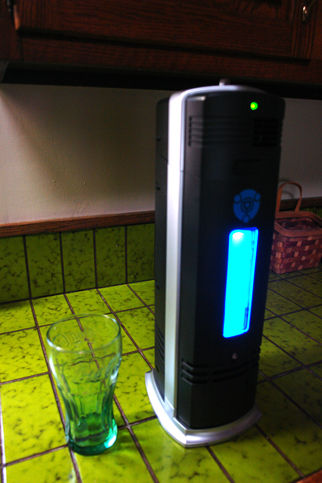
The main reason why I purchased the unit was to destroy coronaviruses free floating in the air. Far Ultraviolet (UVC) radiation destroys viruses and bacteria. In a low humidity environment viruses can dry out and become airborne. It doesn't kill them. These lightweight small particles can become airborne, someone can breathe in the virus into their throats where they can become attached and these viruses will rehydrated and infect a person. So my main objective was to buy a unit that has a UV-C sanitizer. The closest I stumbled across was this unit. It is pretty bare bones. The unit includes an electrostatic collecting, ozone filter and activated carbon filter, powerful UV lamp and a negative ionizer.
So my impressions:
1. The unit is eliminating free floating particles from the air. I had asthma for most of my life and have a high sensitivity. I have observed the air is dramatically cleaner.
2. Another strange observation is that the room felt a little colder than normal. [This observation makes a little sense because free floating particles in the air can act like a thermal insulator. But I suspect that the effect is so small that no one could actually feel it.]
3. This unit was whisper quiet. This is conducive with sleeping. Many years ago I had a HEPA air filter. The motor was larger because it was forcing air though a constricted thick filter. It was noisy, made sleep difficult and produced a musky odor that I found annoying so I packed it up and put it into storage in the pole barn.
4. The air coming out of the unit had a freshness and crispness to it. Sort of like the air you get in the middle of winter after a fresh snowfall. Not exactly the same but close.
5. So I have found that I was able to get a better nights sleep with the unit. It is reducing the free floating particles from the air. It made the air purer so I could breath better during the night. It makes it easier to breath.
So I am giving it a thumbs up. I cannot confirm that it is effectively killing the viruses because viruses are incredibly small critters. But if the unit was designed properly, it would be very effective at that task. But for any Aspies who find it very difficult to get a restful sleep at night or those who suffer from Asthma, I suspect you would find a great benefit with this type of air purifier.
_________________
Author of Practical Preparations for a Coronavirus Pandemic.
A very unique plan. As Dr. Paul Thompson wrote, "This is the very best paper on the virus I have ever seen."
 15 Mar 2020, 11:56 am

There was a survey in Taiwan as to which country has handled the epidemic most efficiently. The unanimous consensus was it was North Korea. Taiwan could only claim the number 2 spot.
That means North Korea is killing infected people then, right?
 15 Mar 2020, 12:00 pm
There was a survey in Taiwan as to which country has handled the epidemic most efficiently. The unanimous consensus was it was North Korea. Taiwan could only claim the number 2 spot.
That means North Korea is killing infected people then, right?
No doubt, it prevents spreading of the infection.
_________________
Let's not confuse being normal with being mentally healthy.
<not moderating PPR stuff concerning East Europe>
15 Mar 2020, 12:02 pm
You may find the following article a good read: This Inexpensive Action Lowers Hospital Infections And Protects Against Flu Season
_______________________________
I noticed that the Forbes website is not downloading the link properly. Since this was an important article, I thought it might be beneficial to include some of it here:
Harvard Medical School graduate and lecturer, Stephanie Taylor, is something of an Indiana Jones of medicine. She’s a determined scientist who can’t seem to sit still. Along with a resume full of accolades and publications, she’s a skydiver with 1,200 jumps. She solves haunting medical mysteries. “Anything that seems scary, I say I need to learn more about that,” she explained in a recent interview.
While practicing pediatric oncology at a major teaching hospital, Taylor wondered why so many of her young patients came down with infections and the flu, despite the hospital’s herculean efforts at prevention. Her hunch: the design and infrastructure of the building contributed somehow.
Dr. Taylor embarked on a quest to find out if she was right. First, the skydiving doctor made a career jump: She went back to school for a master's in architecture, and then began research on the impact of the built environment on human health and infection. Ultimately, she found a lost ark.
She and colleagues studied 370 patients in one unit of a hospital to try to isolate the factors associated with patient infections. They tested and retested 8 million data points controlling for every variable they could think of to explain the likelihood of infection. Was it hand hygiene, fragility of the patients, or room cleaning procedures? Taylor thought it might have something to do with the number of visitors to the patient’s room.
While all those factors had modest influence, one factor stood out above them all, and it shocked the research team. The one factor most associated with infection was (drum roll): dry air. At low relative humidity, indoor air was strongly associated with higher infection rates. “When we dry the air out, droplets and skin flakes carrying viruses and bacteria are launched into the air, traveling far and over long periods of time. The microbes that survive this launching tend to be the ones that cause healthcare-associated infections,” said Taylor. “Even worse, in addition to this increased exposure to infectious particles, the dry air also harms our natural immune barriers which protect us from infections."
Since that study was published, there is now more research in peer-reviewed literature observing a link between dry air and viral infections, such as the flu, colds and measles, as well as many bacterial infections, and the National Institutes of Health (NIH) is funding more research. Taylor finds one of the most interesting studies from a team at the Mayo Clinic, which humidified half of the classrooms in a preschool and left the other half alone over three months during the winter. Influenza-related absenteeism in the humidified classrooms was two-thirds lower than in the standard classrooms—a dramatic difference. Taylor says this study is important because its design included a control group: the half of classrooms without humidity-related intervention.
Scientists attribute the influence of dry air to a new understanding about the behavior of airborne particles, or “infectious aerosol transmissions.” They used to assume the microbes in desiccated droplets were dead, but advances in the past several years changed that thinking. “With new genetic analysis tools, we are finding out that most of the microbes are not dead at all. They are simply dormant while waiting for a source of rehydration,” Taylor explained. “Humans are an ideal source of hydration, since we are basically 60% water. When a tiny infectious particle lands on or in a patient, the pathogen rehydrates and begins the infectious cycle all over again.”
These findings are especially important for hospitals and other health settings, because dry air is also associated with antibiotic resistance, which can devastate whole patient populations. Scientists now believe resistant organisms do not develop only along the Darwinian trajectory, where mutated bacteria produce a new generation of similarly mutated offspring that can survive existing antibiotics. Resistant pathogens in infectious aerosols do not need to wait for the next generation, they can instantly share their resistant genes directly through a process called horizontal gene transfer.
According to her research, and subsequent studies in the medical literature, the “sweet spot” for indoor air is between 40% and 60% relative humidity. An instrument called a hygrometer, available for about $10, will measure it. Every hospital, school, and home should have them, according to Taylor, along with a humidifier to adjust room hydration to the sweet spot.
Operating rooms, Taylor notes, are often kept cooler than other rooms to keep gown-wearing surgical staff comfortable. Cool air holds less water vapor than warm air, so condensation can more easily occur on cold, uninsulated surfaces. Consequently, building managers often turn humidifiers off instead of insulating cold surfaces. This quick fix can result in dry air, and Taylor urges hospitals to bring the operating room’s relative humidity up, even when it is necessary, to maintain a lower temperature. Taylor’s research suggests this reduces surgical site infections.
Taylor travels the country speaking with health care and business groups to urge adoption of the 40%–60% relative humidity standard. And she practices what she preaches. “My husband has ongoing respiratory problems and had at least one serious illness each winter. Ever since we started monitoring our indoor relative humidity and keeping it around 40%, even when using our wood stove, he has not been sick. Our dogs also love it because they do not get static electricity shocks when being petted in the wintertime!”
The bad news is that it takes on average of 17 years for scientific evidence to be put into medical practice, according to a classic study. The good news is that Taylor is on the case, and she’s on a crusade against the destruction of bacteria and viruses. She’s not waiting 17 years. Jock, start the engine.
_________________
Author of Practical Preparations for a Coronavirus Pandemic.
A very unique plan. As Dr. Paul Thompson wrote, "This is the very best paper on the virus I have ever seen."
Last edited by jimmy m on 15 Mar 2020, 4:06 pm, edited 1 time in total.
15 Mar 2020, 12:48 pm
https://en.m.wikipedia.org/wiki/2009_fl ... c_timeline
Warmed up? I'm in the UK. It won't warm up till July ...
It was 81 here the other day then it turned back chilly in the 40’s.
Who knows what this virus will do.We can only hope it doesn’t like it hot.
I have to question if the humidity issue Jimmy mentioned is more relevant. As far as temperature goes, I would question how viruses compare to what I learned about food safety. As far as I know, all food borne illnesses have to be above one hundred forty degrees F or below forty F to make an impact
It’s really humid here in the summer and it didn’t stop the swine flu.The average summer humidity is 72 %to 88 %.Sometimes more after a rain,as in 100%.
Look at the chart Jimmy posted, it shows how too humid can be just as bad as too dry.
It’s possible.But this is a new virus,who knows.That chart assumes it will behave similar to ones in the past. And humidity varies from day to day so there really isn’t anyway to control it outdoors,if we were in a drought it might only be 30% humidity.
The swine flu went all over,low humidity,high,it didn’t care.
_________________
I am the dust that dances in the light. - Rumi
 15 Mar 2020, 1:07 pm
https://www.nbcnews.com/politics/meet-the-press/fauci-americans-are-going-have-hunker-down-significantly-more-fight-n1159381?fbclid=IwAR2bdnLrABDIukIzcVlVKQaVkKWkVmaNobTFxHIz1uDRHeXCMRAkl76Bsxc
Sounding like Germany between 1933-1945.
_________________
Who’s better at math than a robot? They’re made of math!


