
Emergence of a Deadly Coronavirus



 17 Apr 2020, 12:31 pm

Death statistics in china jump by around 30% in one day.
Hmmmm.

Someone accidentally let a death get reported over there?
Saw some stuff online saying China is incinerating bodies before they’re even tallied up as C-19 deaths. A YouTube vid claimed they’re incinerating 30 bodies/day in each of many portable incinerators with many more of the machines on order.. which could be true or could be BS. I tend to believe a lot more people have died, and will die, of this in China than they’ll ever tell us.
China raised Wuhan’s coronavirus death toll by nearly 50 percent Friday following weeks of allegations that officials were underreporting the numbers to make the situation there look better than it actually was.
The city where the coronavirus outbreak is believed to have originated is now reporting 3,869 deaths after adding 1,290 to its previously-announced figure. Numbers of total cases in the city of 11 million were also raised by 325 to 50,333, accounting for about two-thirds of China’s total 82,367 announced cases.
Wuhan residents have been saying for weeks that the numbers coming out of the city didn’t add up.
For more than a week, seven large funeral homes that serve Wuhan reportedly had been handing out the cremated remains of about 500 people to their families every day.
"It can't be right ... because the incinerators have been working round the clock, so how can so few people have died," said Zhang, a Wuhan resident who only gave Radio Free Asia his last name. "They started distributing ashes and starting interment ceremonies on Monday."
There have also been claims of city officials paying off families in exchange for their silence. "There have been a lot of funerals in the past few days, and the authorities are handing out 3,000 yuan in hush money to families who get their loved ones remains laid to rest ahead of Qing Ming," Wuhan resident Chen Yaohui had said. "It's to stop them keeing (a traditional expression of grief); nobody's allowed to keen after [the festival] Qing Ming has passed."
Source: Chinese epicenter Wuhan raises number of virus dead by about 50 percent
_________________
Author of Practical Preparations for a Coronavirus Pandemic.
A very unique plan. As Dr. Paul Thompson wrote, "This is the very best paper on the virus I have ever seen."
17 Apr 2020, 12:54 pm
COVID-19, the disease that has caused the coronavirus pandemic, is a respiratory illness that has symptoms that can include fatigue, a persistent cough and fevers. However, researchers in Spain believe they have discovered another symptom —lesions on feet.
According to a statement from the Spanish General Council of Official Podiatrist Colleges, the lesions are described as similar to those seen with chickenpox and can largely be seen on the feet of children and adolescents. They have also been spotted on some adults.
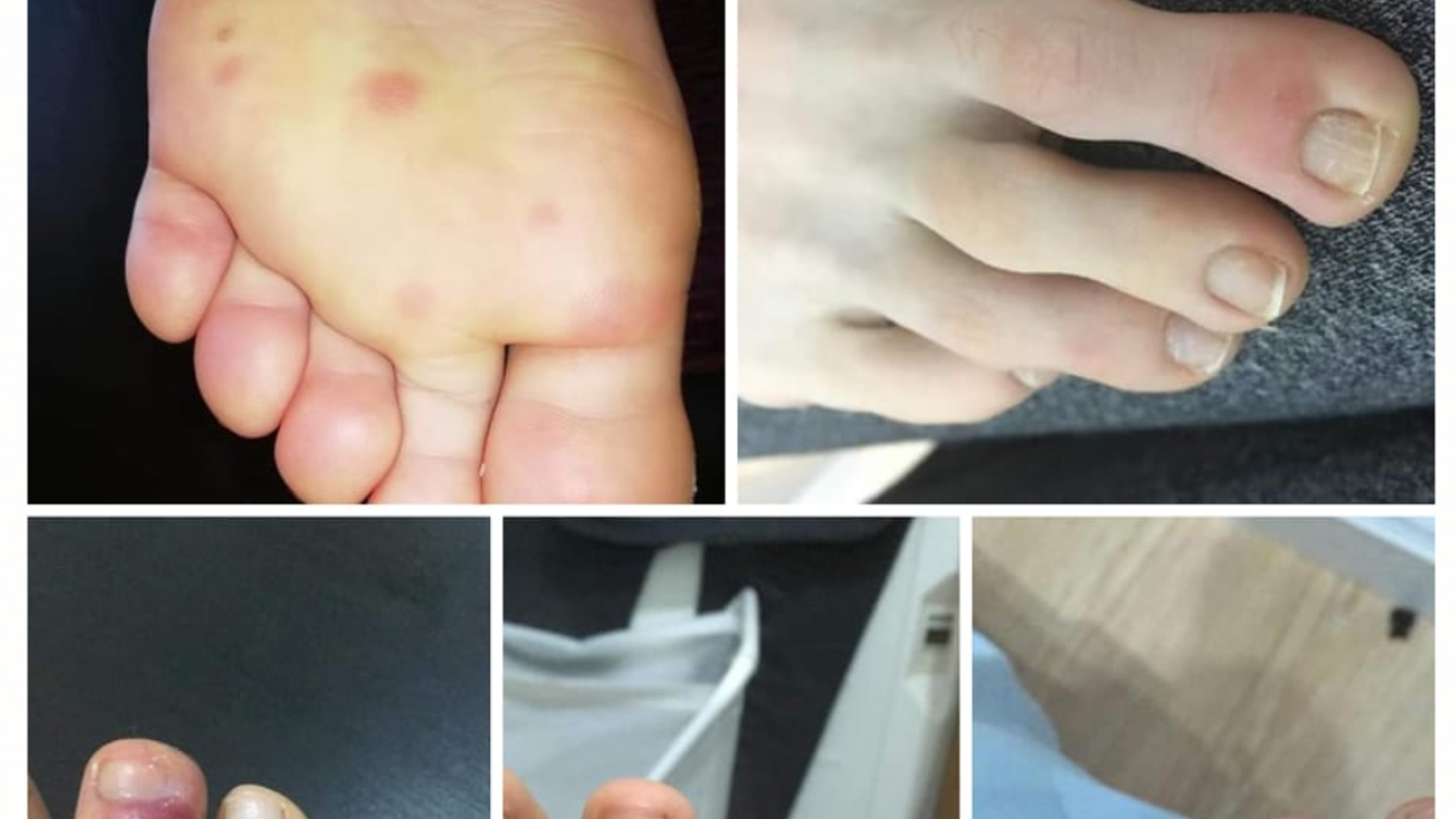
"These are purple-colored lesions (very similar to those of chickenpox, measles or chilblains) that usually appear around the toes and that usually heal without leaving marks on the skin."
Researchers discover new coronavirus symptoms: feet lesions
Ty for this. I wonder which of the 2 strains is spreading in my area, the European one or the Asian one (i seem to recall this was mentioned here before)
_________________
Take defeat as an urge to greater effort.
-Napoleon Hill
The_Face_of_Boo
Veteran


Joined: 16 Jun 2010
Age: 44
Gender: Non-binary
Posts: 33,664
Location: Beirut, Lebanon.
17 Apr 2020, 2:22 pm

Umm... this 21% death isn't scary? Why people focus on the 2-5% death rate (dead count divided by TOTAL number of cases, including active and closed cases), while, the above death rate should be really the main concern?
Am I missing something?
It starts out with 96% mild and 4% serious or critical. Of that 4% 79% recover and 21% die.

Those percentages have pretty much been a constant for the least couple of months
Nowhere they're saying that the closed cases are part of the 4% critical only, no; those who had mild condition yet survived or dead would also be counted in the closed cases.
The 4% critical are part of the ACTIVE cases, meaning people who are still sick.
Only 32% of the total cases had an outcome (surviving or dead) so far..
The way I am seeing it is the 96% mild cases were told to self isolate to let the virus resolve on its own (like Tom Hanks and his wife). The 4% serious or critical are the ones who were hospitalized. The 79% recovered/discharged are the 4% who were hospitalized who recovered and were discharged from the hospital.
Dude, the 4% serious cases are only around 56k, the 79% recovered are 557k, there's no way that the 79% figure is part of the 4%.
There should be no overlap between active and closed cases! Any case who's healed or dead, would subtracted from the left box and added to the right box! Tom Hanks and his wife are counted in the right box, not counted in the left box anymore.
17 Apr 2020, 2:48 pm
Canada is flattening the curve!
Of course you have people like my brother who refuses to wash his hands after coming inside,
or wear something to cover his mouth/nose when going grocery shopping which he does daily from boredom.
And my brothers don't care about disinfecting outside of grocery store items or being careful about washing in between touching the boxes, etc. I even gave them sanitizers which they never use, and disinfectant spray ons which they returned
I told him look you don't mind cross-dressing (as he wore a random fancy sequined skirt over his clothes to shop in South Asian shop, hoping for reactions-- apparently he got nothing HA)
so WHY on earth cant u go to our mom's closet, take out one of her many scarves and wrap it round?
but he's against it.
He's against anything that is rules or expectations.
If the rules said DON'T WEAR A FACE COVERING AT ALL COSTS, he would go and do that.

If I have it but the symptoms have yet to show, it's from visiting them yesterday or from the Wound care nurse coming and not wearing gloves etc though she works in a nursing home with CONFIRMED cases.
_________________
Take defeat as an urge to greater effort.
-Napoleon Hill
17 Apr 2020, 2:50 pm
Coronavirus antibody testing finds Bay Area infections may be 85 times higher than reported
A team of researchers in California found that the number of coronaviruses cases in one county may actually be up to 85 times higher than the what health officials have tallied, and say their data may help better estimate the virus’ true fatality rate.
Earlier this month, Stanford University-led researchers tested 3,330 adults and children in Santa Clara County, who were recruited using Facebook ads, for SARS-CoV-2 antibodies and found that the population prevalence of COVID-19 in Santa Clara ranged from 2.49 percent to 4.16 percent.
“The most important implication of these findings is that the number of infections is much greater than the reported number of cases,” the researchers wrote, in a yet-to-be peer-reviewed study. “Our data imply that, by April 1 (three days prior to the end of our survey) between 48,000 and 81,000 people had been infected in Santa Clara County. The reported number of confirmed positive cases in the county on April 1 was 956, 50-85-fold lower than the number of infectious predicted by this study.”
Asymptomatic carriers of coronavirus have long been a concern for health officials and others who are looking to get a grasp on how prevalent the virus is. The researchers also concluded that detecting previously unreported coronavirus cases could also lead to a “better estimation of the fatality rate from COVID-19.”
“Many estimates of fatality rate use a ratio of deaths to lagged cases (because of duration from case confirmation to death), with an infections-to-cases ratio in the 1-5 fold range as an estimate of under-ascertainment,” the researchers wrote. “Our study suggests that adjustments for under-ascertainment may need to be much higher.”
_________________
Author of Practical Preparations for a Coronavirus Pandemic.
A very unique plan. As Dr. Paul Thompson wrote, "This is the very best paper on the virus I have ever seen."

 17 Apr 2020, 3:16 pm
This is an interesting read, but I don't know how reliable the author is. I've never heard of her.
https://www.jillcarnahan.com/2020/04/16/emerging-theories-that-may-help-us-solve-the-covid-19-puzzle/
Consider these mysteries of COVID-19:
Patients are showing blood oxygen levels so low that they should be life-threatening, but without showing the typical signs of distress that are expected when the same levels are reached due to lung dysfunction.
1
Doctors are saying that ventilators aren’t working as well as they should be and may even be harming some people.
2
Many patients report a loss of taste and smell, typically associated with zinc deficiency, not respiratory disease.
Researchers have noted that the pathological mechanism that causes the damage to the body remains a mystery.
3
Twenty percent of COVID-19 patients have cardiac damage.
4
Fatality rates, even among places with robust testing in place, are wildly different.
These discrepancies have hinted at a new culprit as well as new possible solutions. So, should we be treating COVID-19 as a dysfunction of red blood cells rather than the lungs?
 17 Apr 2020, 3:21 pm
Early peek at data on Gilead coronavirus drug suggests patients are responding to treatment
A Chicago hospital treating severe Covid-19 patients with Gilead Sciences’ antiviral medicine remdesivir in a closely watched clinical trial is seeing rapid recoveries in fever and respiratory symptoms, with nearly all patients discharged in less than a week, STAT has learned.
Remdesivir was one of the first medicines identified as having the potential to impact SARS-CoV-2, the novel coronavirus that causes Covid-19, in lab tests. The entire world has been waiting for results from Gilead’s clinical trials, and positive results would likely lead to fast approvals by the Food and Drug Administration and other regulatory agencies. If safe and effective, it could become the first approved treatment against the disease.
https://www.statnews.com/2020/04/16/ear ... treatment/
_________________
There Are Four Lights!
goldfish21
Veteran
Joined: 17 Feb 2013
Age: 43
Gender: Male
Posts: 22,612
Location: Vancouver, BC, Canada
17 Apr 2020, 4:01 pm
Because obesity IS a health problem!! ! Aka pre-existing underlying condition.
FFS what is wrong with people that they don’t realize that obesity is a health problem that does in fact impact one’s immune system as well as cardiovascular health??
 Hell, it impacts a lot more, too. Musculoskeletal function and health.. etc.
_________________
No
 for supporting trump. Because doing so is deplorable.
ASPartOfMe
Veteran

Joined: 25 Aug 2013
Age: 68
Gender: Male
Posts: 39,637
Location: Long Island, New York
17 Apr 2020, 6:44 pm
What Does Covid-19 Do to Your Brain?
Doctors at Henry Ford tested the woman for Covid-19, and she came back positive. They also ordered CT and MRI scans. The images showed a brain aflame, its folds swelling against the patient’s skull. On the computer screen, white lesions dotted the gray cross-sectioned landscape—each one filled with dead and dying neurons in regions that normally relay sensory signals, regulate alertness, and access memories. On the screen they appeared white. But in the electrical grid of the patient’s brain, those areas had gone dark.
Her doctors diagnosed a dangerous condition called acute necrotizing hemorrhagic encephalopathy, or ANE, which they detailed in the journal Radiology last month. It’s a rare complication known to occasionally accompany influenza and other viral infections, though usually in children. With the flu, scientists believe such brain damage is caused not so much by the virus itself but by squalls of inflammation-inducing molecules called cytokines, which are sometimes produced in excess by the body’s immune system during an infection. Scientists are still trying to figure out if the same is true for Covid-19, or if the coronavirus called SARS-CoV-2 is actually invading the nervous system directly. It’s an open question, the answer to which could have wide-ranging implications for how doctors diagnose and treat Covid-19 patients.
By now you’re probably familiar with the typical hallmarks of Covid-19, the disease that has so far killed more than 125,000 people around the world: fever, cough, difficulty breathing. But stories of other, stranger symptoms—headaches, confusion, seizures, tingling and numbness, the loss of smell or taste—have been bubbling up from the frontlines for weeks. Published data on how frequently the disease manifests in these types of neurological symptoms is still sparse, and experts say they likely occur in a minority of the 2 million officially tallied Covid-19 infections worldwide. But for physicians, they are important because some of these new symptoms may require a different line of treatment, one designed for the brain rather than the body.
THE FIRST REPORTS of Covid-19 affecting the central nervous system appeared on the preprint server medRxiv in late February, posted by neurologists in Wuhan, China, where the outbreak started. Analyzing health records from 214 patients admitted to the Union Hospital of Huazhong University of Science and Technology, the team found that 36.4 percent of those patients showed signs of nervous-system-related issues.
The most common symptoms they observed were muscle pain, headaches, dizziness, or confusion—which tend to manifest during any viral infection, especially in older people. A few patients experienced more distinct neurological syndromes, including strokes, prolonged seizure, and a disappearing sense of smell. In at least some of the patients, especially the ones with headaches, the neurological symptoms started days before a cough and fever set in.
The upshot? Doctors need to consider altered brain function as cause to test for SARS-CoV-2, in order to “avoid delayed diagnosis or misdiagnosis and prevention of transmission,” the authors wrote in a peer-reviewed version of the study published Friday in the journal JAMA Neurology. Failure to recognize these early warning signs could result in patients being discharged and unknowingly exposing others to the virus, they wrote.
“We’ve been telling people that the major complications of this new disease are pulmonary, but it appears there are a fair number of neurologic complications that patients and their physicians should be aware of,” says Josephson, who co-authored a commentary about the study that appeared alongside it in JAMA Neurology. Still, it shouldn’t come as a complete surprise that SARS-CoV-2 causes some neurological impairment, he says. Any serious viral infection is likely to affect the central nervous system, either through a direct infection or indirectly through inflammation caused by an immune system response. One of the study’s biggest limitations is that it can’t distinguish between those two possibilities.
That’s in part due to the realities of trying to document a new disease while being buried beneath the first wave of the outbreak. With hospitals in Wuhan overwhelmed by a crush of Covid-19 patients during the first half of February, doctors often had to rely on patients’ own descriptions of their symptoms. There was a lot they couldn’t do, like imaging people’s brains, measuring their nervous system activity, or looking for copies of the coronavirus in their spinal fluid. But that’s the kind of data that would help pinpoint what’s disrupting brain function for some Covid-19 patients.
In its absence, researchers are left to ponder the scant, incomplete, and conflicting evidence in case reports. Like this one, published March 21 in Cureus, a publishing platform modeled on Turbotax and aimed at making it easier for doctors to share notable patient profiles. A 74-year-old Dutch man with a history of chronic lung disease, Parkinson’s, and stroke shows up in a Boca Raton emergency room complaining of a cough and slight fever. Chest X-rays rule out pneumonia, and he gets sent home. Twenty-four hours later he’s back—only now he can no longer speak or make eye contact. Nose swabs prove he’s positive for Covid-19. Brain scans and a battery of tests on his spinal fluid come back clear, with no sign of infection. His doctors conclude that SARS-CoV-2 does not cross the blood-brain barrier to prey upon neurons.
Or this one, published April 3 in the International Journal of Infectious Diseases: A 24-year-old man living in central Japan with no travel history goes to the doctor with a headache, fever, and fatigue. He tests negative for the flu and goes home. Three days later he visits another clinic, looking for relief from his worsening headache and sore throat. Chest X-rays and blood tests don’t turn up anything. Four days later he is found unconscious, lying on the floor in his own vomit. In the ambulance on the way to the hospital he has seizures. CT scans show swelling in his brain. Health care workers swab the inside of his nose and throat, but tests for SARS-CoV-2 come back negative. They try again, this time with spinal fluid, and that’s where they find the virus. SARS-CoV-2 can invade the central nervous system, his doctors conclude.
If you were hoping the Detroit case would turn out to be some kind of anecdotal tie-breaker, prepare to be disappointed. Doctors at Henry Ford weren’t able to test the airline worker’s spinal fluid for SARS-CoV-2 because a botched lumbar puncture introduced blood into the sample. Despite not having proof of the virus in the patient’s central nervous system, the woman’s doctors concluded that her pattern of inflammation was consistent with a viral infection. “This may indicate the virus can invade the brain directly in rare circumstances,” Elissa Fory, a Ford Health neurologist who was involved with the patient’s diagnosis, told The New York Times.
Doctors in Baton Rouge also weren’t able to administer the test, but for a different reason. According to Asia Filatov, a neurology resident who was part of the team that treated the Dutch patient, there aren’t any good guidelines for detecting the virus in spinal fluid, which has to be handled differently than blood or nasal swabs. “We attempted to contact multiple labs and institutions across the US,” Filatov wrote in an email to WIRED. “Unfortunately, there is a lack of protocols and reagents available to run the test and most labs don’t have the capability.”
Josephson says that might change in the coming weeks and months as testing capacity continues to expand and demand for nasal swab testing goes down, especially in cities like San Francisco where Covid-19 cases are expected to peak this week. Wider availability of spinal fluid testing would enable doctors to more accurately document what’s going on inside Covid-19 patients’ bodies when they present with neurological symptoms. Without those kinds of datasets, there’s no way to know how to interpret reports on patients like the ones in Japan, Michigan, and Florida. “Single cases are tantalizing, but they can be fraught with coincidence,” says Josephson.
BUT IF SARS-COV-2 turns out to be a brain-invader, it wouldn’t shock Stanley Perlman, a microbiologist and infectious disease physician at the University of Iowa. During the 2003 SARS epidemic that killed 774 people, only a few dozen autopsies were ever performed. But in at least eight of them, pathologists found bits of the virus and its genome in the brain, in addition to the lungs, kidneys, digestive tract, and spleen. Perlman wanted to understand how that might happen. So he zoomed in on a receptor called ACE2, which SARS-CoV—the coronavirus that causes SARS—uses to enter human cells. In a 2008 study, Perlman and his colleagues genetically engineered mice to express that human receptor and then squirted a small dose of SARS-CoV into their noses. Rather than descending into their lungs, the virus climbed out of the nasal cavity and into their brains using olfactory neurons like rungs on a ladder.
Once in the brain, SARS-CoV spread rapidly, causing widespread nerve damage that led to the animals’ death. A few years later the scientists replicated the work with the coronavirus that causes MERS. In both studies, the virus showed a preference for neurons in certain areas, including the brainstem, which is involved in regulating involuntary respiration. And like it its genetic cousin, SARS-CoV-2 also uses ACE2 as a molecular doorway into human cells.
Despite Covid-19’s far more devastating death toll, not many autopsies are being done. And the few published examples have so far primarily examined victims’ lungs. But according to Perlman, researchers in China have peered inside the skulls of deceased Covid-19 patients, and discovered the coronavirus lurking in brain tissues. Those autopsy studies are not yet published, but Perlman says it’s the strongest data he’s seen to support the possibility that at least in severe cases, SARS-Cov-2 crosses the blood-brain barrier. “At this point, I’d say there’s a good chance that there’s some viral invasion of the brain,” he says.
But what intrigues Perlman most isn’t these severe cases in which the virus seems able to penetrate deep into the brain. It’s the mild cases in which it seems like it doesn’t; specifically, the cases in which people lose their sense of smell. Preliminary data suggests that this sudden olfactory deprivation happens in 30 to 50 percent of Covid-19 infections. Often, it’s one of the first symptoms to appear, suggesting SARS-CoV-2 might be latching onto and damaging smell-sensing cells inside the nose. These neurons reside in the olfactory bulbs, each one extending a branching, odorant receptor-covered arm into the nasal cavity, like the tentacles of a smell-hunting jellyfish. “Here you have this virus tugging away at the only central nervous system cells exposed to the exterior world. If there was going to be SARS-CoV-2 brain disease, you’d think this would be the group that has it,” says Perlman. “But there’s no evidence of that. These people lose their sense of smell and not much else. It’s very curious.”
No one yet knows exactly why this happens; why the virus seems to stop in the nose rather than climbing into their brains like in Perlman’s mice. But clues are emerging. New research has shown that in people that might not be possible, because human olfactory neurons don’t appear to express ACE2 at all, unlike Perlman’s lab-engineered animals.
two unrelated preprints posted earlier this month, researchers from the US, Switzerland, Italy, Belgium, and the UK mapped where in the respiratory tract and nasal passages the ACE2 receptor could be found. Both teams of scientists independently discovered these receptors on lots of different cell types, but importantly, not olfactory neurons. Their analyses suggest the virus could instead be infecting other cells in the nose. The group led by Harvard neurologists hypothesized that the point of invasion could be the cells that line capillaries and are involved in maintaining the blood-brain barrier. A team from the University of Geneva speculated that the virus could be targeting specialized life-support cells that surround olfactory neurons and help them survive. If either of those cell types got infected, it could temporarily impair or prevent olfactory neurons from interacting with odor molecules.
Verifying either mechanism will require studies of the living tissues inside Covid-19 patients’ noses. But, as Perlman points out, it will be hard to get people with otherwise mild symptoms to let doctors snip out little bits of their nasal passages for science. For most people, the swab used to test for the virus is more than enough nasal discomfort for one pandemic. Until more large-scale studies are conducted, doctors are still mostly on their own to figure out how to treat Covid-19 patients with neurological symptoms. For now, the best they can do is share their experiences to help others learn and adapt.
In Detroit, the Covid-19 patient who developed a rare form of encephalitis is now recovering in a rehabilitation facility. She was discharged last week. “I’m very cautiously optimistic that she will recover,” Fory said in a statement released by the hospital. The patient’s case, she said, highlights the need for physicians to expand the list of symptoms that should set off Covid-19 alarm bells. Look in the lungs, but don’t forget the brain.
A lot more then just the flu.
_________________
“Self Acceptance is a process not a performance”
“You are autistic enough. And you always have been”
Professionally Identified and joined WP August 26, 2013
DSM 5: Autism Spectrum Disorder, DSM IV: Aspergers Moderate Severity.
ASPartOfMe
Veteran
Joined: 25 Aug 2013
Age: 68
Gender: Male
Posts: 39,637
Location: Long Island, New York
17 Apr 2020, 6:57 pm
Get your results yet?
_________________
“Self Acceptance is a process not a performance”
“You are autistic enough. And you always have been”
Professionally Identified and joined WP August 26, 2013
DSM 5: Autism Spectrum Disorder, DSM IV: Aspergers Moderate Severity.
ASPartOfMe
Veteran
Joined: 25 Aug 2013
Age: 68
Gender: Male
Posts: 39,637
Location: Long Island, New York
17 Apr 2020, 7:22 pm
I took another test today.
Oh boy. Frustrating. At least whatever you had was mild.
_________________
“Self Acceptance is a process not a performance”
“You are autistic enough. And you always have been”
Professionally Identified and joined WP August 26, 2013
DSM 5: Autism Spectrum Disorder, DSM IV: Aspergers Moderate Severity.
 17 Apr 2020, 7:32 pm
Umm... this 21% death isn't scary? Why people focus on the 2-5% death rate (dead count divided by TOTAL number of cases, including active and closed cases), while, the above death rate should be really the main concern?
Am I missing something?
It starts out with 96% mild and 4% serious or critical. Of that 4% 79% recover and 21% die.
Those percentages have pretty much been a constant for the least couple of months
Nowhere they're saying that the closed cases are part of the 4% critical only, no; those who had mild condition yet survived or dead would also be counted in the closed cases.
The 4% critical are part of the ACTIVE cases, meaning people who are still sick.
Only 32% of the total cases had an outcome (surviving or dead) so far..
The way I am seeing it is the 96% mild cases were told to self isolate to let the virus resolve on its own (like Tom Hanks and his wife). The 4% serious or critical are the ones who were hospitalized. The 79% recovered/discharged are the 4% who were hospitalized who recovered and were discharged from the hospital.
Dude, the 4% serious cases are only around 56k, the 79% recovered are 557k, there's no way that the 79% figure is part of the 4%.
There should be no overlap between active and closed cases! Any case who's healed or dead, would subtracted from the left box and added to the right box! Tom Hanks and his wife are counted in the right box, not counted in the left box anymore.
The 56k is the current number. 705k is the total number. Of that 705k, 557k recovered.


