
Emergence of a Deadly Coronavirus



 27 Apr 2020, 10:42 pm

There's also underdiagnosis, because of the millions of people with no access to tests. Also as proven recently the virus doesn't always attack the airway, but often other organs. In those cases the people aren't often tested for C19.
_________________
I never give you my number, I only give you my situation.
Beatles
 27 Apr 2020, 11:30 pm
In an acute column published April 13, the New York Times’ Charlie Warzel listed 48 basic questions that remain unanswered about the coronavirus and what must be done to protect ourselves against it, from how deadly it is to how many people caught it and shrugged it off to how long immunity to the disease lasts after infection (if any time at all). “Despite the relentless, heroic work of doctors and scientists around the world,” he wrote, “there’s so much we don’t know.” The 48 questions he listed, he was careful to point out, did not represent a comprehensive list. And those are just the coronavirus’s “known unknowns.”
In the two weeks since, we’ve gotten some clarifying information on at least a handful of Warzel’s queries.
ut there is one big question that didn’t even make it onto Warzel’s list that has only gotten more mysterious in the weeks since: How is COVID-19 actually killing us?
We are now almost six months into this pandemic, which began in November in Wuhan, with 50,000 Americans dead and 200,000 more around the world. If each of those deaths is a data point, together they represent a quite large body of evidence from which to form a clear picture of the pandemic threat. Early in the epidemic, the coronavirus was seen as a variant of a familiar family of disease, not a mysterious ailment, however infectious and concerning. But while uncertainties at the population level confuse and frustrate public-health officials, unsure when and in what form to shift gears out of lockdowns, the disease has proved just as mercurial at the clinical level, with doctors revising their understanding of COVID-19’s basic pattern and weaponry — indeed often revising that understanding in different directions at once. The clinical shape of the disease, long presumed to be a relatively predictable respiratory infection, is getting less clear by the week. Lately, it seems, by the day. As Carl Zimmer, probably the country’s most respected science journalist, asked virologists in a tweet last week, “is there any other virus out there that is this weird in terms of its range of symptoms?”
ou probably have a sense of the range of common symptoms, and a sense that the range isn’t that weird: fever, dry cough, and shortness of breath have been, since the beginning of the outbreak, the familiar, oft-repeated group of tell-tale signs. But while the CDC does list fever as the top symptom of COVID-19, so confidently that for weeks patients were turned away from testing sites if they didn’t have an elevated temperature, according to the Journal of the American Medical Association, as many as 70 percent of patients sick enough to be admitted to New York State’s largest hospital system did not have a fever.
Over the past few months, Boston’s Brigham and Women’s Hospital has been compiling and revising, in real time, treatment guidelines for COVID-19 which have become a trusted clearinghouse of best-practices information for doctors throughout the country. According to those guidelines, as few as 44 percent of coronavirus patients presented with a fever (though, in their meta-analysis, the uncertainty is quite high, with a range of 44 to 94 percent). Cough is more common, according to Brigham and Women’s, with between 68 percent and 83 percent of patients presenting with some cough — though that means as many as three in ten sick enough to be hospitalized won’t be coughing. As for shortness of breath, the Brigham and Women’s estimate runs as low as 11 percent. The high end is only 40 percent, which would still mean that more patients hospitalized for COVID-19 do not have shortness of breath than do. At the low end of that range, shortness of breath would be roughly as common among COVID-19 patients as confusion (9 percent), headache (8 to 14 percent), and nausea and diarrhea (3 to 17 percent). That the ranges are so wide themselves tells you that the disease is presenting in very different ways in different hospitals and different populations of different patients — leading, for instance, some doctors and scientists to theorize the virus might be attacking the immune system like HIV does, with many others finding the disease is triggering something like the opposite response, an overwhelming overreaction of the immune system called a “cytokine storm.”
The most bedeviling confusion has arisen around the relationship of the disease to breathing, lung function, and oxygenation levels in the blood — typically, for a respiratory illness, a quite predictable relationship. But for weeks now, front-line doctors have been expressing confusion that so many coronavirus patients were registering lethally low blood-oxygenation levels while still appearing, by almost any vernacular measure, pretty okay. It’s one reason they’ve begun rethinking the initial clinical focus on ventilators, which are generally recommended when patients oxygenation falls below a certain level, but seemed, after a few weeks, of unclear benefit to COVID-19 patients, who may have done better, doctors began to suggest, on lesser or different forms of oxygen support. For a while, ventilators were seen so much as the essential tool in treating life-threatening coronavirus that shortages (and the president’s unwillingness to invoke the Defense Production Act to manufacture them quickly) became a scandal. But by one measure 88 percent of New York patients put on ventilators, for whom an outcome as known, had died. In China, the figure was 86 percent.
But for weeks now, front-line doctors have been expressing confusion that so many coronavirus patients were registering lethally low blood-oxygenation levels while still appearing, by almost any vernacular measure, pretty okay.
On April 20 in the New York Times, an ER doctor named Richard Levitan who had been volunteering at Bellevue proposed that the phenomenon of seemingly stable patients registering lethally low oxygen levels might be explained by “silent hypoxia” — the air sacs in the lung collapsing, not getting stiff or heavy with fluid, as is the case with the pneumonias doctors had been using as models in their treatment of COVID-19. But whether this explanation is universal, limited to the patients at Bellevue, or somewhere in between is not yet entirely clear. A couple of days later, in a pre-print paper others questioned, scientists reported finding that the ability of the disease to mutate has been “vastly underestimated” — investigating the disease as it appeared in just 11 patients, they said they found 30 mutations. “The most aggressive strains could generate 270 times as much viral load as the weakest type,” the South China Morning-Post reported. “These strains also killed the cells the fastest.”
That same day, the Washington Post reported on another theory gaining traction among American doctors treating the disease — that one key could be the way COVID-19 affects the blood of patients, producing much more clotting. “Autopsies have shown that some people’s lungs are filled with hundreds of microclots,” the Post reported. “Errant blood clots of a larger size can break off and travel to the brain or heart, causing a stroke or a heart attack.”
But the bigger-picture perspective the newspaper offered is perhaps more eye-opening and to the point:
One month ago, as the country went into lockdown to prepare for the first wave of coronavirus cases, many doctors felt confident that they knew what they were dealing with. Based on early reports, covid-19 appeared to be a standard variety respiratory virus, albeit a very contagious and lethal one with no vaccine and no treatment. But they’ve since become increasingly convinced that covid-19 attacks not only the lungs, but also the kidneys, heart, intestines, liver and brain.
“Despite the more than 1,000 papers now spilling into journals and onto preprint servers every week,” Science concluded, “a clear picture is elusive, as the virus acts like no pathogen humanity has ever seen.”
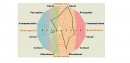
In a single illuminating chart, Science lists the following organs as being vulnerable to COVID-19: brain, eyes, nose, lungs, heart, blood vessels, livers, kidneys, intestines. That is to say, nearly every organ:
On April 15, the Washington Post reported that, in New York and Wuhan, between 14 and 30 percent of ICU patients had lost kidney function, requiring dialysis. New York hospitals were treating so much kidney failure “they need more personnel who can perform dialysis and have issued an urgent call for volunteers from other parts of the country. They also are running dangerously short of the sterile fluids used to deliver that therapy.” The result, the Post said, was rationed care: patients needing 24-hour support getting considerably less. On Saturday, the paper reported that “[y]oung and middle-aged people, barely sick with COVID-19, are dying from strokes.” Many of the patients described didn’t even know they were sick.
It’s not unheard of, of course, for a disease to express itself in complicated or hard-to-parse ways, attacking or undermining the functioning of a variety of organs. And it’s common, as researchers and doctors scramble to map the shape of a new disease, for their understanding to evolve quite quickly. But the degree to which doctors and scientists are, still, feeling their way, as though blindfolded, toward a true picture of the disease cautions against any sense that things have stabilized, given that our knowledge of the disease hasn’t even stabilized. Perhaps more importantly, it’s a reminder that the coronavirus pandemic is not just a public-health crisis but a scientific one as well. And that as deep as it may feel we are into the coronavirus, with tens of thousands dead and literally billions in precautionary lockdown, we are still in the very early stages, when each new finding seems as likely to cloud or complicate our understanding of the coronavirus as it is to clarify it. Instead, confidence gives way to uncertainty.
In the space of a few months, we’ve gone from thinking there was no “asymptomatic transmission” to believing it accounts for perhaps half or more of all cases, from thinking the young were invulnerable to thinking they were just somewhat less vulnerable, from believing masks were unnecessary to requiring their use at all times outside the house, from panicking about ventilator shortages to deploying pregnancy massage pillows instead. Six months since patient zero, we still have no drugs proven to even help treat the disease. Almost certainly, we are past the “Rare Cancer Seen in 41 Homosexuals” stage of this pandemic. But how far past?
Bolding and italics = mine
Terrifying stuff.
And this is why I can't dismiss out of hand the conspiracy theories that got out of a lab or is a bioweapon.
Unbelievable. The most broadly damaging and contagious virus yet known to humanity? Of entirely natural origin? I've always had my doubts of that and still do very much.
27 Apr 2020, 11:59 pm
I feel COVID19 can be virulent and quite
severe in way too many cases, though still a strong minority.
It seems to behave like regular flu for the majority of sufferers
....but, if one has the bad luck of having an extreme immune response, plus having the bad luck of having bodily conditions which are suitable for the aggressive penetration of this virus, a much more severe illness ensues, which can affect multiple bodily systems.
 28 Apr 2020, 12:06 am
like envirozentinel i think there's overreaction and overdiagnosis going on
all i have to do is look things up
"The flu, which is a viral infection, can cause secondary complications such as sepsis. ... These infections can cause a chain reaction in your body, causing tissue damage, organ failure, and even death."

 28 Apr 2020, 5:12 am
severe in way too many cases, though still a strong minority.
It seems to behave like regular flu for the majority of sufferers
....but, if one has the bad luck of having an extreme immune response, plus having the bad luck of having bodily conditions which are suitable for the aggressive penetration of this virus, a much more severe illness ensues, which can affect multiple bodily systems.
The point is, Covid19 is still much less understood than flu or common pneumonia.
Science works but it works slowly.
The researchers need more time to figure out more successful treatments for severe cases. Current standards for viral pneumonia seem not really well fitted to the novel virus but there is nothing else we have at the moment.
If you're unlucky to be the severe case, the later you catch it, the better - the medical staff has more chances to know how to save you.
_________________
Let's not confuse being normal with being mentally healthy.
<not moderating PPR stuff concerning East Europe>
 28 Apr 2020, 5:16 am
 28 Apr 2020, 9:27 am
ASPartOfMe
Veteran


Joined: 25 Aug 2013
Age: 68
Gender: Male
Posts: 39,637
Location: Long Island, New York
28 Apr 2020, 10:16 am
We Still Don’t Know How the Coronavirus Is Killing Us
I believe the current Covid19 tests only detect the virus if it happens to be in the nasopharyngeal / oropharyngeal area at that precise time, and the swab happens to hit the exact area of infection. I'm sure many people have the virus ingested through the digestive system rather than the airway, or likewise it enters the eyes directly into the bloodstream / brain. I wish they would increase the scope of tests to include people who have atypical presentation to avoid false negatives. Thousands of deaths by kidney failure, heart attack, stroke, and other non-respiratory afflictions have failed to be counted in the fatality tallies, because our current method of testing is respiratory-specific. I wish they would invent blood or endoscopic tests for people with unusual symptoms, not to find antibodies but to identify the virus as it manifests.
One thing not in the article is there any disease where 40 to 50 percent of the people test positive with no symptoms?
A comforting thought is that is acting typically so far in that it has gone through an exponential growth, peaks, social distancing and lock downs seem to mitigate it, and then it goes down. That said you can’t have too much faith in modeling, you can’t have too much faith it will continue to act typically, and as noted above you can’t have too much faith in the number of cases and death figures, and thus have any faith that any policy choices will work or that the policies that do work were the result of the policies. The economy vs death arguments seem pointless with such lack of understanding. One can hope it acts untypically by disappearing for unknown reasons.
_________________
“Self Acceptance is a process not a performance”
“You are autistic enough. And you always have been”
Professionally Identified and joined WP August 26, 2013
DSM 5: Autism Spectrum Disorder, DSM IV: Aspergers Moderate Severity.
 28 Apr 2020, 1:19 pm
My family in Ga said even though many buisnesses in Ga have opened back up now so far the buisnesses are not seeing much in the way of customers yet.
Fox news said in the recent survey 80% of the people in the USA are concerned about states opening back up too soon.
The way I see it if we open up somethings we can let the 20% who think the virus is overrated or fake be our Guinea Pigs so we can so were we really are at.
_________________
Freedom is the sovereign right of every American. Death is a preferable alternative to communism
Democracy is freedom, Communism is tyranny
28 Apr 2020, 1:31 pm
Yes.
It makes sense that even though businesses might be opening back up they're not seeing the customer base they had pre-virus. With the virus still being a very active and highly communicable disease who would want to go back to eating in restaurants? You can't eat with a mask on.
Personally, from the things I've read with the disease being aerosolized and transmittable from breath alone, I don't think having people spaced 6 feet apart does much of anything in a space dense with people. If there is no reliable cure or preventative vaccine found, I won't be returning to restaurants or any other place where many people congregate, period.
28 Apr 2020, 1:42 pm
I remember back in the early days of this pandemic as the TSA tried to impose screening test at airports to keep the coronavirus out. Many times one would see an agent with a handheld infrared thermometer taking travelers forehead temperatures. But there were people who were asymptomatic, they showed no symptoms, they had no fever, but they were infected and able to pass the disease onto others. Thus the U.S. even though it tried to build a firewall against the disease was unable.
Now we know that one of the symptoms of the coronavirus is "silent hypoxia", people with blood oxygen saturation levels that are very low but who aren't gasping for breath. These are mostly young healthy people who are the carriers. It sounds very similar to those who have "walking pneumonia". So maybe this is the key to understanding the "asymptomatic" population.
If you can identify a symptom of the asymptomatic, those that do not have fevers, then one can test for the condition. One can identify and screen the asymptomatic travelers.
So picture at the checkpoint of the airports, that not only do they take your forehead temperature, but they hook up a pulse oximeter to your finger for a few seconds and screen you for "silent hypoxia".
THAT'S A WINNER!
As a non scientist I think it sounds like a great idea.
_________________
Take defeat as an urge to greater effort.
-Napoleon Hill


