
Emergence of a Deadly Coronavirus


ASPartOfMe
Veteran


Joined: 25 Aug 2013
Age: 68
Gender: Male
Posts: 39,637
Location: Long Island, New York
 25 Dec 2020, 12:01 pm

Two new medical studies suggest that people who are infected once with COVID-19 are very unlikely to test positive again for up to six months and possibly longer.
One study, published Wednesday by the New England Journal of Medicine, involved more than 12,500 health workers at Oxford University Hospitals in the United Kingdom. Among the 1,265 who had coronavirus antibodies at the outset, only two had positive results on tests to detect active infection in the following six months and neither developed symptoms. That contrasts with the 11,364 workers who initially did not have antibodies; 223 of them tested positive for infection in the roughly six months that followed.
The National Cancer Institute study involved more than 3 million people who had antibody tests from two private labs in the United States. Less than 1% of those who initially had antibodies later tested positive for the coronavirus, compared with 3% of those who lacked such antibodies.
Infectious disease specialist Joshua Wolf said the findings were "not a surprise" but were reassuring because "it tells people that immunity to the virus is common."
The way it looks now the vaccines in the US will become available for most people in spring or early summer. It is very possible that the vaccine will be wearing off or worn off during peak aerosol infection wintertime. That is why we vaccinate for flu during the fall.
Already even on WP anybody whom would wait and see are assumed to be anti-vaxxers who are going to recklessly kill people and unnecessarily hamstring economic recovery. If you choose to not get vaccinated once the vaccine is readily available you should social distance, mask up to a degree even more then you do now because most will not be doing those things and celebrating their return to “normalcy” or whatever can be recalibrated. It is possible especially in blue states that those that refuse to vaccinate will have their children barred from school and themselves barred from employment and certain locations. The bright side is that getting vaccinated in the fall should be much easier then in the spring because those who are going to get vaccinated would have done so by that point.
IMHO anti vaxxers deserve those consequences. Waiting for above stated reason is not being anti vaxx. Also, by the spring/early summer if there are any unexpectedly wide bad side effect they would have probably happened already, no need to wait and see any further.
If you choose to wait in the hope of being more immune during the cold weather months further self denial and ostracism from others would only be a temporary thing, a matter of three to at most six months before you can return to whatever part of your 2019 life you wish to return too. Thing is your intentional self denial(and maybe denying family and friends social things with you that most others are back to doing) will be based on an educated guess, an assumption that both the coronavirus and the vaccines will act in a similar manner to many other other diseases and vaccines. While the coronavirus is acting in a similar manner to other “winter ailments” we don’t really know, and we have no bloody clue about the vaccines. And that there are multiple vaccines increases uncertainty. For that reason it is going to be hard to resist getting vaccinated as soon as it becomes available for me despite my brain saying I am giving in to emotion, being illogical and despite my 2019 life being less different from my current life then for the vast majority of others.
_________________
“Self Acceptance is a process not a performance”
“You are autistic enough. And you always have been”
Professionally Identified and joined WP August 26, 2013
DSM 5: Autism Spectrum Disorder, DSM IV: Aspergers Moderate Severity.
ASPartOfMe
Veteran
Joined: 25 Aug 2013
Age: 68
Gender: Male
Posts: 39,637
Location: Long Island, New York
25 Dec 2020, 4:22 pm
L.A. County hospitals running dangerously low on oxygen, supplies as ER units are overwhelmed
There are now so many patients that some hospitals are running dangerously low on oxygen and other supplies critical to treating those with COVID-19.
Patients are waiting as many as eight hours in ambulances before they can enter the emergency room. With intensive care units at 0% available capacity, health officials are urging that people avoid emergency rooms or dialing 911 for assistance unless absolutely necessary.
And in a grim reminder that the worst is still likely to come, one L.A. County health official has asked providers to reach out to patients who have serious illnesses or are medically frail to review their advanced-care directives and ensure forms are on file detailing their end-of-life care.
On Thursday, L.A. County saw its most-ever COVID-19 deaths in a single day: 140.
As the coronavirus continues to spread widely and send unprecedented numbers of Angelenos to the hospital, hospitals in L.A. County are running dangerously low on their supplies of oxygen, a person familiar with the matter told The Times.
Many patients instead receive a high-flow oxygen treatment, where oxygen is sent through plastic tubes placed in the nose.
And the need for that assistance is high. While a non-COVID patient may receive six liters of oxygen per minute, COVID-19 patients need 60 to 80 liters a minute.
So now, hospitals need 10 times more oxygen than they did before. There have been periods of time where hospitals have run dangerously low on their stores of oxygen before obtaining additional supplies, said the source, who spoke on the condition of anonymity.
Hospitals are also running short of other key supplies, such as the special plastic tubes used to bring the oxygen into the lungs.
Balter asked providers to talk to patients with ongoing medical problems about when it was appropriate to visit the ER or call 911, and to do so only when it is a true emergency. She also encouraged the quick discharge of hospitalized patients to try to create as much space as possible on wards, citing a “steep increase” in COVID-19 cases and hospitalizations.
“There are very limited hospital and ICU beds available and emergency departments are strained to capacity,” Balter wrote.
There were about 6,700 coronavirus-positive patients hospitalized countywide on Wednesday, according to the latest state data, with 1,329 of them in the ICU. Those numbers have spiked by 85% and 62%, respectively, over the past two weeks.
Each day that the number of COVID-19 patients grows also increases the likelihood that more neurosurgery patients may have to wait for care or find it elsewhere, he said.
This puts doctors in the uncomfortable position of determining who receives the limited resources remaining at the hospital. A large brain tumor would probably be operated on immediately, he said, but surgery for a smaller, less dangerous one might be delayed.
Dr. Christina Ghaly, L.A. County’s health services director, forecast this week that nearly 7,000 more people might die from COVID-19 by the end of January if current trends continue. Already, the disease has killed 9,305 people countywide.
_________________
“Self Acceptance is a process not a performance”
“You are autistic enough. And you always have been”
Professionally Identified and joined WP August 26, 2013
DSM 5: Autism Spectrum Disorder, DSM IV: Aspergers Moderate Severity.
Andoras
Yellow-bellied Woodpecker


Joined: 19 Nov 2014
Age: 38
Gender: Male
Posts: 61
Location: Dunakeszi, Hungary
27 Dec 2020, 4:06 pm
December was a horrific month of Covid-19 unfortunetly January seems to be a nightmare continue:
https://edition.cnn.com/2020/12/27/heal ... index.html
 27 Dec 2020, 8:30 pm
The Oxford COVID-19 vaccine will be distributed across the U.K. starting January 4 if it is approved, according to a report by the Sunday Telegraph. The British government has set a goal of vaccinating two million people within two weeks of starting distribution. The plan includes doses from either the Oxford-AstraZeneca or Pfizer-BioNTech vaccines, according to the Telegraph.
Source: British government plans to approve Oxford vaccine, distribute starting Jan. 4
_________________
Author of Practical Preparations for a Coronavirus Pandemic.
A very unique plan. As Dr. Paul Thompson wrote, "This is the very best paper on the virus I have ever seen."
28 Dec 2020, 1:18 pm
Eight days ago on this threat, I noted that the 20 million doses of the vaccine administered in the U.S. by the end of December seemed a bit too optimistic:
The following article came out today:
Though figures from a federal COVID-19 vaccine-tracking system are likely underestimates plagued by reporting delays, the U.S. will probably still fall short of its original goal of 20 million individuals vaccinated against the novel coronavirus by the end of the year.
According to the tracker from the Centers for Disease Control and Prevention (CDC), nearly 2 million people have received the first jab in a two-dose regimen, and over 9.5 million doses, altogether, have been distributed to states.
"We’re going to distribute another 4.7 million this week, so by the end of this week, in the hands of the states [will be] over 15.5 million doses."
Source: US COVID-19 vaccinations likely to fall short of 20M end-of-year goal
So even though they missed their goals, these are really, really good numbers.
_________________
Author of Practical Preparations for a Coronavirus Pandemic.
A very unique plan. As Dr. Paul Thompson wrote, "This is the very best paper on the virus I have ever seen."
29 Dec 2020, 12:57 pm
Significant Under-reporting of Infections in China
A study on coronavirus antibodies in Wuhan’s population conducted back in mid-April suggests the true tally of COVID-19 infections may have been 10 times higher than the numbers were reported by health officials.
Of the 11 million people living in the city, China’s Center for Disease Control and Prevention (CDC) found 4.43% had antibodies for the virus. That percentage amounts to nearly 500,000 people who had contracted the novel virus, but at the time, the city was reporting about 50,000 infections.
Outside of Wuhan, the study found the prevalence of antibodies was significantly lower, registering 0.44%. The CDC said that the low rate indicated that Wuhan’s disease control measures "effectively prevented the virus from spreading on a large scale," according to the South China Morning Post, however, the containment measures and when officials chose to act has since come under intense scrutiny.
In late January, the city was locked down and cut off from any outside resources or visitors for nearly 80 days. World leaders have questioned the origins of the disease, and exactly when Wuhan and the rest of China knew about it especially as leaders stifled media efforts and social media posts regarding the virus, then described as a pneumonia-like respiratory illness, during the intense lockdown.
Source: Wuhan coronavirus infections may be 10 times higher than reported, China CDC study finds
_________________
Author of Practical Preparations for a Coronavirus Pandemic.
A very unique plan. As Dr. Paul Thompson wrote, "This is the very best paper on the virus I have ever seen."
29 Dec 2020, 1:26 pm
U.S. Military Begins Inoculations
The U.S. military began inoculating American troops based overseas this week, focusing on military and civilian health care workers, first responders and command teams.
Troops based in Japan, South Korea and Europe were among the first to receive the vaccine amid rising cases of the coronavirus around the world.
Army Lt. Col. Brian Cohee, a pulmonary and critical care physician, was among the 20 other service members to receive the vaccine at the Brian D. Allgood Army Community Hospital at Camp Humphreys in South Korea. Other locations administering the Moderna vaccine are Osan Air Base and Kunsan Air Base, both also in South Korea.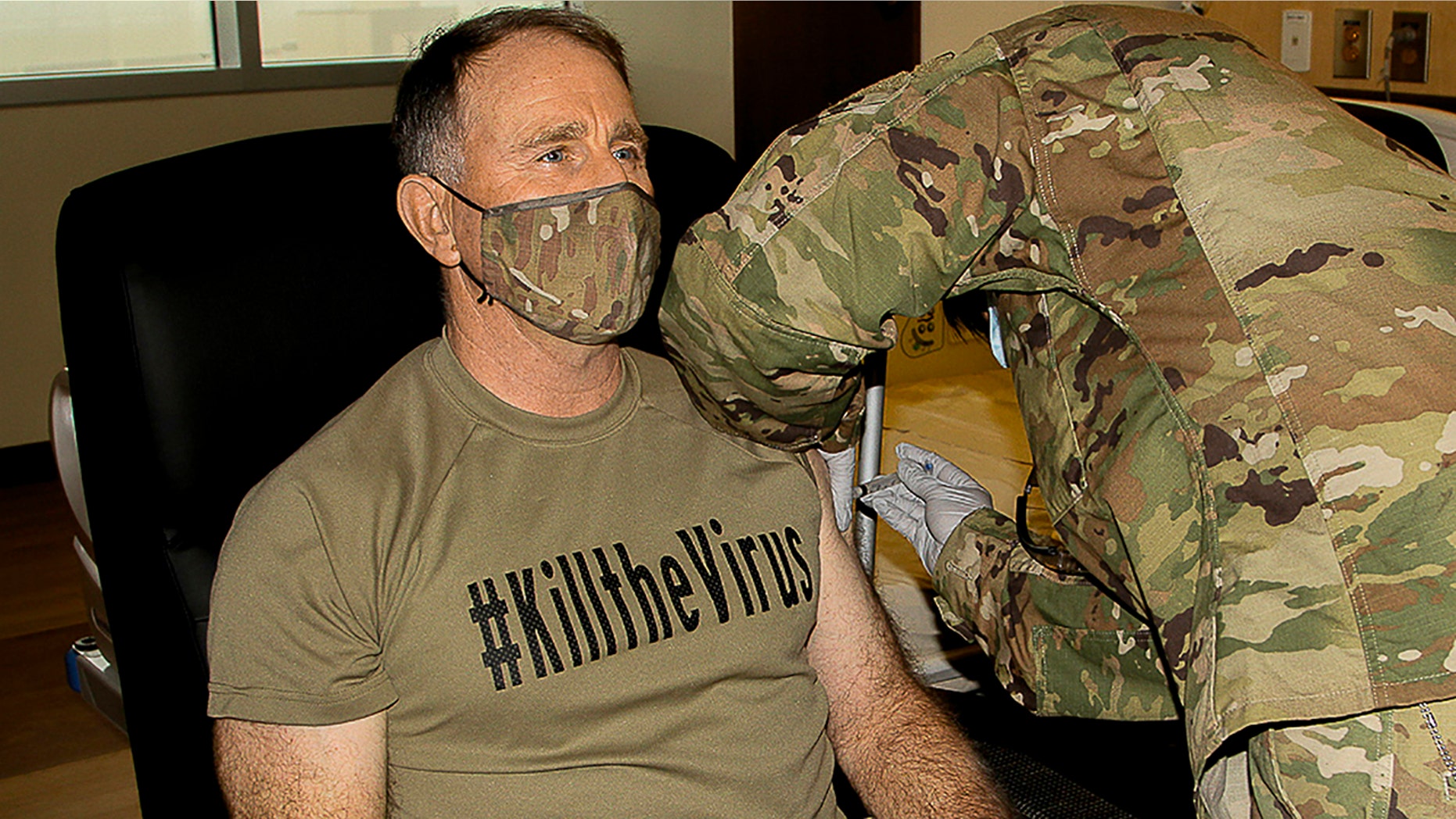
Gen. Robert B. Abrams, the chief of the 28,500 American troops deployed in South Korea, said in a statement that while the vaccine is 100% voluntary and not mandatory, "I strongly encourage all eligible individuals to receive the vaccine." Abrams was among those who were inoculated Tuesday. He told Stars and Stripes that the Moderna vaccine was painless compared to the lingering effects of the anthrax vaccine series he received going into Operation Desert Shield nearly two decades ago.
Source: COVID-19 vaccine rollout to US troops overseas gets underway
I had been inoculated against many types of infections over my long lifetime including the shot for the Black Death and for Small Pox. The only one which cause me any trouble was the Black Plague. I never had a shot for Anthrax. So I will just take Abram's word on that one.
_________________
Author of Practical Preparations for a Coronavirus Pandemic.
A very unique plan. As Dr. Paul Thompson wrote, "This is the very best paper on the virus I have ever seen."
ASPartOfMe
Veteran
Joined: 25 Aug 2013
Age: 68
Gender: Male
Posts: 39,637
Location: Long Island, New York
29 Dec 2020, 2:15 pm
’Tier 5’:England faces possible new Covid restrictions, source says
However, an analysis of the spread of the new, highly transmissible coronavirus variant by experts at the London School of Hygiene and Tropical Medicine, released this month, warned that even if the whole of England were placed under tier 4 restrictions on Boxing Day until the end of January, the R value would not fall below 1.
According to the Mirror, a Whitehall source has said the tier 4 rules do not appear to be working, adding that the government could introduce “another level on to tier 4, so like a tier 5
While no details have been released as to what such a tier could look like, or whether it would even be called “tier 5”, one possibility is that the tighter measures could include closing schools for the majority of pupils and moving education online.
In terms of tier 4, it doesn’t appear to be effective in those parts of the country where the new variant is circulating, but we will learn more over the next week or so,” he said.
_________________
“Self Acceptance is a process not a performance”
“You are autistic enough. And you always have been”
Professionally Identified and joined WP August 26, 2013
DSM 5: Autism Spectrum Disorder, DSM IV: Aspergers Moderate Severity.
ASPartOfMe
Veteran
Joined: 25 Aug 2013
Age: 68
Gender: Male
Posts: 39,637
Location: Long Island, New York
29 Dec 2020, 9:46 pm
1st reported US case of COVID-19 variant found in Colorado
The variant was found in a man in his 20s who is in isolation southeast of Denver in Elbert County and has no travel history, state health officials said.
Elbert County is a mainly rural area of rolling plains at the far edge of the Denver metro area that includes a portion of Interstate 70, the state’s main east-west highway.
Colorado Politics reported there is a second suspected case of the variant in the state according to Dwayne Smith, director of public health for Elbert County. Both of the people were working in the Elbert County community of Simla. Neither of them are residents of that county — expanding the possibility of the variant’s spread throughout the state.
The Colorado State Laboratory confirmed the virus variant, and the Centers for Disease Control and Prevention was notified.
For the moment, the variant is likely still rare in the U.S., but the lack of travel history in the first case means it is spreading, probably seeded by travelers from Britain in November or December, said scientist Trevor Bedford, who studies the spread of COVID-19 at Fred Hutchinson Cancer Research Center in Seattle.
“Now I’m worried there will be another spring wave due to the variant,” Bedford said. “It’s a race with the vaccine, but now the virus has just gotten a little bit faster.”
Public health officials are investigating other potential cases and performing contact tracing to determine the spread of the variant throughout the state.
_________________
“Self Acceptance is a process not a performance”
“You are autistic enough. And you always have been”
Professionally Identified and joined WP August 26, 2013
DSM 5: Autism Spectrum Disorder, DSM IV: Aspergers Moderate Severity.
ASPartOfMe
Veteran
Joined: 25 Aug 2013
Age: 68
Gender: Male
Posts: 39,637
Location: Long Island, New York
31 Dec 2020, 12:29 pm
Cases of new variant appear worldwide
Infections linked to people who arrived from the UK were reported in Spain, Switzerland, Sweden and France.
A couple found infected in Ontario, Canada, had no known travel history or high-risk contacts, officials say.
Japan is to ban most non-resident foreign nationals from entering the country for a month from Monday.
Since reporting infections in five passengers who had all arrived from the UK, the country has confirmed two more cases, one of which is said to have been domestically transmitted.
First U.S. Case Of New COVID-19 Variant Is Colorado Guardsmen Deployed To Nursing Home In Simla
The nursing home has an ongoing outbreak of COVID-19 cases that were first identified in mid-December, following routine surveillance testing. All 26 residents tested positive for the coronavirus and four deaths have been reported. Additionally, 20 of 34 regular staff members at the facility have tested positive.
The National Guard members deployed to the facility on Dec. 23 and were tested on Dec. 24.
They will both be ordered to quarantine for 14 days. The confirmed case is now isolating at home in Arapahoe County and the other possible case is isolating at a hotel in Lincoln County.
Discovery of Virus Variant in Colorado and California Alarms Scientists
“The overall picture is pretty grim,” said Bill Hanage, an epidemiologist at the Harvard T.H. Chan School of Public Health.
The variant’s arrival also makes it all the more imperative that Americans receive vaccinations in great numbers, and more quickly, scientists said. A pathogen that spreads easily is more difficult to contain, and a greater percentage of the population must be inoculated to turn back the pandemic.
The variant, called B.1.1.7, is not thought to be more deadly than other versions of the virus, nor does it seem to cause more severe illness. Masks, physical distancing and hand hygiene are still the best ways to contain its spread. Current vaccines are likely to be effective against it and any others that may emerge in the short term.
But given the mutant’s apparent contagiousness, scientists fear that its toehold in the United States augurs another difficult chapter in the pandemic. Gov. Gavin Newsom of California announced on Wednesday that a case of the variant had been discovered in the state.
Officials in San Diego County later identified the patient as a man in his 30s who had not traveled outside the United States, suggesting the virus was transmitted by someone else in the community — a sign that the new version is already spreading. A household contact of the man has developed symptoms, the officials said, and is being tested.
Officials in Colorado confirmed one patient and identified a second suspected case, both men in the National Guard assigned to a nursing home in Simla, Colo., about 80 miles southeast of Denver. The confirmed patient also had not traveled.
Officials at the Centers for Disease Control and Prevention said on Wednesday that they were working with state laboratories in California, Delaware and Maryland to analyze patient samples for infection. Agency scientists also plan to analyze up to 3,500 viral genomes each week to detect the new mutant and others as they emerge.
a variant that infects more people will reach more who are vulnerable or frail, leading to more illness and fatalities even if the virus itself is not more deadly.
In places like the U.S. and the U.K., where the health care system is already at its breaking point, a huge surge of new cases on top of the exponential spread we’re already seeing is going to be really, really bad,” said Angela Rasmussen, a virologist affiliated with Georgetown University in Washington.
“Not only is that going to potentially increase the number of Covid deaths, but it’s also probably going to increase the number of deaths from other causes as well.”
People infected with the variant may need different care than earlier coronavirus patients, further burdening the health care system, experts said.
But the ease with which the new version spreads implies that even more stringent restrictions may be needed, scientists said. “This variant was not stopped by the stronger interventions that were put in place in the U.K. in November,” Dr. Hanage said. “And that means that we need more.”
That is likely to prove difficult at a time when many Americans are already defying restrictions.
On Wednesday, about a quarter of the shoppers going into the Simla Food Store in Colorado left their faces uncovered, only half a block from the nursing home where the mutant virus is believed to have surfaced.
“They chew us out because they don’t think all this is real,” said Cené Kurtchi, 71, who runs a cafe in town and requires patrons to wear masks.
The variant probably accounts for fewer than 1 percent of cases now, he estimated, but might constitute the majority of cases by March.
The variant has 23 mutations, compared with the original virus discovered in Wuhan, China. Seventeen mutations appeared since the virus diverged from its most recent ancestor, said Muge Cevik, an infectious disease expert at the University of St. Andrews in Scotland and a scientific adviser to the British government.
The speed with which the virus acquired so many alterations worries scientists, who had expected the coronavirus to evolve far more slowly.
But with every new person it infects, the coronavirus also has more chances to mutate, and therefore more chances to happen upon mutations that give it an advantage
_________________
“Self Acceptance is a process not a performance”
“You are autistic enough. And you always have been”
Professionally Identified and joined WP August 26, 2013
DSM 5: Autism Spectrum Disorder, DSM IV: Aspergers Moderate Severity.
The_Face_of_Boo
Veteran

Joined: 16 Jun 2010
Age: 44
Gender: Non-binary
Posts: 33,664
Location: Beirut, Lebanon.
01 Jan 2021, 5:29 pm
I traveled 100 miles and went to a distant Mall to go to the annual Dillard's after Christmas sale. The store was packed. Everyone was wearing masks and doing their best to maintain social distancing guidelines. Just before I arrived at the mall, the strap on my N95 broke. OH, NO!! ! I spend a few minutes and repaired it with my trusty pocket knife. When I returned home, I threw the N95 in the trash and replaced it with a new one. I have been getting around 2 months of intermittent use on each mask.
Well tomorrow it is off to the movies to see a matinee. Just me and my N95.
_________________
Author of Practical Preparations for a Coronavirus Pandemic.
A very unique plan. As Dr. Paul Thompson wrote, "This is the very best paper on the virus I have ever seen."
02 Jan 2021, 10:22 am
WHO Approves COVID Vaccine
The World Health Organization (WHO) approved Pfizer and BioNTech’s coronavirus vaccine for emergency use on Thursday. The vaccine, which goes by the name Comirnaty, is the first coronavirus vaccine to be approved by the agency and added to its Emergency Use Listing (EUL), according to the announcement. WHO’s emergency use authorization follows the vaccine’s approval by the U.S. FDA on Dec. 11 and the European Commission on Dec. 21.
Source: WHO approves Pfizer's coronavirus vaccine for emergency use
_________________
Author of Practical Preparations for a Coronavirus Pandemic.
A very unique plan. As Dr. Paul Thompson wrote, "This is the very best paper on the virus I have ever seen."
02 Jan 2021, 10:55 am
Vaccine Doses Administered
The number of vaccine doses administered thus far as of the end of the year:
United States = ~ 2.6 million (as of 30 Dec.)
United Kingdom = ~ 0.9 million (as of 27 Dec.) Covid-19 vaccine: Latest updates on Oxford, Moderna and Pfizer breakthroughs - and who will get it first?
Canada = ~ 0.1 million (as of 30 Dec.)
Sources:
* US lags behind some other countries in Covid-19 vaccinations
* Covid-19 vaccine: Latest updates on Oxford, Moderna and Pfizer breakthroughs - and who will get it first?
* COVID-19 vaccine tracker: How many people in Canada have received shots?
The last source gives a fairly comprehensive global breakdown of vaccinations administered. Unfortunately I could not copy the graphs. Open the article and see for yourself.
_________________
Author of Practical Preparations for a Coronavirus Pandemic.
A very unique plan. As Dr. Paul Thompson wrote, "This is the very best paper on the virus I have ever seen."
ASPartOfMe
Veteran
Joined: 25 Aug 2013
Age: 68
Gender: Male
Posts: 39,637
Location: Long Island, New York
02 Jan 2021, 11:05 pm
The Mutated Virus Is a Ticking Time Bomb
ZEYNEP TUFEKCI is a contributing writer at The Atlantic and an associate professor at the University of North Carolina. She studies the interaction between digital technology, artificial intelligence, and society.
All good and no cause for alarm, right? Wrong.
A more transmissible variant of COVID-19 is a potential catastrophe in and of itself. If anything, given the stage in the pandemic we are at, a more transmissible variant is in some ways much more dangerous than a more severe variant. That’s because higher transmissibility subjects us to a more contagious virus spreading with exponential growth, whereas the risk from increased severity would have increased in a linear manner, affecting only those infected.
Increased transmissibility can wreak havoc in a very, very short time—especially when we already have uncontrolled spread in much of the United States. The short-term implications of all this are significant, and worthy of attention, even as we await more clarity from data. In fact, we should act quickly especially as we await more clarity—lack of data and the threat of even faster exponential growth argue for more urgency of action. If and when more reassuring data come in, relaxing restrictions will be easier than undoing the damage done by not having reacted in time.
To understand the difference between exponential and linear risks, consider an example put forth by Adam Kucharski, a professor at the London School of Hygiene & Tropical Medicine who focuses on mathematical analyses of infectious-disease outbreaks. Kucharski compares a 50 percent increase in virus lethality to a 50 percent increase in virus transmissibility. Take a virus reproduction rate of about 1.1 and an infection fatality risk of 0.8 percent and imagine 10,000 active infections—a plausible scenario for many European cities, as Kucharski notes. As things stand, with those numbers, we’d expect 129 deaths in a month. If the fatality rate increased by 50 percent, that would lead to 193 deaths. In contrast, a 50 percent increase in transmissibility would lead to a whopping 978 deaths in just one month—assuming, in both scenarios, a six-day infection-generation time.
I dismissed the news initially because viruses mutate all the time and there have been too many baseless “mutant-ninja virus” doomsaying headlines this year. The exaggerated, clickbaity alarmism makes it harder to discern real threats from sensationalism.
However, as data on the new variant roll in, there is cause for real concern. Trevor Bedford, a scientist at the Fred Hutchinson Cancer Research Center and a board member for the Covid Tracking Project at The Atlantic, points out that infections from the new variant are increasing very rapidly among the population in the U.K. Bedford also notes that this new variant seems to have a higher secondary-attack rate—meaning the number of people subsequently infected by a known case—compared with “regular” COVID-19. Finally, the new variant seems to result in higher viral loads (though this is harder to be sure about as viral loads can be affected by sampling bias and timing). As Kucharski told me, all of this does not rule out other explanations. This increased transmission could be due to chance or founder effects—meaning one variant just happened to get somewhere before the other variants and then got “lucky”; it was early, rather than more transmissible. It could be due to changed behavior among people—quarantine fatigue, less masking—leading to more rapid spread. However, given the current evidence, along with the specifics of the mutation, it’s getting harder to assume that those other explanations are more likely than the simple proposition that this is truly a more transmissible variant.
To make matters thornier, we aren’t yet exactly sure why it’s more transmissible, though reasonable theories are already being tested. This variant, now called B.1.1.7, has “an unusually large number of genetic changes, particularly in the spike protein,” which is how the virus gains entry into our cells.
This uncertainty in understanding the variant’s exact mechanisms means that we don’t know if our existing tools—masks, distancing, and disinfecting—are as effective as they were compared with an identical scenario with the regular variant. To be clear: The variant is still a respiratory virus, so the basic tools will not change, and they will all continue to work. In fact, they have become more important, but we may need to be stricter—less time indoors, better masks, better ventilation, more disinfection of high-touch surfaces—to get the same bang for our protective buck. It may be a small difference, or not. We don’t know. We won’t know for a while.
Given that this new variant is already here in America, are we too late? No, but we are on our back foot. The United States does not have extensive genomic surveillance, or a rapid turnaround with what surveillance it has, so in some ways, we are flying without a map
This could, of course, change extremely quickly, before we can even detect that change, but that highlights the importance of early action. In addition to the threat of exponential growth, we must remember that this pathogen is quite overdispersed—meaning some people seem to cause many infections, while many do not transmit it at all (though these ratios may change as well).
For exponential processes, small initial differences can mean gargantuan differences in the long run, and we are not helpless.
We can and should deploy whatever weapons we have in our arsenal, as soon as possible.
A week or two may not seem like a lot, but combined with other aggressive public-health measures, we may actually gain a few additional weeks. Maybe all of that could delay this new variant’s widespread establishment until February or even March.
This moment is somewhat similar to America’s initial COVID-19 surge and shutdown in March. We need to once again talk about the importance of flattening the curve. We need to again preserve hospital capacity, so our fatality rate doesn’t increase. But this time around, we can be a lot more hopeful: We need to flatten the curve because delaying potential infections just a few weeks or a month can make a tremendous difference when highly effective vaccines are being rolled out.
We are in a race against time, and the virus appears to be gaining an unfortunate ability to sprint just as we get closer to the finish line. Although the initial rollout of the vaccines has been slow, it is expected to increase rapidly. The U.S. may have 50 million to 100 million people vaccinated as early as March.
Every indication we have suggests that vaccinated people will also transmit less—how much less is still being studied, but the difference may well be substantive.
We already know that people who never develop symptomatic disease are a lot less likely to transmit COVID-19. (Note the difference between people who are truly asymptomatic and people who are just about to get sick—presymptomatic—but are highly infectious.) In a preliminary study, the Moderna vaccine was found to even prevent two-thirds of asymptomatic infections. Vaccinated people are thus not only much, much less likely to get any disease; they appear much less likely to get even a silent, asymptomatic infection. Although we need more data to be sure, all of this strongly suggests that vaccinated people will also transmit less.
Even without a vaccine, Morris said, knocking down the virus through temporary suppression can be valuable even though the virus will grow again, precisely because of these exponential effects. The same percentage growth amounts to a much smaller number of infected people when the baseline number is much smaller. Bringing the baseline level of contagion down also allows for safer experimentation: What happens if we relax X a bit? What restrictions work best? Which ones are most sustainable? If cases are growing from a very large base number, however, that means the state of the world is changing very quickly, so small mistakes are magnified. As Morris said, “You can’t finesse the steep part of an exponential.” He noted that throughout the pandemic, we bemoaned the absence of silver bullets while underestimating the value of crude hammers. But now we are in a different situation: We do have a silver bullet—vaccines—just as we have this new threat thrown at us. How we react in the next few weeks will matter immensely.
All this means that the speed of the vaccine rollout is of enormous importance. There are already worrisome indicators of slow rollout.
Meanwhile, the United States was reportedly planning to hold back half the vaccine it has in freezers as a hedge against supply-chain issues, and some states may be slowed down by murky prioritization plans. Scott Gottlieb—the former FDA chief and a current board member of Pfizer—has argued that the U.S. should also go ahead with vaccinating as many people as possible right now and trust that the supply chain will be there for the booster. Researchers in Canada—where some provinces decided to vaccinate now as much as possible without holding half in reserve, and will administer the booster with future supplies—estimate that this type of front-loading can help “avert between 34 and 42 per cent more symptomatic coronavirus infections, compared with a strategy of keeping half the shipments in reserve.”
Maybe—just maybe—this variant will turn out to be a false alarm, not nearly as transmissible as we feared. We will know soon enough. Our precautions will still be net positives. But if it is indeed much more transmissible, we may face a true tragedy: exponential growth with massive numbers of illnesses and deaths just as highly effective vaccines are being made available. We’ve had a year to learn—about the importance of early action, of acting decisively even in the face of uncertainty, of not confusing absence of evidence with evidence of absence. A year to learn to aim not for perfection in knowledge but for maximal impact even while considering the trade-offs. And most important, a year to learn to not wait when faced with threats with exponential dynamics but to act as early and as decisively as we can—and to adjust and tamper later, if warranted.
_________________
“Self Acceptance is a process not a performance”
“You are autistic enough. And you always have been”
Professionally Identified and joined WP August 26, 2013
DSM 5: Autism Spectrum Disorder, DSM IV: Aspergers Moderate Severity.
03 Jan 2021, 12:03 pm
The one quote from this article that I completely agree with is: "We can and should deploy whatever weapons we have in our arsenal, as soon as possible."
It means don't put all your eggs in one basket. So what weapons do we have in our arsenal that has not already been deployed?
From my perspective it is the knowledge that the coronavirus is transmitted through aerosols. That awareness allows individuals to plug a major hole in our defenses. How?
* By wearing better face mask such as N95s.
* By filtering the air in our homes/businesses/mass transit using HEPA filters.
* By killing the viruses indoors using UVC sanitizers [germicidal ultraviolet lights].
* By properly ventilating our indoor environments with outside air especially during the winter months.
_________________
Author of Practical Preparations for a Coronavirus Pandemic.
A very unique plan. As Dr. Paul Thompson wrote, "This is the very best paper on the virus I have ever seen."
Last edited by jimmy m on 03 Jan 2021, 12:33 pm, edited 2 times in total.


