neilson_wheels wrote:
I like facts to be factual, no offence intended.
Empathy wrote:
Anybody from my country would know I meant first MALE Brit.
Including the current one, there have now been 7 British astronauts, all male apart from the one mentioned above.
Sorry, I don't read The Mirror. He's not the first person from this country that has been 'allowed' to go into space.
The first was Helen Sharman in the early 90's.
All in the season of Goodwill I suppose..
You could always manage yourself better by exploring some of the facts first before belting out ones through popular appeal.
I understand though, if offending people comes naturally to you.
I have a series of scientific facts, from the department of health but managed through NASA.
All links can be sourced through the media coverage I have here.
http://www.bbc.co.uk/news/resources/idt ... 2a22bd1ebchttp://www.bbc.co.uk/news/science-environment-35101643 
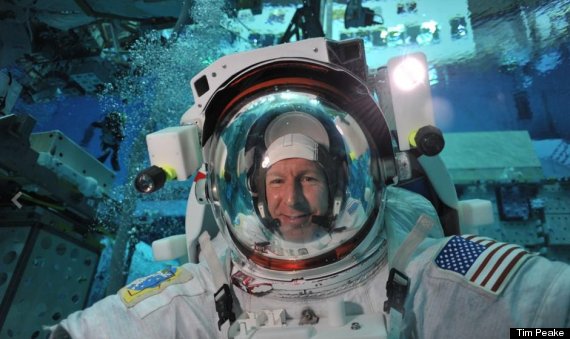
"Mr Peake is making history as the first official UK astronaut".
" The father-of-two is the first Briton to join the crew of the ISS."
"The former Army major is the first Briton to join the crew of the ISS and is employed by the European Space Agency.
"Helen Sharman became the first British citizen to travel to space when she visited the Soviet space station Mir in 1991.
Other Britons who have flown into space have done so either as private individuals or by taking US citizenship."
("see end of second link")
Facts on SharmanA former chemist for a chocolate company, Helen Sharman was Britain's first astronaut.
She won her place on a space trip in 1989 after answering an advertisement she heard on the radio, which said: "Astronaut wanted. No experience necessary."
She was eventually selected from more than 13,000 applicants to be the British member of the
Soviet scientific space mission, Project Juno,(also funded by Russian soviets) which travelled to the Mir space station in 1991.
Ms Sharman spent 18 months training in Star City - 30km north-east of Moscow, Russia - and during her eight days in space she carried out a series of medical and agricultural experiments.
Health and biological experiments with NASA 
Another project, called Fluid Shifts and managed by Nasa, is exploring the question of pressure within the brain.
Astronauts have often reported problems with their vision and the assumption is that this is the result of fluids shifting within the body and particularly moving towards the head.
Researchers at University Hospital Southampton NHS Trust have found a connection between the brain and the ear, and a better grasp of how this process works could help with a new technique for assessing brain pressure by taking measurements in the ear.
But if there is ever to be a long trek through space to Mars or even beyond, medical knowledge of how humans cope will be essential.
So some of the research is aimed specifically at gaining new insights that will benefit future generations of spacefarers while other experiments are designed to have a relevance to life here on Earth.
One European Space Agency project is investigating the properties of metals in a level of detail that cannot be matched down on the ground because of the influence of gravity.
Early daysA UK company, Marchbanks Measurements Systems, has come up with a device that can detect slight changes in the inner ear.
The company's founder Dr Robert Marchbanks told us:" It is crucial to the understanding of how brain pressure changes. It is a different environment, there is no gravity but that is important to our understanding of brain pressure."
And while some research is aimed at improving human health, another focus is on helping answer the fundamental question of whether we are alone in the universe.
Since micro-organisms such as bacteria have been found thriving in the most inhospitable corners of Earth - from the deep-frozen Antarctic to boiling hydrothermal vents - the next step is to explore how they cope with space.







 You've made us all proud back in the U.K.