
Self Driving Cars



 06 Aug 2020, 7:58 am

There is a illusion that self driving cars are about to enter mainstream. Wouldn't it be nice to get inside of a car, tell the car where you would like it to go and just like a flying carpet, off you go. But the reality is there are many, many speed bumps that have to be overcome. Such as how do you compensate for those pesky pedestrians. Maybe you have to chip every individual so the self driving cars will see them. What about dogs? Jump out when you least expect them.
In the news today:
Two tests by AAA (American Automobile Association) during the past two years show that partially automated driving systems don’t always function properly, so the auto club is recommending that car companies limit their use.
Researchers with AAA recently tested systems from five manufacturers over a distance of 4,000 miles (6,400 kilometers), and said they encountered problems every eight miles (13 kilometers).
Most of the issues involved systems designed to keep vehicles in their lane, but the tests discovered that many had trouble spotting simulated broken-down vehicles in their path. About two-thirds of the time the test vehicles hit the broken-down car, at an average speed of 25 mph (40 kph), according to the study.
It was AAA’s second round of tests on the systems. Researchers said little had changed from a test of four other vehicles in 2018, prompting the recommendation that automakers stop including the technology on more models.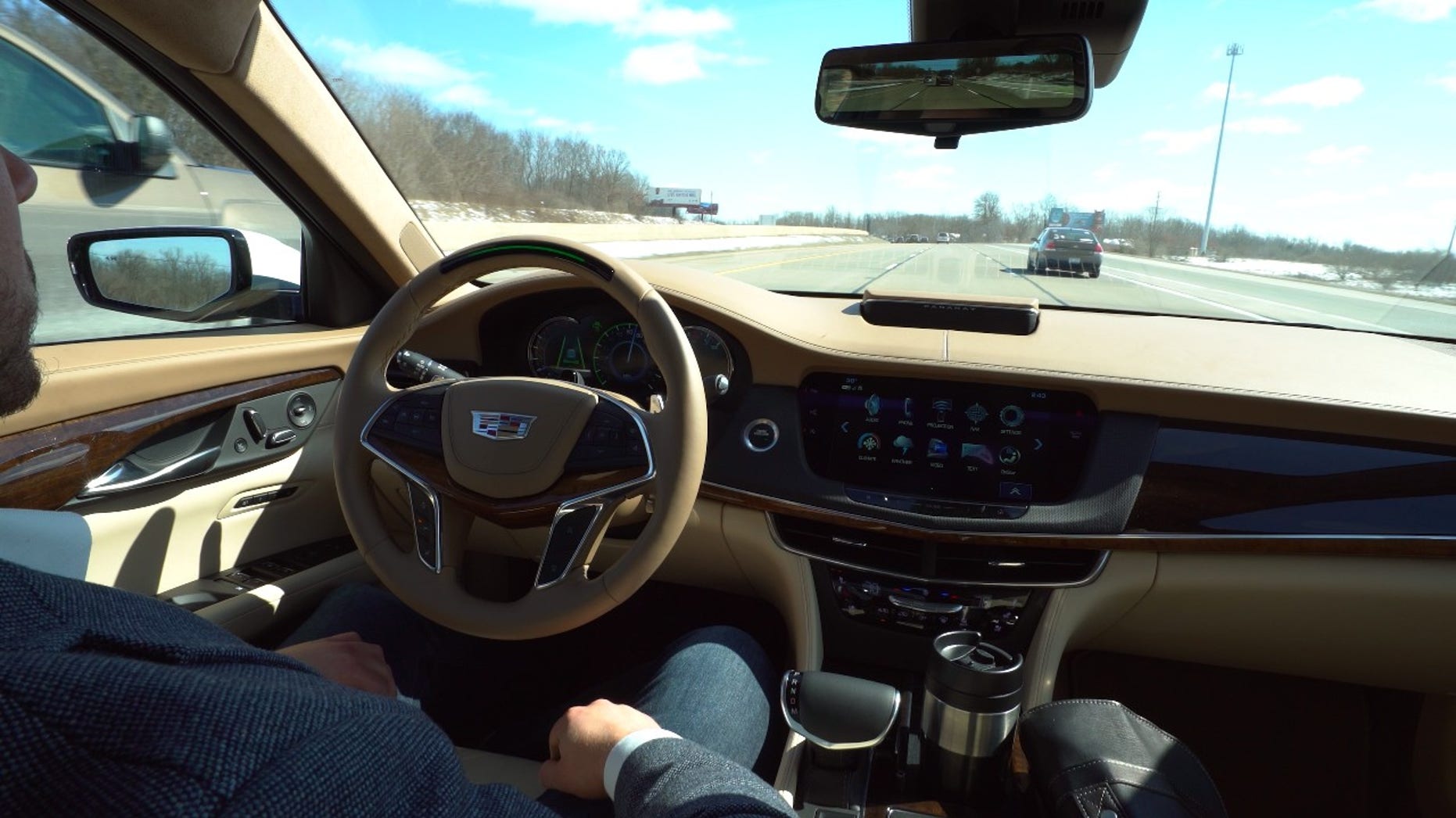
“AAA has repeatedly found that active driving assistance systems do not perform consistently, especially in real-world scenarios,” said Greg Brannon, AAA’s director of automotive engineering. “Automakers need to work toward more dependable technology including improving lane keeping assistance.”
Also the systems, which combine control of acceleration, braking and steering, often quit working with little notice to drivers, AAA found. That could cause a dangerous situation if the driver isn’t fully engaged and has to make an emergency decision.
AAA tested five vehicles at several research centers, with drivers and instruments monitoring their performance. Included this year were a 2019 BMW X7 SUV, a 2019 Cadillac CT6 sedan, a 2019 Ford Edge SUV, a 2020 Kia Telluride SUV and a 2020 Subaru Outback SUV. Their systems have names like Kia’s “Highway Driving Assist,” Subaru’s “EyeSight,” Ford’s “Co-Pilot 360,” Cadillac’s “Super Cruise,” and BMW’s “Active Driving Assistant Professional.” The results were similar to those found in 2018 testing by AAA of four other vehicles including a 2017 Tesla Model S with the company’s “Autopilot” system.
AAA said most owners manuals explain that the systems have trouble spotting stationary objects.
Also, research has shown that people become overly reliant on the technology, which could be dangerous when the systems don’t work, he said. Also, there’s no standardized way for the vehicles to notify drivers that the systems are disengaging. Some just have a green light on the dash, while the Cadillac’s steering wheel vibrates and a green light goes to flashing red, he said.
In real-road tests, all of the systems had trouble keeping the vehicles in their lanes, and they came too close to other vehicles and guardrails, AAA said. Test track examinations of three vehicles, the Kia Telluride, BMW X7 and Subaru Outback, found that all had trouble spotting a simulated broken-down vehicle in their lane most of the time, Brannon said.
Source: Partially automated driving systems don’t always work
-------------------------------
I think that those that currently use this technology place too much reliance on the system. They don't pay attention and are caught blind sided when it fails. It wasn't my fault, it was the cars.
I had an associate at work a few decades ago who was going cross country and bought the latests radar detector for his vehicle before he left. As a result he drove 20-30 mph faster than the speed limit and was pulled over with a rather large speeding ticket. In the end he rectified the situation by throwing his new radar detector in the trash.
Normally I drive, but a couple decades ago, I took a bus in California that traveled the freeways. The bus was higher than most cars. It was interesting watching the drivers on the highway. We were barreling down the highway at 65 mph and some drivers did not pay proper attention to the roadway. Maybe only 10% had both hands on the steering wheel. There were several people putting on makeup or eating while they drove. One person drove down the road without their hands on the steering wheel for over a mile. Another person used their knees. One couple were passionately making out while they drove. This was long before cell phones, so things I suspect only are getting worse. Now you add self driving cars into this mix.
_________________
Author of Practical Preparations for a Coronavirus Pandemic.
A very unique plan. As Dr. Paul Thompson wrote, "This is the very best paper on the virus I have ever seen."
27 Aug 2020, 12:40 pm
Tesla on autopilot hits police car as driver watches movie on cellphone
A North Carolina doctor’s Tesla operating on Autopilot crashed into a police car early Wednesday morning as he was watching a movie on his cellphone.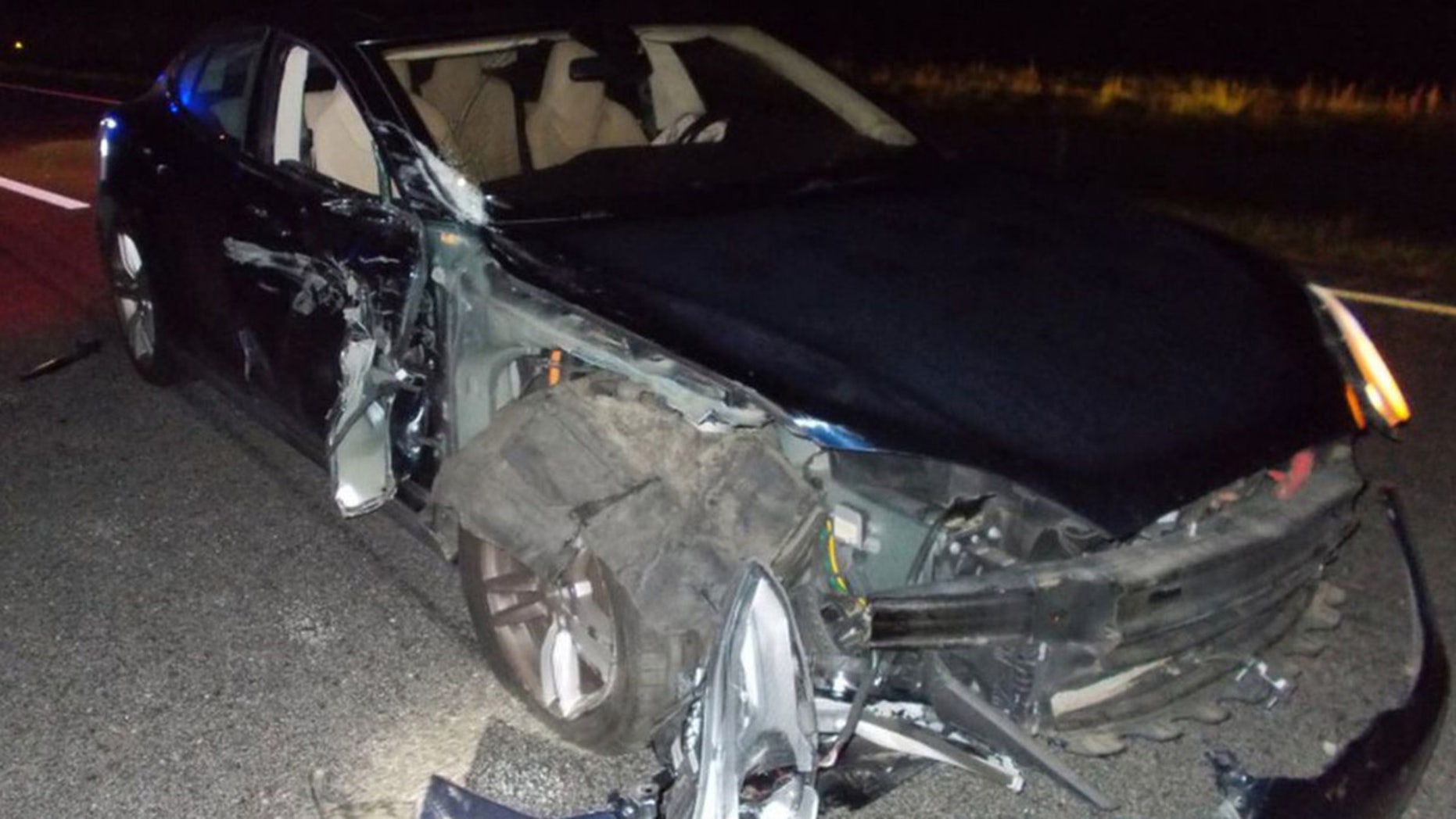
The North Carolina State Highway Patrol said the Model S sedan driven by Devainder Goli smashed into a Nash County Sheriff’s Office deputy’s vehicle that had stopped to assist a Highway Patrol trooper responding to an accident on U.S. 64 about 13 miles outside of Nashville, N.C.
Tesla’s Autopilot and “Full Self-Driving” systems have the capability to steer a car within a lane and avoid some obstacles, but require the driver to show they are attentive by touching the steering wheel.
Misuse of the feature has been connected to several fatal accidents, and the National Transportation Safety Board has criticized both its design and the federal regulations concerning such systems.
“It shows automation is never going to take the place of the motoring public paying attention, not texting, not being on the phone, but focusing on what you were doing, that is, driving,” Nash County Sheriff Keith Stone told CBS 17.
Source: Tesla on autopilot hits police car as driver watches movie on cellphone
_________________
Author of Practical Preparations for a Coronavirus Pandemic.
A very unique plan. As Dr. Paul Thompson wrote, "This is the very best paper on the virus I have ever seen."
28 Aug 2020, 10:03 pm
This is supposedly an older Tesla.
In older Tesla, the autopilot hardware required in shop updates (not capable of being updated through an internet connection).
So it required an owner to go to a shop to update the autopilot software.
Elon Musk says free self-driving chip upgrade could come to older Teslas this year
https://www.theverge.com/2019/7/8/20685 ... lf-driving:format(webp)/cdn.vox-cdn.com/uploads/chorus_image/image/64685356/Tesla_Full_Self_Driving_Computer_2040.0.jpg)
_________________
Then a hero comes along, with the strength to carry on, and you cast your fears aside, and you know you can survive.
Be the hero of your life.

 29 Aug 2020, 7:11 am
A vlog on YouTube about legal matters, consumer protections, and other similar topics brought up a very real concern about self-driving cars which I'd never considered: weather conditions. The vlog comes out of Michigan, USA and the host brought up the fact that most states have laws specific to certain weather conditions. In my current home state for instance, headlights must be used during visible fog, and whenever conditions require windshield wipers to be utilized. More importantly, how will self-driving cars recognize road conditions that drivers often overlook? It is possible for a patch of road to be wet, icy, or covered in snow while most of the rest of the roadbed is not. Could they even spot potholes? Probably not, if they hit cars stopped on the shoulder in emergency situations. How would a self-driving car know if rain has JUST begun to fall [which is when the road is typically at its most slippery]? Most modern cars have thermometers near the low end of the front bumper, but this isn't a perfect measure of the existence of a snow or icy patch when ambient air temperature is above 32 degrees [zero Celsius].
_________________
-- Hank
o-(|8[#]
“Politics is the art of controlling your environment.”
― Dr. Hunter S. Thompson
 30 Aug 2020, 6:00 am
31 Oct 2020, 7:43 pm
30 Aug 2020, 6:00 am
31 Oct 2020, 7:43 pm
Although driver-assistance technology has advanced considerably, we're still a long way away from cars that can truly drive themselves on public streets. Both Tesla's Autopilot and Chevrolet's Super Cruise — the two most advanced driver-assistance systems — require full human attention and can't be used everywhere.
* An autonomous race car crashed immediately during a Roborace event on Thursday.
* The car, fielded by a Swiss team Acronis SIT Autonomous, made a sharp right turn and accelerated into a wall right off the starting line.
Source: A self-driving race car drove straight into a wall off the starting line in the world's first autonomous racing series

_________________
Author of Practical Preparations for a Coronavirus Pandemic.
A very unique plan. As Dr. Paul Thompson wrote, "This is the very best paper on the virus I have ever seen."


