Aimless wrote:
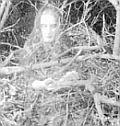
Andrew Solomon writes about depression in his book The Noonday Demon, An Atlas of Depression and the expression noonday demon really struck a chord with me. I knew exactly what he meant from experience. Anyway, this house made me think of that concept. I just found the source of the expression, it is from an early church text describing various "demons".
from:http://earlychurchtexts.com/public/evagrius_of_pontus_eight_logismoi.htm
The demon of acedia, which is also called the noonday demon, is the most burdensome of all the demons. It besets the monk at about the fourth hour (10 am) of the morning, encircling his soul until about the eighth hour (2 pm). [1] First it makes the sun seem to slow down or stop moving , so that the day appears to be fifty hours long. [2] Then it makes the monk keep looking out of his window and forces him to go bounding out of his cell to examine the sun to see how much longer it is to 3 o’clock, and to look round in all directions in case any of the brethren is there. [3] Then it makes him hate the place and his way of life and his manual work. It makes him think that there is no charity left among the brethren; no one is going to come and visit him. [4] If anyone has upset the monk recently, the demon throws this in too to increase his hatred. [5] It makes him desire other places where he can easily find all that he needs and practice an easier, more convenient craft. After all, pleasing the Lord is not dependent on geography, the demon adds; God is to be worshipped everywhere. [6] It joins to this the remembrance of the monk’s family and his previous way of life, and suggests to him that he still has a long time to live, raising up before his eyes a vision of how burdensome the ascetic life is. So, it employs, as they say, every [possible] means to move the monk to abandon his cell and give up the race. No other demon follows on immediately after this one but after its struggle the soul is taken over by a peaceful condition and by unspeakable joy.
I also think that the picture could have been taken from a different angle and different lighting and i might have had a completely different impression.
Thank you for the link,
Aimless - it's fascinating. I've first read about the Noonday Demon in a book about Goya - he called it Yantar and feared it greatly. But I've never made the connection with the term acedia which I've encountered in a completely different context.
_________________
"Selfishness is not living as one wishes to live, it is asking others to live as one wishes to live" (Oscar Wilde)