post something Quite Interesting..
The miniscule book has 30 pages and three color illustrations. The print cannot be read by the naked eye, but Palkovic keeps another larger copy of the book, still measuring just a tiny 2 by 1.8 centimeters, nearby.
"There are only 100 of these books that were published," says Palkovic. "Fifty were published in English (Palkovic has the English version) and 50 in Russian. I have copy number 16 of the English version."
There have been smaller books created by nanotechnology labs, such as the book, Teeny Ted From Turnip Town, which was created by the Nano Imaging Facility of Simon Fraser University. You would need an electron microscope to read this book.
_________________
Age: 60. Sex: male. Gender: OK I give up, please tell me
AQ: 37/50; Aspie Quiz: 110/200 for Aspie, 82/200 for NT
Almost certainly not Aspie, but certainly something like it
^^ thanks, Twirlip
QI Fact of the Day
Guppies are named after RJL Guppy, a civil engineer from Trinidad, who sent the first specimen to the Natural History Museum in London.
QI Quote of the Day
"Humans are the only animals that have children on purpose with the exception of guppies who like to eat theirs. "PJ O'ROURKE
The miniscule book has 30 pages and three color illustrations. The print cannot be read by the naked eye, but Palkovic keeps another larger copy of the book, still measuring just a tiny 2 by 1.8 centimeters, nearby.
"There are only 100 of these books that were published," says Palkovic. "Fifty were published in English (Palkovic has the English version) and 50 in Russian. I have copy number 16 of the English version."
There have been smaller books created by nanotechnology labs, such as the book, Teeny Ted From Turnip Town, which was created by the Nano Imaging Facility of Simon Fraser University. You would need an electron microscope to read this book.
That's a very short story!
_________________
"Reality is not made of if. Reality is made of is."
-Author prefers to be anonymous.
I think this was mentioned on QI:
The history of ice cream << Mr Whippy Ice Cream: Ice Cream Van hire for weddings, events and parties
So (as someone said on the programme) once again Thatcher took milk from the mouths of children.
_________________
Age: 60. Sex: male. Gender: OK I give up, please tell me
AQ: 37/50; Aspie Quiz: 110/200 for Aspie, 82/200 for NT
Almost certainly not Aspie, but certainly something like it
I think this was mentioned on QI:
The history of ice cream << Mr Whippy Ice Cream: Ice Cream Van hire for weddings, events and parties
So (as someone said on the programme) once again Thatcher took milk from the mouths of children.
well, it was from the telegraph's QI column, so discovered by the elves.. it may have been on the show, although i think i'd remember.
regardless, it seemed to me quite interesting..
thanks for more interesting things about ice cream.
I have an ice-cream fact that I don't think anyone's mentioned?
Skatole is a chemical which is responsible for the distinctive smell of faeces.
It is "a white or brownish crystalline solid with a strong faecal odour, found in faeces, beetroot, and coal tar; B-methylindole. Formula: C9H9N"
The curious thing is that it's also used as a food and perfume additive, in small amounts. In fact, it's a vital part of the flavour of vanilla ice-cream.
Hope this doesn't spoil anyone's day ![]()
moving on to something more pleasant..
Sick bacteria
We know we've picked up bits of bacterial DNA in our genes over time but we may also have given something back. Northwestern Medicine researchers have discovered the first evidence of a human DNA fragment in a bacterial genome - Neisseria gonorrhoeae. But even if gonorrhoea has caught a nasty dose of humanity, it may use our DNA to its advantage by developing new and different strains of itself. Gonorrhoea is one of the oldest recorded diseases and one of very few exclusive to humans.
(Wrote this to my friend, then just copy and pasted)
I'm very much interested in the language of standard Japanese. I can detect it from any other language (which can be an arduous task sometimes, considering the variations and dialects) and I understand its basic grammar and construct relatively basic sentences fairly accurately. My vocabulary kind of sucks, though... so I can only last about two or three minutes in a conversation on any subject. I do not really talk about this interest very often, because it's a language and I much prefer speaking it over talking about it in English. But yeah... I'm kind of rambling...
My intense interest in the language does pertain to something that happened yesterday at school, though.
In mathematics class, there is an obnoxious girl. Very self-important, is how I perceive her. It is not quite a negative perception, considering who she is.
We did practically nothing. I just relax and usually read when this is the case; sometimes put my head down and think. The classroom was (for once) quiet, due to the fact that about 3/5 of its usual contents were outside. I was reading, when I suddenly heard the word 'Japanese' (in context of the language) several times within a conversation. I looked over and started paying attention to the discussion. The boy kept repeating, "Well, why do you know Japanese? Why are you learning Japanese?" She was apparently showing him her "Japanese writing." I did not hear her answer very well, nor could I see the small sheet from so far away (other side of the room), but she was apparently writing in her little version of romaji, for the boy could read it aloud. It said something similar to this:
"Guo gon to mong fo..."
Tones in all.
A very tonal language, was what was read. Japanese is not at all tonal, except in a few examples (like in English. "Ame" can mean "candy" or "rain", depending on the syllable emphasis; also, "kami" could mean "hair", or "god", or "paper"... again, depending on emphasis.) What was read aloud sounded like a pseudo-Chinese language (in which case the roman characters would be referred to as pinyin, not romaji.)
These are the different ways to write Japanese, just for future reference. I will write one sentence: "I love philosophy." These are all the different ways this one sentence can be written:
Romaji:
"Watashi ha tetsugaku ga daisuki desu."
Kanji/hiragana mix (most common):
私は哲学が大好きです。
Katakana only (rare nowadays, though common in the war and earlier:
ワタシハテツガクガダイスキデス。
Hiragana only (common for young children books, or prints aimed at young children):
わたしはてつがくがだいすきです。
Then you can mix Katakana and Kanji, also... as well as Roman characters with more traditional means of Japanese writing... but those are the ways you would see most often in print.
On August 16, 1960, as part of a high-altitude test, U.S. Air Force pilot Joseph Kittinger ascended to 102,800 feet (31,300 m) in a specialized helium balloon, and then jumped out... right at the edge of space. He fell for four minutes and 36 seconds, reaching a maximum speed of 614 miles per hour (988 km/h) before opening his parachute at 18,000 feet (5,500 m). He later landed safely in the New Mexico desert. He set historical numbers for highest balloon ascent, highest parachute jump, and fastest speed by a human being through the atmosphere.
Here is a short film that was made about his mission, including shots of space from inside the balloon and footage that Kittinger himself took after he jumped out.
[youtube]http://www.youtube.com/watch?v=Qw8OJJQ_hgk[/youtube]
_________________
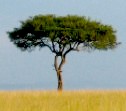
Plantae/Magnoliophyta/Magnoliopsida/Fabales/Fabaceae/Mimosoideae/Acacia