
Is anyone interested in creating an artificial language?


 17 Mar 2013, 11:25 am

I had an idea awhile ago about creating a language that would be a hybrid of Indo-European and East Asian languages, that would be universally easy to learn. It would have very basic grammar rules, be perfectly phonetic, have no tones, and have very categorized words and phrases derived from both Indo-European and East Asian languages. I haven't figured out what the writing system would like be yet, but I was thinking maybe something that includes Latin, Cyrillic, and Greek characters. Esperanto has already been created as an attempt to create a universally easy-to-learn language, but I think an even more basic language could be made. Esperanto is pretty much all Latin based, but I'm thinking of creating something that's entirely new. Feel free to contribute your own ideas.
 17 Mar 2013, 11:53 am
Do you mean combining European languages and Japanese, Korean and Chinese?
I think we might as well come up with a completely new character set that is different from any of the existing languages.
Being perfectly phonetic without exception would be nice.
No irregular verbs, adjectives etc at all. Very limited conjugation. Very simple systematic grammar.
Words can be derived from existing languages.
No tones, no stressed syllables.
5 distinct vowels - a, e, i, o and u, as in Spanish and Japanese.
Limited number of consonants that exist in (almost) all existing languages. So we shouldn't include such consonants as v (as in vet), th (as in think or this), l (as in language), zh (as in television), z (as in zoo) etc as they could be confusing.
No masculine or feminine for inanimate nouns.
No articles.
No plural forms for anything.
I put ridiculously many restricting factors, but these are the factors that make learning a foreign language difficult. I might come up with more ideas. For now that's all I have to say.
thomas81
Veteran


Joined: 2 May 2012
Age: 45
Gender: Male
Posts: 5,147
Location: County Down, Northern Ireland
17 Mar 2013, 12:04 pm
The problem with this sort of project is that it would be easier for one group to learn than another depending what alphabet you use. Are you planning on making a new alphabet?
17 Mar 2013, 12:41 pm
It would be nice if the characters used in the language already existed somewhere in Unicode, so that things could conveniently be typed in the language. Creating entirely new characters that aren't already in Unicode would be more work, and would deter people from using the language. The characters don't have to all be Latin, but I don't want to create entirely new characters.
Last edited by Mike1 on 17 Mar 2013, 2:12 pm, edited 2 times in total.
17 Mar 2013, 2:39 pm
It would be nice to create entirely new characters, but then no one would be able to type in the language unless we could get Unicode to accept it as a standard writing system, which would probably take a very long time. Without being able to type in the language, we wouldn't be able to easily spread it through the Internet, thus it would probably die off pretty quickly, long before it would ever get to the point of being accepted as a standard writing system. It would take a lot more effort to spread an artificial language that uses entirely new characters.
OliveOilMom
Veteran

Joined: 11 Nov 2011
Age: 62
Gender: Female
Posts: 11,447
Location: About 50 miles past the middle of nowhere
17 Mar 2013, 3:23 pm
The kids on "Zoom" made up the "Ubby Dubby" language in the 70's.
I'm just saying.
_________________
I'm giving it another shot. We will see.
My forum is still there and everyone is welcome to come join as well. There is a private women only subforum there if anyone is interested. Also, there is no CAPTCHA.

The link to the forum is http://www.rightplanet.proboards.com
18 Mar 2013, 10:57 am
It would be nice to create entirely new characters, but then no one would be able to type in the language unless we could get Unicode to accept it as a standard writing system, which would probably take a very long time. Without being able to type in the language, we wouldn't be able to easily spread it through the Internet, thus it would probably die off pretty quickly, long before it would ever get to the point of being accepted as a standard writing system. It would take a lot more effort to spread an artificial language that uses entirely new characters.
OK, you have a valid point there. From the point of view of practicality, a totally new character set would be almost unrealistic. A language needs to be used by many people in order to survive. Would that mean we have to use the 26 letters of the English alphabet? Other characters such as letters in Greek would, depending on the keyboard and software, require a little more effort to type, which could become a nuisance.
I also think it's very important to consider the ease of learning for everyone. Pronunciation should be very simple. We should avoid sounds that are only subtly different for the people who are not used to that subtle difference.
18 Mar 2013, 3:23 pm
Using only the 26 letters of the English alphabet would probably be the best way to get a lot of people to use the language. The language could also be converted into the Cyrillic alphabet for people living in Russia and other countries that use the Cyrillic alphabet, but I don't think it would be necessary.
I was also thinking that we could reduce the number of nouns by using more compound terms like in Chinese. The number of words could also be reduced by having no synonyms. All antonyms could be conjugations of the words that they're antonyms of, to avoid confusion.
It will be difficult trying to create a language that is contextually neutral. Languages such as English and Chinese are different enough from each other that things that make sense in one of the languages often don't make sense in the other language. For example, in Chinese, an "electricity child" is an electron, and a "chicken child" is a small piece of chicken. The second character is often translated as "child", but that's not really a good translation for it. Also, the classification of things under certain nouns is different between languages. For example, in Chinese, barn and warehouse are the same character, gas and soul are the same character, and traveler, guest, and passenger are the same character. I know some Chinese, but I'm far from proficient. Japanese is probably even more different from English, considering how terrible Google Translations is at translating it into English.
Shatbat
Veteran

Joined: 19 Feb 2012
Age: 33
Gender: Male
Posts: 5,791
Location: Where two great rivers meet
 19 Mar 2013, 11:45 am
I agree making the meaning of words very systematic by using modules would help simplify the language and make it easy to learn. The extensive use of prefixes and suffixes etc would probably be needed. I just wonder if the complete lack of synonyms and a strict system could make the language somehow bland and dry. For practical purposes such a language would be perfect, but for more artistic purposes (such as fiction etc), it might fail to convey the subtle nuance.
I understand that different existing languages express certain ideas in very different ways like the examples you gave. I can also think of an example. The English word "hot" can express both high temperature and spicy taste, and sometimes these two meanings can be confused. In some other languages, these two meanings are distinctly different ideas and never get mixed up. So you'd say the new language would be closer to English than to any other language? I'd say it will simply be dictated by the system in which the meanings of words, verb conjugations, verb tenses etc are defined. So it might happen to be similar to certain languages. It doesn't have to be completely neutral.
I would also rather avoid having complicated verb tenses such as in Spanish. English verbs are far simpler, yet are capable of expressing anything one wants to. Such unnecessary complications should be avoided.
19 Mar 2013, 5:18 pm
I was also thinking that for compound words made up of an adjective and a noun, if what you're talking about can be implied using just the adjective or the noun, then the other part of the word could be dropped. For instance, an adjective such as "red" could be used as a noun if it can be implied what you're talking about. Also, general nouns could be used to refer to something specific if that specific thing can be implied. It would be convenient to be able to drop the modules that are not needed to convey the intended message.
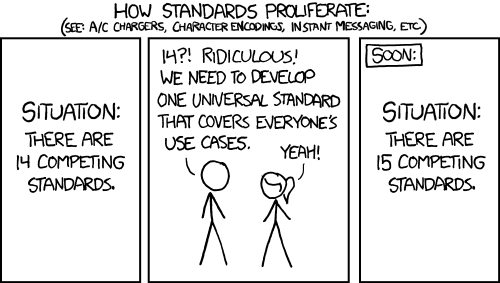
A lack of synonyms would probably make the language bland and dry, but it would keep it simple. It would be pretty hard to replicate the artistic quality of non-artificial languages with an artificial language. There are many expressions that cannot be made up, and can only become incorporated into a language with time. There are also many parts of non-artificial languages that are not literal. The best way to make a language easier for people of different linguistic backgrounds to understand would be to make it as literal as possible. This probably wouldn't be very good as a primary language, but it would create a much easier way for people of different linguistic backgrounds to convey messages to each other. One application for this language would be that you could be understood when ordering food at a restaurant anywhere in the world. This language would be great for tourism purposes. My hopes of developing a language that would become this widespread are pretty far fetched, but it's possible. If the language that I want to create doesn't end up becoming this basic international standard for communication, then maybe someone else will create one that does. I think it's a pretty good idea.
I've got stuff to do for my college classes, so I might do some work on this language over the summer. I'll probably give up on it long before it gets finished though. I just thought it was a cool idea that there could be an international standard for communication that would be basic enough that everyone would approve of it regardless of linguistic background, and would revolutionize the international tourism industry as well as other things.
 20 Mar 2013, 10:40 pm
I didn't really get this part. Do you mean, for example, you say "teen" instead of "teenager" "human" instead of "human being", and "mean" instead of "mean-spirited"? Also, are there any examples of general nouns that can imply a specific thing? I just want to understand what you mean.
OK, I understand you want to develop a language for practical communication, not necessarily one with "rich" expressions etc for the sake of fun and art of reading. I agree with you that artificial languages can't initially have all subtle literary expressions etc. So intially it's a simple language for the sake of communicating literally in such situations as ordering food in a restaurant for people with many different linguistic backgrounds. I also have to agree that it is a rather far-fetched idea and is quite an ambitious project, but I do think it's a really good/fun idea. English is becoming an international language, but I notice many people from non-English speaking backgrounds cannot pronounce certain sounds properly or distinguish between some different sounds when listening. So I think there still is room for another international language that is practical and very easy in many ways.
I'm no expert in language, grammar or any related field, but I at least have an experience of learning and using a foreign language at a practical level. So I am quite aware of the issues that one can have in learning a foreign language. And I am very interested in languages.


