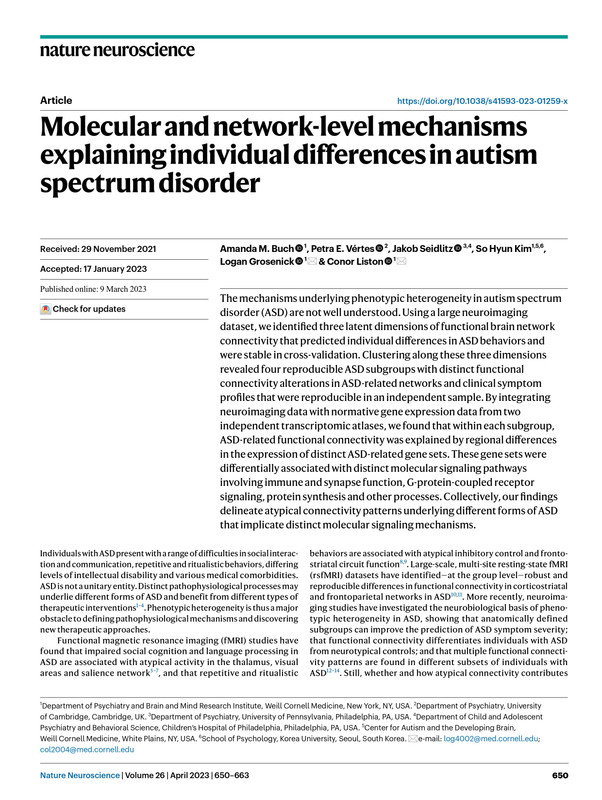
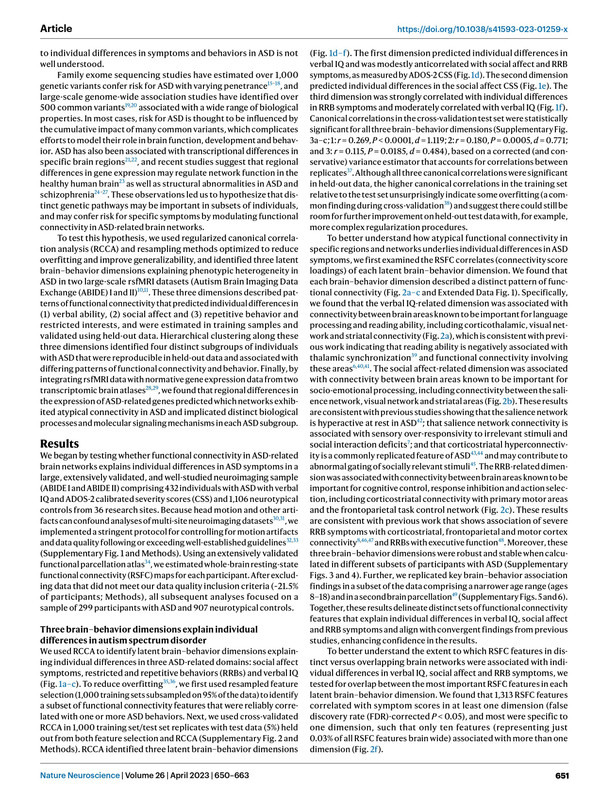
Machine learning identifies FOUR autism subtypes

Page 5 of 7 [ 110 posts ]  Go to page Previous  1, 2, 3, 4, 5, 6, 7  Next

ToughDiamond
Veteran
Veteran

User avatar

Joined: 15 Sep 2008
Age: 73
Gender: Male
Posts: 14,534

10 Apr 2023, 4:44 pm

MrsPeel wrote:
I'm not quite sure if verbal intelligence means the same as verbal abilities.
If it's the same, then the 4 subtypes are across 3 domains, something like this:

1. verbal ability good - social communication poor - repetitive behaviours less poor
2. verbal ability good - social communication less poor - repetitive behaviours poor
3. verbal ability less poor - social communication poor - repetitive behaviours poor
4. verbal ability poor - social communication poor - repetitive behaviours poor

But it's really not clear if that's what they mean.
Guess I might have to actually buy the paper.

Assuming that's cracked the "encryption," my best guess is that I'm type 2, though it doesn't fit me like a glove.


Recidivist
Veteran
Veteran

User avatar

Joined: 4 Jan 2023
Gender: Male
Posts: 3,851
Location: He/him/his

10 Apr 2023, 6:31 pm

ToughDiamond wrote:
Recidivist wrote:
MrsPeel wrote:
Guess I might have to actually buy the paper.


Or you could read it here


Wow! Good work. Hope they don't send the black helicopters after you for doing that.
Which page of that itemises the 4 subtypes? They've got to be in there somewhere. Though scientists aren't always good at presenting simple, at-a-glance information for general consumption.


I've got AA guns on the roof, let them come :twisted:

The subtypes/subgroups are not itemised (apart from 1 - 4), subtypes/subgroups are just compared with each other with regards to symptoms. I can't help any more than that as I have only scanned the paper.

https://www.thebrighterside.news/post/g ... -of-autism

Quote:
The advances in machine learning allowed the team to identify four clinically distinct groups of people with autism. Two of the groups had above-average verbal intelligence. One group also had severe deficits in social communication but fewer repetitive behaviors, while the other had more repetitive behaviors and less social impairment.

The connections between the parts of the brain that process visual information and help the brain identify the most salient incoming information were hyperactive in the subgroup with more social impairment. These same connections were weak in the group with more repetitive behaviors.

The other two groups had severe social impairments and repetitive behaviors but had verbal abilities at the opposite ends of the spectrum. Despite some behavioral similarities, the investigators discovered completely distinct brain connection patterns in these two subgroups.


https://www.jpost.com/science/article-738872

Quote:

The first two subgroups were noted for displaying high levels of verbal intelligence. One of them, however, displayed severe social communication issues while having fewer repetitive behaviors, while the opposite was true with the other one.

The second set of subgroups had severe social communication issues and repetitive behaviors, but with just average verbal intelligence.

These two seemed similar at first, but there were key differences. Notably, one of them had stronger connectivity between visual and salience networks – that is to say, the part of the brain that detects and filters salient stimuli, meaning something that stands out and which plays a key role in communication and self-awareness through understanding sensory and emotional information.

By contrast, the other subgroup had distinctly weaker connectivity in this regard.

By linking it to biological factors, the study was also able to open the door to the possibility of finding ways to support people based on their specific needs.


_________________
Another man's freedom fighter, one man's terrorist is - Yoda (probably)


ToughDiamond
Veteran
Veteran

User avatar

Joined: 15 Sep 2008
Age: 73
Gender: Male
Posts: 14,534

10 Apr 2023, 8:06 pm

^
They certainly know how to speak in riddles. I usually like puzzles, but this is a real 3-pipe conundrum.


KitLily
Veteran
Veteran

User avatar

Joined: 7 Jan 2021
Age: 57
Gender: Female
Posts: 5,074
Location: England

11 Apr 2023, 3:18 am

ToughDiamond wrote:
I suppose they know that if they just listed the 4 subtypes, we'd have no reason to buy the original. I doubt they have our interests at heart. I hate it when health information is monetised. When I worked at a university, all we had to do was to send a request card to any author to get a free copy of their paper. They weren't legally bound to comply, but it was considered bad form not to, and they usually did.


Every bloody thing is monetised now isn't it :roll:


_________________
That alien woman. On Earth to observe and wonder about homo sapiens.


KitLily
Veteran
Veteran

User avatar

Joined: 7 Jan 2021
Age: 57
Gender: Female
Posts: 5,074
Location: England

11 Apr 2023, 3:20 am

ToughDiamond wrote:
Wow! Good work. Hope they don't send the black helicopters after you for doing that.


Black helicopters :lol: Hopefully Airwolf!


_________________
That alien woman. On Earth to observe and wonder about homo sapiens.


MrsPeel
Veteran
Veteran

User avatar

Joined: 1 Oct 2017
Age: 54
Gender: Non-binary
Posts: 1,927
Location: Australia

11 Apr 2023, 5:45 am

Thanks Recidivist, you're a star!

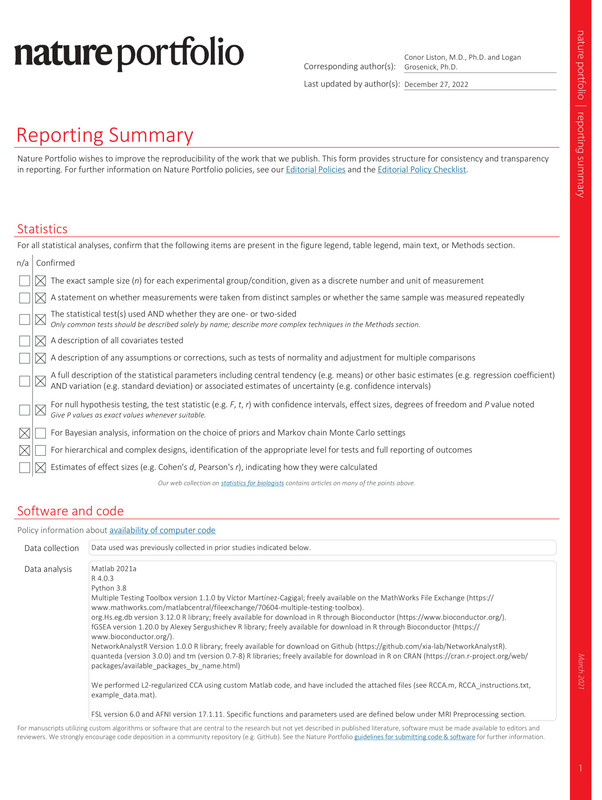
I'm reading the article and will try to summarise in plainer language, as far as I understand it. This might take 3 or 4 posts - it's a complex study. But what they've done is awesome! Not perfected yet but leading the way in distinguishing autism subtypes.

So FIRST:
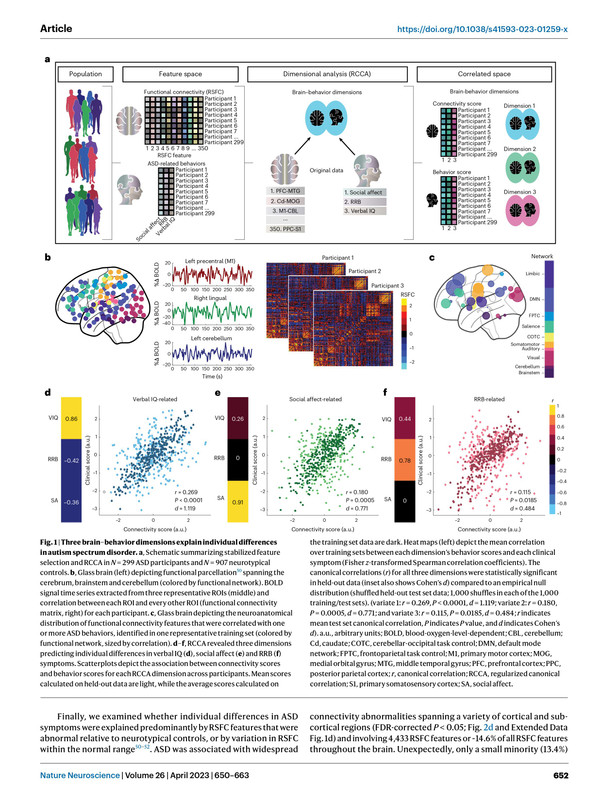
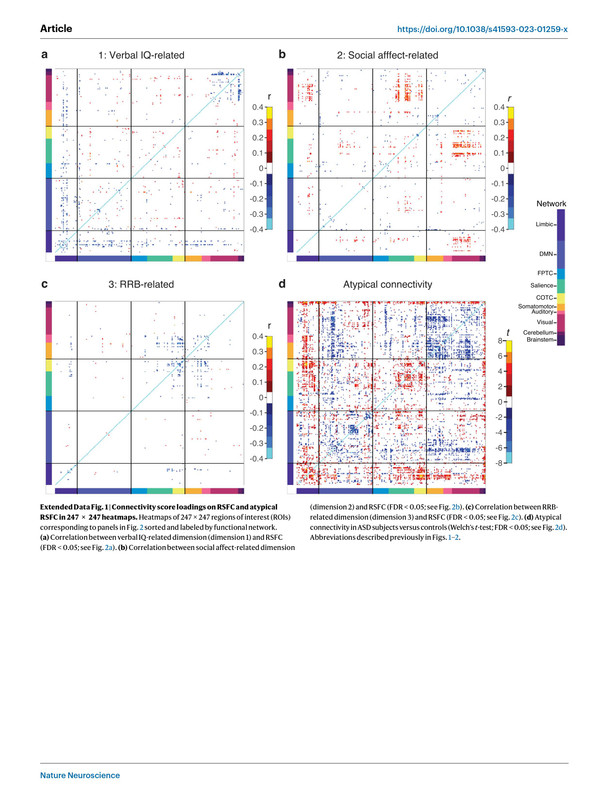
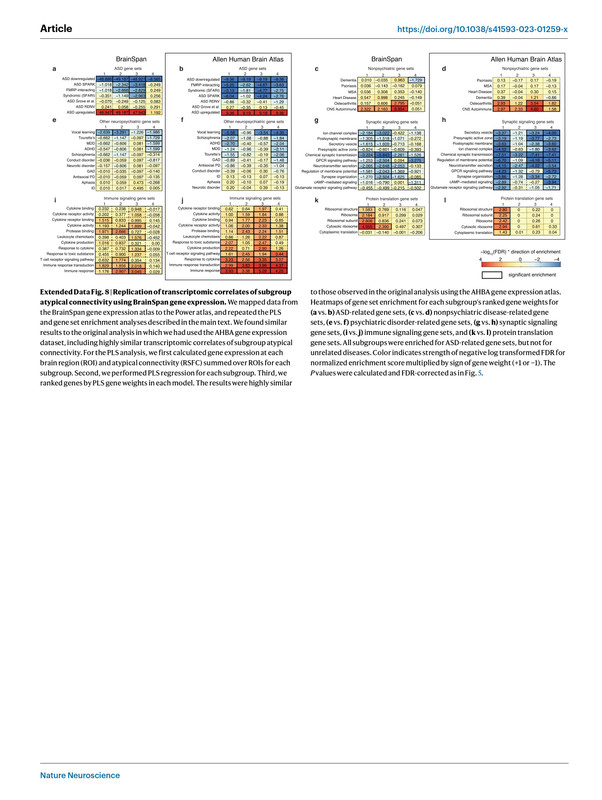
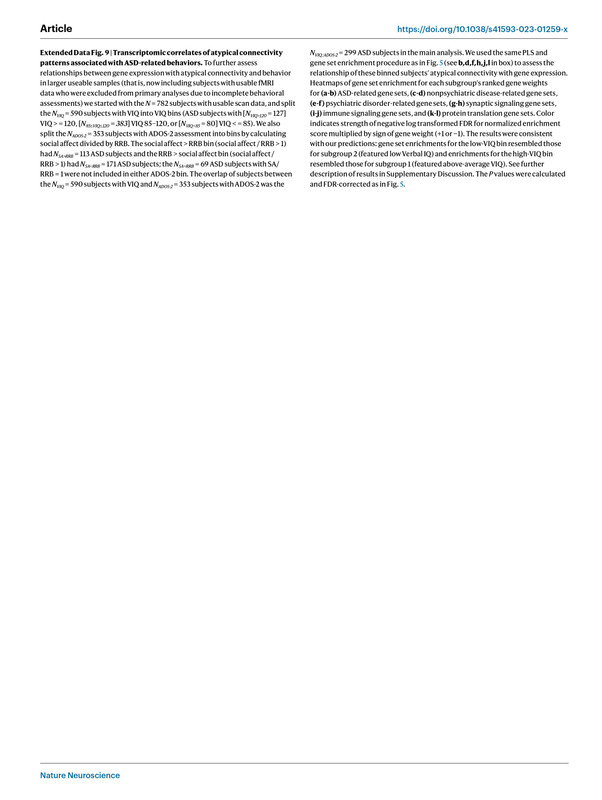
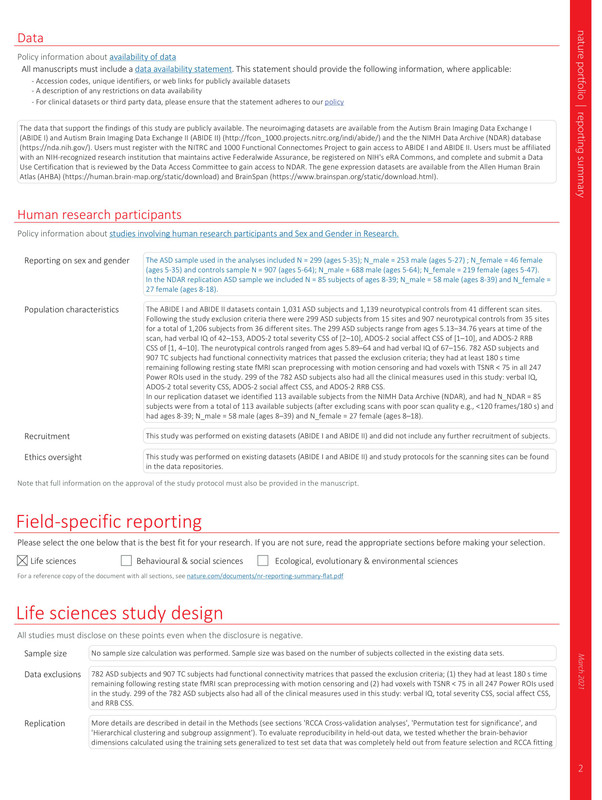
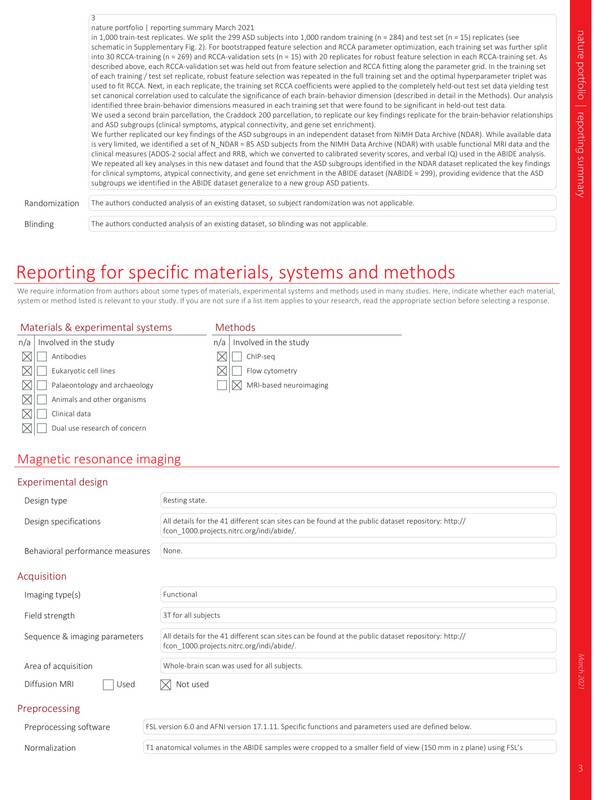
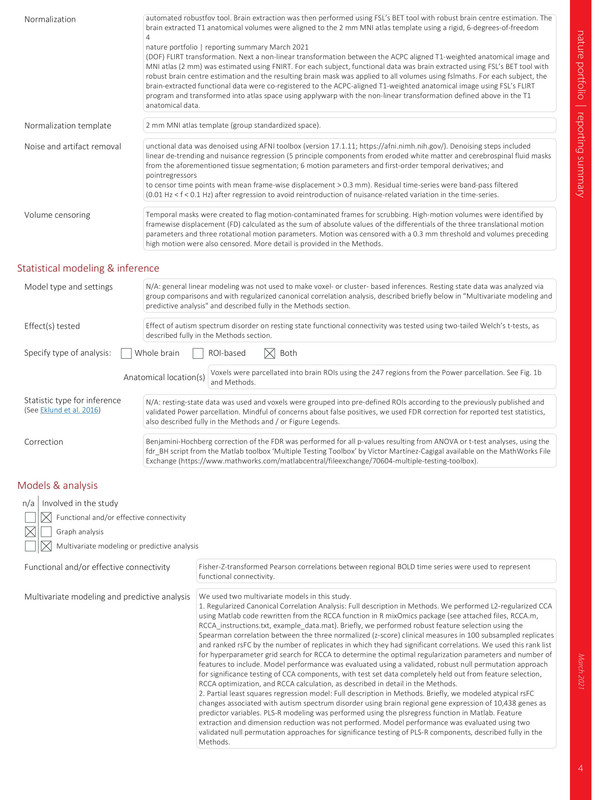
They used fMRI scan data to look at Resting State Functional Connectivity (RSFC). This is how well different parts of the brain are connected. After knocking out poor quality data the study included 299 autistics (85% male) plus 1106 NT controls.

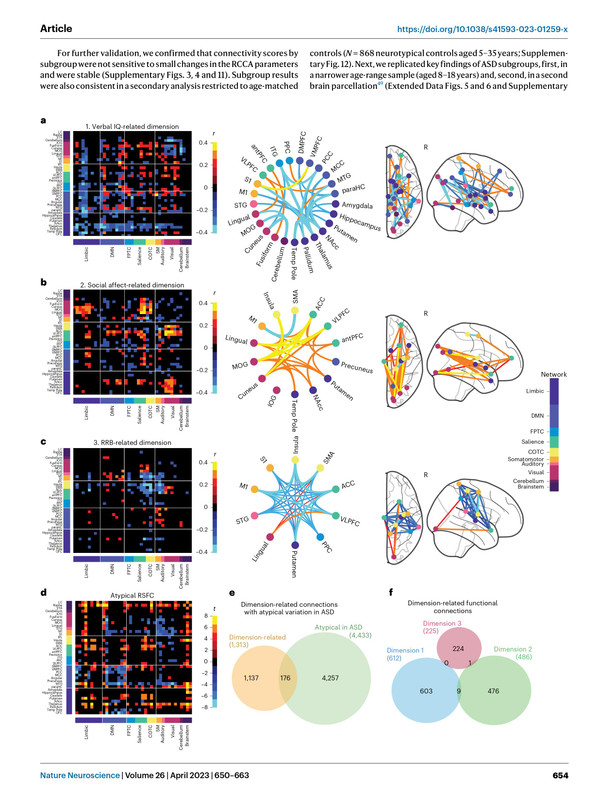
They found that 3 distinct brain networks are associated with the following "brain-behaviour dimensions" relevant to autism:
- verbal IQ
- social affect
- restricted repetitive behaviours (RRB)

( I understand these 3 dimensions were adopted as they could be correlated to the IQ test and ADOS test results of the study group).

In other words, there was a statistically significant correlation between the RSFC connectivity scores for each brain network and the associated brain-behaviour dimension.

So for example, the verbal IQ dimension was related to functional connectivity in areas important for language processing and reading ability. (Functional connectivity in these areas correlated with verbal IQ test scores).

The social affect dimension was related to connectivity in areas important for socio-emotional processing. (This includes the "salience network", which is associated with sensory over-responsivity to irrelevant stimuli and social interaction deficits).

The RRB dimension was related to connectivity in areas important for cognitive control, response inhibition and action selection.

More to come...


KitLily
Veteran
Veteran

User avatar

Joined: 7 Jan 2021
Age: 57
Gender: Female
Posts: 5,074
Location: England

11 Apr 2023, 5:54 am

Thanks Mrs Peel, it's so interesting, even if I don't really understand it! Having 4 subtypes might make our lives easier. I like categories and groups, it makes more sense to me to have people/things in categories.


_________________
That alien woman. On Earth to observe and wonder about homo sapiens.


MrsPeel
Veteran
Veteran

User avatar

Joined: 1 Oct 2017
Age: 54
Gender: Non-binary
Posts: 1,927
Location: Australia

11 Apr 2023, 6:06 am

SECONDLY

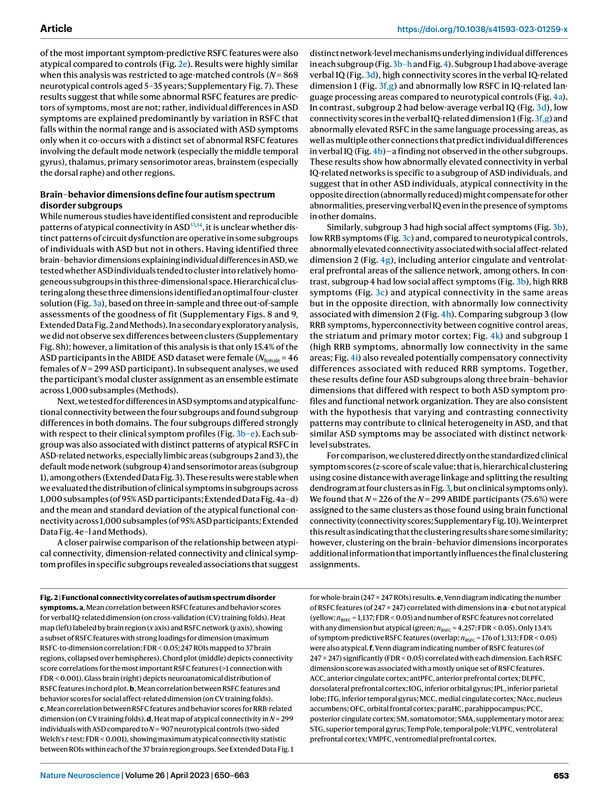
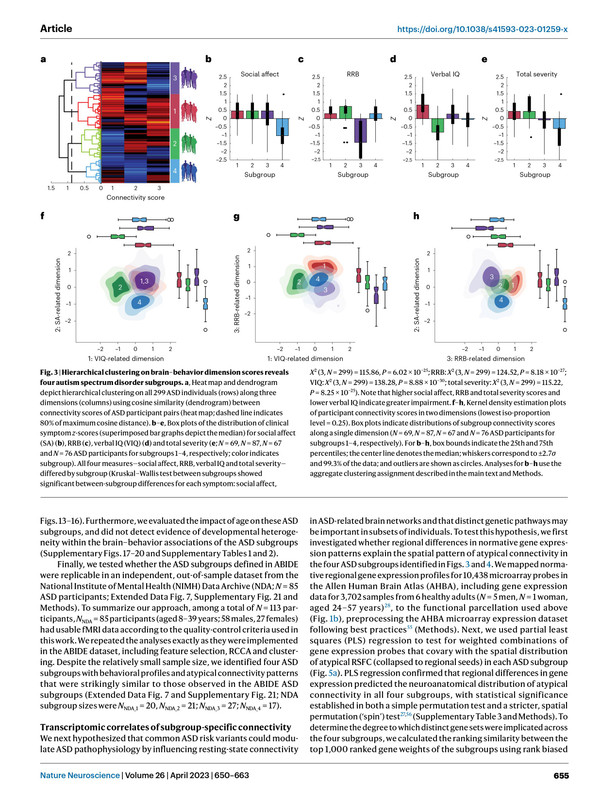
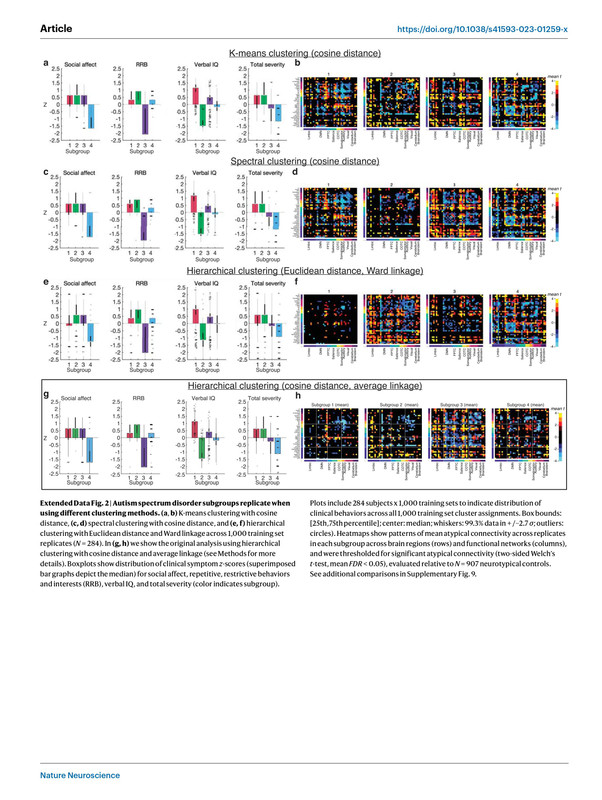
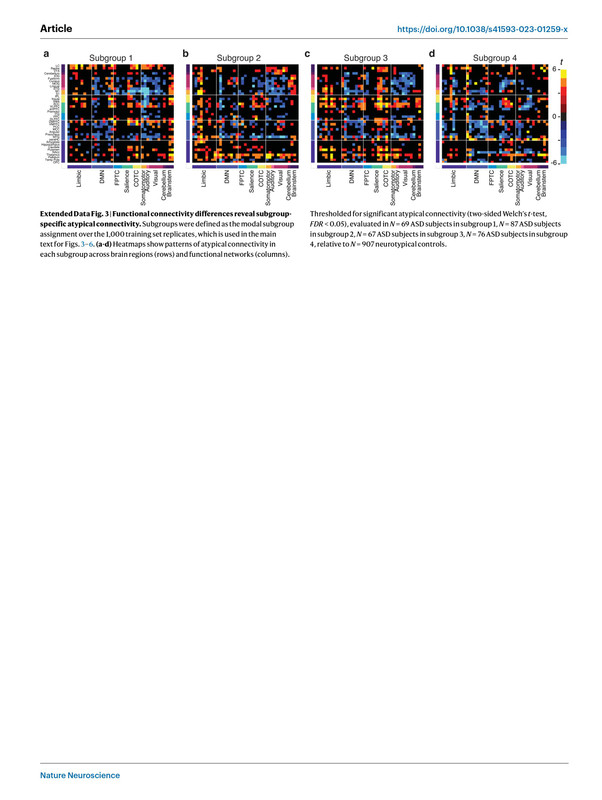
They considered whether autistics clustered into subgroups with similar patterns of connectivity within these 3 dimensions. I'm not quite sure what they did here, it's something statistical. But the result was that they identified 4 subgroups.

These subgroups displayed differences in both domains:
- ASD symptoms
- atypical functional connectivity in the brain (RSFC)

Each subgroup displayed distinct patterns of atypical RSFC, including (amongst others):
- in the limbic areas (subgroups 2 & 3)
- in the default mode network (subgroup 4)
- in sensorimotor areas (subgroup 1)

There's further explanation I don't understand but it seems to be saying that these atypical RSFC agreed with clinical symptom patterns for 95% of those studied (?)

More description of the subgroups to come...


MrsPeel
Veteran
Veteran

User avatar

Joined: 1 Oct 2017
Age: 54
Gender: Non-binary
Posts: 1,927
Location: Australia

11 Apr 2023, 8:05 am

THIRDLY

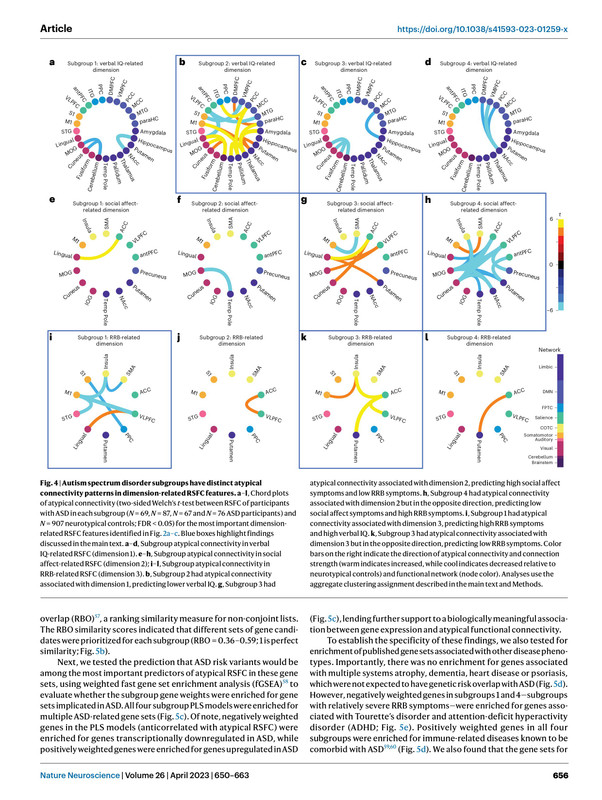
There is more explanation of the brain connectivity and traits of each subgroup. This is where it gets a bit confusing. It seems like they are saying that both over-connectivity and under-connectivity of the same network can produce autism traits (?)

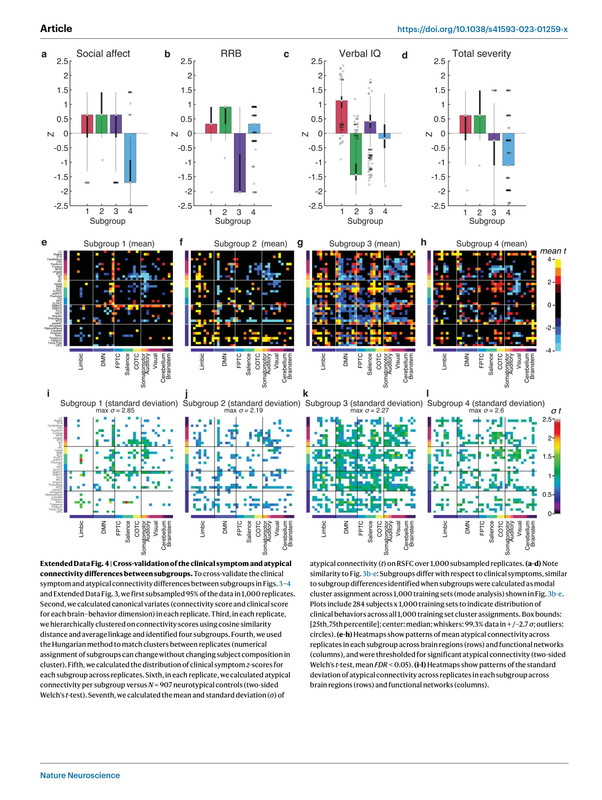
Also there are compensatory mechanisms at work in our brains. For some subgroups these help maintain verbal IQ despite connectivity issues in the IQ area, for another subgroup these reduce RRB traits despite connectivity issues in the control areas.

I'll try to summarise the subgroups from my (limited) understanding. I've bolded what seems to be the principal characteristic:

Subgroup 1:
From the text: Above average verbal IQ + High connectivity in verbal IQ network + abnormally low connectivity in language processing areas.
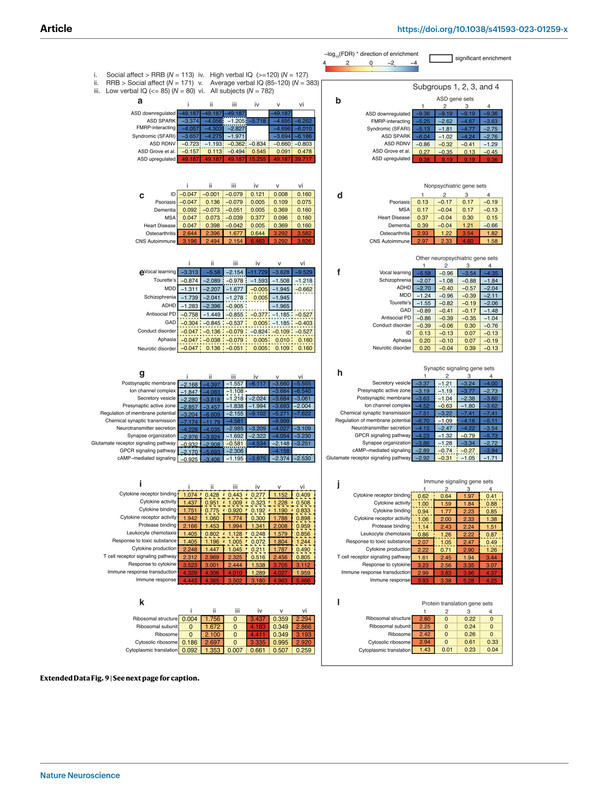
Also, from the charts: impairments in social affect and RRB.

Subgroup 2:
From the text: Below average verbal IQ + Low connectivity in verbal IQ network + abnormally high connectivity in language processing areas. Plus many individual differences in aspects of IQ.
Also, from the charts: impairments in social affect and RRB.

Subgroup 3:
From the text: High social affect symptoms + high connectivity in social affect networks + low RRB symptoms.
Also, from the charts: Abnormally low connectivity in RRB networks? + average to above verbal IQ.

Subgroup 4:
From the text: Low social affect symptoms + abnormally low connectivity in social affect networks + high RRB symptoms + high connectivity in RRB networks.
Also, from the charts: Average verbal IQ.

Summarised in my own words by principal traits, with a few inferences:
Type 1 = high IQ except language processing, may be stimmy
Type 2 = low verbal IQ (or very spiky IQ profile)
Type 3 = more socially impaired (+may have sensory issues?)
Type 4 = more restricted/repetitive behaviours (obsessive interests, rigid schedules?)

OK this has taken me a long time to summarise, I'll have to follow up with the rest tomorrow.


Edna3362
Veteran
Veteran

User avatar

Joined: 29 Oct 2011
Gender: Female
Posts: 13,727
Location: ᜆᜄᜎᜓᜄ᜔

11 Apr 2023, 12:04 pm

Hmmm...

That eliminates type 1 in my own case.
And higher chances of being type 2 -- cannot yet completely discount type 3 and 4.


_________________
Gained Number Post Count (1).
Lose Time (n).

Lose more time here - Updates at least once a week.


Recidivist
Veteran
Veteran

User avatar

Joined: 4 Jan 2023
Gender: Male
Posts: 3,851
Location: He/him/his

11 Apr 2023, 2:16 pm

MrsPeel wrote:
Thanks Recidivist, you're a star!


You are doing the heavy lifting by translating :star:


_________________
Another man's freedom fighter, one man's terrorist is - Yoda (probably)


The_Walrus
Forum Moderator
Forum Moderator

User avatar

Joined: 27 Jan 2010
Age: 31
Gender: Male
Posts: 8,878
Location: London

11 Apr 2023, 2:47 pm

ToughDiamond wrote:
KitLily wrote:
ToughDiamond wrote:
That's the kind of clear, straightforward list I wish the article had directly given. I'd be ashamed of myself if I wrote an article mentioning 4 things without itemising them clearly. I hope the consensus is that your list is correct. It looks like quite a bit of work to parse them out of the article.


Yes! I'd be ashamed too.

It's ironic. They should be clearer because we are autistic and need clarity.

I suppose they know that if they just listed the 4 subtypes, we'd have no reason to buy the original. I doubt they have our interests at heart. I hate it when health information is monetised. When I worked at a university, all we had to do was to send a request card to any author to get a free copy of their paper. They weren't legally bound to comply, but it was considered bad form not to, and they usually did.

I don't think there is any nefarious reason why Cornell would deliberately obfuscate for their own benefit. The writers of a paper do not financially benefit from people buying copies of the journal it is published in - which is exactly why academics are so happy to send around pirated copies of their papers.


Recidivist
Veteran
Veteran

User avatar

Joined: 4 Jan 2023
Gender: Male
Posts: 3,851
Location: He/him/his

11 Apr 2023, 2:59 pm

R.I.P Aaron Swartz :heart:


_________________
Another man's freedom fighter, one man's terrorist is - Yoda (probably)


ToughDiamond
Veteran
Veteran

User avatar

Joined: 15 Sep 2008
Age: 73
Gender: Male
Posts: 14,534

12 Apr 2023, 4:03 pm

The_Walrus wrote:
ToughDiamond wrote:
I suppose they know that if they just listed the 4 subtypes, we'd have no reason to buy the original. I doubt they have our interests at heart. I hate it when health information is monetised. When I worked at a university, all we had to do was to send a request card to any author to get a free copy of their paper. They weren't legally bound to comply, but it was considered bad form not to, and they usually did.

I don't think there is any nefarious reason why Cornell would deliberately obfuscate for their own benefit. The writers of a paper do not financially benefit from people buying copies of the journal it is published in - which is exactly why academics are so happy to send around pirated copies of their papers.

Who knows? The publishers do, but I don't suppose they'll ever tell us what their unwritten policies are. I guess a journal costs money to produce, and it has to come from somewhere. But it could very well be that the journalists who wrote the articles didn't list the 4 subtypes simply because they're so hard to figure out even with access to the paper itself. There's something disappointing about a world in which a science paper can talk about discovering 4 things without ever explicitly and simply listing those things. But you're right that I don't know how things ever came to such a pass.


KitLily
Veteran
Veteran

User avatar

Joined: 7 Jan 2021
Age: 57
Gender: Female
Posts: 5,074
Location: England

22 Apr 2023, 9:26 am

Some guy on Reddit gave me this PDF of the article about the subtypes that he got from his university!

https://drive.google.com/file/d/1ypXKHR ... vE7o5/view

Good luck reading this, it's very complex!


_________________
That alien woman. On Earth to observe and wonder about homo sapiens.


IsabellaLinton
Veteran
Veteran

User avatar

Joined: 1 Nov 2017
Gender: Female
Posts: 72,433
Location: Chez Quis

22 Apr 2023, 9:36 am

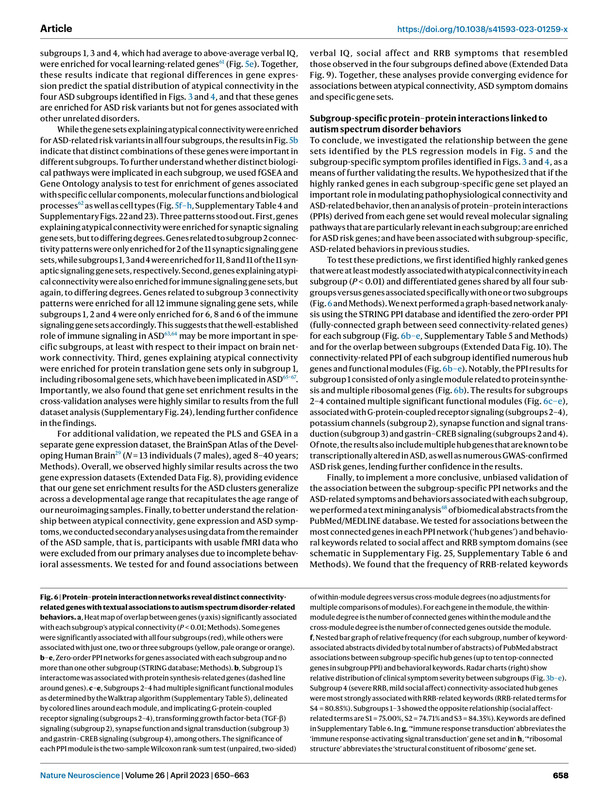
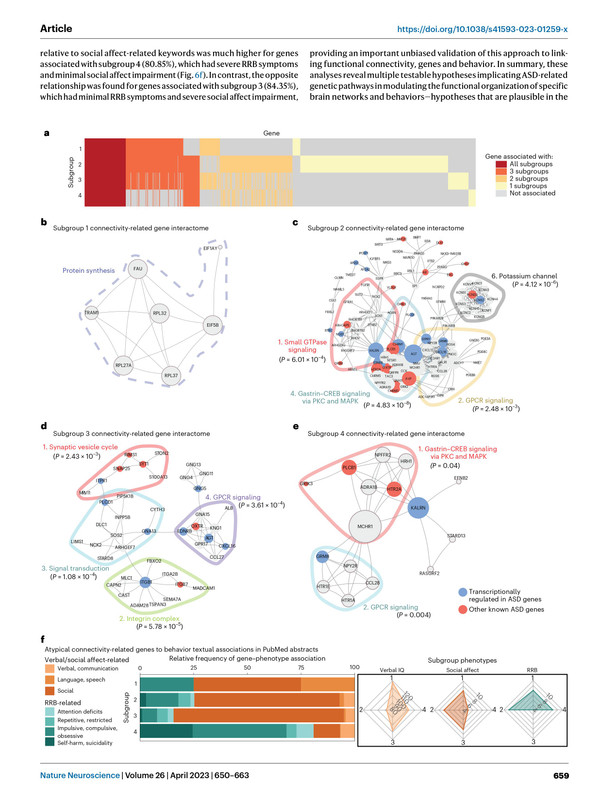
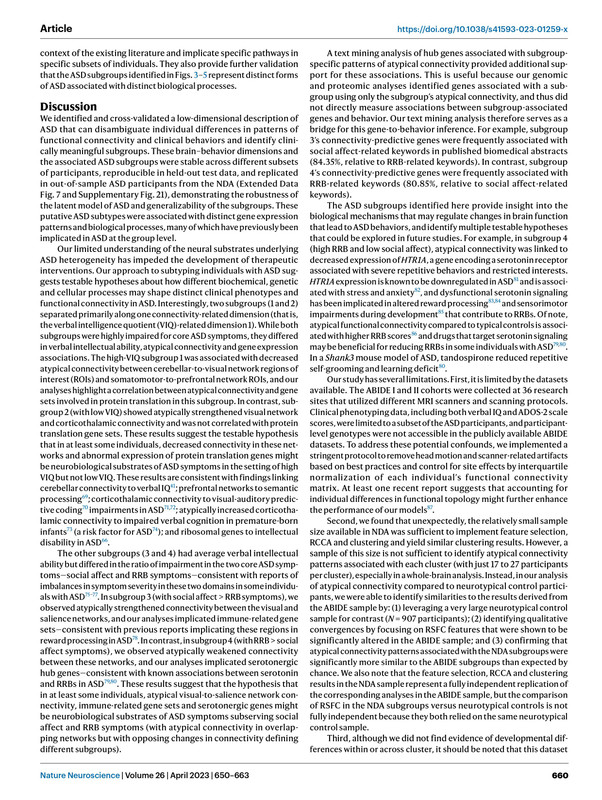
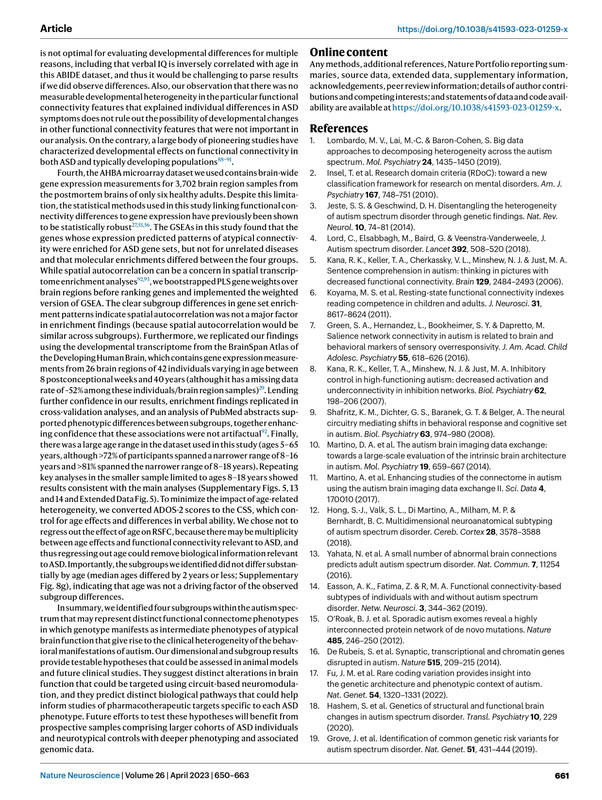
I love the graphics! ^

I was disappointed they didn't name the four groups in the conclusion. :(
I hate when that happens.

I might give it a go sometime and try to figure out what it all means.


_________________
I never give you my number, I only give you my situation.
Beatles