
4 major neurotransmitters


Tyri0n
Veteran


Joined: 24 Nov 2012
Age: 39
Gender: Male
Posts: 2,879
Location: Douchebag Capital of the World (aka Washington D.C.)
 20 Apr 2013, 5:45 pm

which are acetylcholine, dopamine, sertonin, and GABA.
Is it possible that autistic symptoms may be made worse by a deficiency in some or all of them? Has anyone done experimentation to see which one could be causing issues?
I took Zoloft and and 5-HTP (all prescribed) and quickly reached symptoms of mild Serotonin Syndrome, so I'm pretty sure serotonin isn't the issue. But Zoloft really did help with depression and sensory issues. I recently tried St. John's Wort at the recommendation of a doctor, and it really helped with depression and sensory integration as well; however, it causes headaches and irritability after about two weeks of taking it, which is basically mild Serotonin Syndrome.
When I take choline, it helps in small doses, but taking the recommended daily dose (on top of getting whatever I get from food) causes depression. So I'm pretty sure it's not choline.
Could it actually be dopamine and/or GABA? Trying to figure out why SSRI's help but serotonin isn't the issue. Wouldn't this seem to implicate dopamine as a problem? Some SSRI's increase dopamine levels as a side effect. Also, when I smoke pot, engage in intimate relations, whack off, etc -- it leads to feelings of depression and sensory issues. Have I, perhaps, hit on dopamine dysfunction as an issue, and if so, has anyone else with similar experiences figured out what to do about it?
 20 Apr 2013, 6:52 pm
You're on to something there. The answer is probably dopamine, and the opioid receptors.
Dopamine and that are the reward(/pleasure)-system, and we just get rewards from more/other things than NTs do. Which is a very nice thing. And then we also (at least me) get withdrawal when not engaged in whatever is hitting our reward-button.
Tyri0n
Veteran
Joined: 24 Nov 2012
Age: 39
Gender: Male
Posts: 2,879
Location: Douchebag Capital of the World (aka Washington D.C.)
20 Apr 2013, 7:36 pm
Dopamine and that are the reward(/pleasure)-system, and we just get rewards from more/other things than NTs do. Which is a very nice thing. And then we also (at least me) get withdrawal when not engaged in whatever is hitting our reward-button.
I wonder if taking L DOPA could do some great things in an autistic person. I think I am going to try to combine it with a nootropic agent I already have, which will hopefully help with fixing whatever is wrong with the dopamine transport system as well (for example, VTA-NAc).
Do you know if a stimulant for the BDNF and NGF would have an effect on this system, if it is damaged?
I've noticed that listening to some Trance/techno music, especially some of the European artists like Phynn, seems to have a reward-like effect on my mood as well while listening to most ordinary music is just a distraction.
20 Apr 2013, 8:03 pm
Dopamine and that are the reward(/pleasure)-system, and we just get rewards from more/other things than NTs do. Which is a very nice thing. And then we also (at least me) get withdrawal when not engaged in whatever is hitting our reward-button.
I wonder if taking L DOPA could do some great things in an autistic person. I think I am going to try to combine it with a nootropic agent I already have, which will hopefully help with fixing whatever is wrong with the dopamine transport system as well (for example, VTA-NAc).
Do you know if a stimulant for the BDNF and NGF would have an effect on this system, if it is damaged?
I've noticed that listening to some Trance/techno music, especially some of the European artists like Phynn, seems to have a reward-like effect on my mood as well while listening to most ordinary music is just a distraction.
The system isn't necessarily damaged, it probably just works differently, but compared to NTs I guess we could call it that. I don't think more dopamine will fix it, but I do think it would make ones autism look more normal, while actually putting it into overdrive, if that makes sense. More dopamine will make the reward button being hit all the time, which would make EVERYTHING one's special interest, making one a more "even" person while still being autistic. It's exhausting though, as an autistic brain will be overwhelmed very fast by being like that... It's still worth a try though, I'll check if I can get some of that too or some other precursor to dopamine as I'm a bit worried about my dopamine level. But you should probably check the potential side-effects first, though I don't know what they are, like serotonin that can cause both serotonin syndrome (like you had) and apparently paradoxical LESS activity in the area of the brain they thought would increase in activity, like that paper in the serotonin-thread said, which probably is what causes emotional numbness.
Music works like that for me too, especially the more trance-inducing (not meaning just that genre though)

 20 Apr 2013, 8:28 pm
I'm worried anyway, as I don't eat many of the foods that convert to dopamine and I take some medicines that affect my dopamine. Anyway I think it's mostly how it's used that matters, so while not just having more dopamine would make the rewards come more often, it would have to work with something that do that, I still think it might work like that. I know very well how it works for me.
20 Apr 2013, 8:48 pm
Hmm. So that is what happens when there's too much dopamine. http://www.yourhormones.info/Hormones/Prolactin.aspx
Then the solution would be something hitting the reward-switch and maybe not extra dopamine. Though if someone was going to start with that it might help having a storage of dopamine ready. Not sure how this works but I think people working together can figure it out.

 20 Apr 2013, 9:06 pm
I'm not an expert on neurotransmitters or SSRI's, but if you were taking SSRI's for depression, is it possible that a decline in depression symptoms simply made it easier for you to deal with autistic symptoms, hence making it seem as though they were helping with autistic symptoms? This is just a pure speculation on my part though, and like I said, I'm far from an expert on this stuff.
Some VERY scant web browsing seems to show several promising leads connecting dopaminergic and serotonergic systems to autism. And simply typing in "autism" and "dopamine" or "serotonin" yielded thousands of results each when using my university library's online database for scholarly articles. I found an (old, as in like 2000, title "Serotonin and autism" in the Journal "European Neuropharmacology") article claiming that serotonin has an affect on certain symptoms associated with autism, but not core features like communication and lack of social interaction. It also cited a link between hyperserotonemia (high levels of 5-HT in blood) in "over 25% of children and adolescents with autism." Then there was a study linking. A 2010 study in JAMA (I'm assuming that be Journal of American Medial Association?) Psychiatry links lower serotonin transporter binding throughout the brains of adults with high functioning autism relative to adults without autism. Dopamine transporter binding was found to be higher in the orbitofrontal cortex of adults with HFA relative to control group. The title of this second study was "Brain Serotonin and Dopamine Transporter Bindings in Adults with High-Functioning Autism".
Anyways, that's what I found in a few minutes of research that was far from thorough. I hope this can help give you a good starting place if you're interested in doing any more research yourself.
I feel like the trance music is just something non-distracting that you enjoy listening to. I can't listen to certain types of music when I'm doing something that requires significant concentration (i.e. metal, hip-hop).
Tyri0n
Veteran
Joined: 24 Nov 2012
Age: 39
Gender: Male
Posts: 2,879
Location: Douchebag Capital of the World (aka Washington D.C.)
20 Apr 2013, 9:07 pm
By the way, for anyone who wanted to get on SSI and went to see a new doctor to get a letter, this knowledge could work in reverse: a combination of lots of 5HTP, too much acetylcholine, cannabis every day, soda, and lots of whacking off would have the effect of spiking autistic symptoms within two weeks or less, leading to horrible posture, low energy, major processing delays, and no eye contact. It would be very easy to then go to a doctor, claim to be unable to work, and then go to your SSI interview looking like this, which would enhance believability.
Heck, if my real career doesn't work out, I am going to try something like this right before I shape up and move overseas somewhere like the Philippines, Lijiang, or Saigon where $1000/month is upper middle class.
20 Apr 2013, 9:31 pm
Some VERY scant web browsing seems to show several promising leads connecting dopaminergic and serotonergic systems to autism. And simply typing in "autism" and "dopamine" or "serotonin" yielded thousands of results each when using my university library's online database for scholarly articles. I found an (old, as in like 2000, title "Serotonin and autism" in the Journal "European Neuropharmacology") article claiming that serotonin has an affect on certain symptoms associated with autism, but not core features like communication and lack of social interaction. It also cited a link between hyperserotonemia (high levels of 5-HT in blood) in "over 25% of children and adolescents with autism." Then there was a study linking. A 2010 study in JAMA (I'm assuming that be Journal of American Medial Association?) Psychiatry links lower serotonin transporter binding throughout the brains of adults with high functioning autism relative to adults without autism. Dopamine transporter binding was found to be higher in the orbitofrontal cortex of adults with HFA relative to control group. The title of this second study was "Brain Serotonin and Dopamine Transporter Bindings in Adults with High-Functioning Autism".
Anyways, that's what I found in a few minutes of research that was far from thorough. I hope this can help give you a good starting place if you're interested in doing any more research yourself.
I feel like the trance music is just something non-distracting that you enjoy listening to. I can't listen to certain types of music when I'm doing something that requires significant concentration (i.e. metal, hip-hop).
I'll save those to read later, as long as they aren't behind a paywall.
Really useful post. Thank you.
btbnnyr
Veteran

Joined: 18 May 2011
Gender: Female
Posts: 7,359
Location: Lost Angleles Carmen Santiago
20 Apr 2013, 9:41 pm
The excitation/inhibition imbalance hypothesis of autism says that autism is possibly caused by increased excitation and decreased inhibition in neural circuits, which is possibly caused by deletion and mutation of GABA receptor subunits, which respond to GABA, which is the main inhibitory neurotransmitter in the brain, like glutamate is the main excitatory neurotransmitter. Proponents of E/I imbalance point out the high co-occurrence of autism and epilepsy. GABA also has a very important role the early development of the brain, when it is an excitatory neurotransmitter.
_________________
Drain and plane and grain and blain your brain, and then again,
Propane and butane out of the gas main, your blain shall sustain!
20 Apr 2013, 9:53 pm
Some VERY scant web browsing seems to show several promising leads connecting dopaminergic and serotonergic systems to autism. And simply typing in "autism" and "dopamine" or "serotonin" yielded thousands of results each when using my university library's online database for scholarly articles. I found an (old, as in like 2000, title "Serotonin and autism" in the Journal "European Neuropharmacology") article claiming that serotonin has an affect on certain symptoms associated with autism, but not core features like communication and lack of social interaction. It also cited a link between hyperserotonemia (high levels of 5-HT in blood) in "over 25% of children and adolescents with autism." Then there was a study linking. A 2010 study in JAMA (I'm assuming that be Journal of American Medial Association?) Psychiatry links lower serotonin transporter binding throughout the brains of adults with high functioning autism relative to adults without autism. Dopamine transporter binding was found to be higher in the orbitofrontal cortex of adults with HFA relative to control group. The title of this second study was "Brain Serotonin and Dopamine Transporter Bindings in Adults with High-Functioning Autism".
Anyways, that's what I found in a few minutes of research that was far from thorough. I hope this can help give you a good starting place if you're interested in doing any more research yourself.
I feel like the trance music is just something non-distracting that you enjoy listening to. I can't listen to certain types of music when I'm doing something that requires significant concentration (i.e. metal, hip-hop).
I'll save those to read later, as long as they aren't behind a paywall.
Really useful post. Thank you.No problem. I'm pretty sure the at least the second one (and probably the first one) should be free for anybody to read, but it was really the second one that seemed useful to me.
 21 Apr 2013, 12:32 am
What about norepinephrine?
_________________
AQ 31
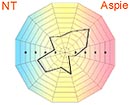
Your Aspie score: 100 of 200 / Your neurotypical (non-autistic) score: 101 of 200
You seem to have both Aspie and neurotypical traits
What would these results mean? Been told here I must be a "half pint".
 21 Apr 2013, 2:02 am
I was definitely not low in dopamine before I got diagnosed with schizophrenia and put on antipsychotics. But I am autistic. Although my serotonin levels may have been low in parts of my brain as I take an SSRI for OCD.
_________________
I am a partially verbal classic autistic. I am a pharmacology student with full time support.
 21 Apr 2013, 5:24 am
I took Gabapentin for several weeks, and that was one of the weirdest experiences in my life. I did however seem to "get" people better. But also had freakish dreams... long ones... very long. It had an effect, but oddly I wasn't really inclined to analyze it while it was happening... which again, is strange.
I've taken MDMA before, and while it doesn't exactly fix autism... at low dosages it completely supresses any anxiety issues I have.


