
Found a cure for stress, anxiety, sensitivity to criticism


 21 Sep 2020, 3:09 am

Negative life experiences caused me to suffer from stress, anxiety, low self-esteem, depression, and an increased sensitivity to criticism due to something called classical conditioning. I was able to overcome those problems and want to share what I learned because I think it may help other people.
What is classical conditioning?
Some stimuli naturally evoke certain responses such as dogs salivating when they see food, babies being frightened by loud noises, and people experiencing painful emotions after being rejected. The stimulus and response are unconditioned because they occur naturally.
When a neutral stimulus occurs before another stimulus that evokes a certain response (such as ringing a bell before feeding a dog), the brain may associate the two and respond to the neutral stimulus (hearing a bell) the same way it responds to the other stimulus (seeing food). That’s what Ivan Pavlov found in an experiment with dogs. The Little Albert experiment confirmed that classical conditioning also occurs in humans when the researcher showed that an 11 month old baby could be conditioned to fear a white lab rat he initially wasn’t afraid of by making a loud noise to frighten him after showing him the rat on several occasions. The new response to the neutral stimulus is called a conditioned response because it occurs as a result of the brain associating the neutral stimulus with the other stimulus.
Classical Conditioning and Phobias
I'm going to explain how classical conditioning causes phobias first because it's simpler which makes it easier to understand how it works. The following example shows how classical conditioning can cause a person who is attacked by a dog to become afraid of dogs:
The mind associating dogs with being assaulted (bitten) can result in people responding to dogs the same way they respond to being assaulted (fear). Obviously, someone who's been around friendly dogs for years who is bitten by a little dog won't react the same way (little or no association between dogs and assault) as someone whose first experience with a dog resulted in a vicious attack (strong association between dogs and assault). Unlike CBT, where people are taught that thoughts influence emotions, classical conditioning doesn’t involve thoughts at all. Once conditioned to fear dogs, people may remain afraid of dogs even if they no longer remember being bitten. A bad experience with a dog when you’re 3 years old that you can’t remember can make you afraid of dogs when you’re 30 years old although it’s not the dog itself that causes fear but the conditioned response to it. The process described above can explain many phobias people experience including social anxiety.
Classical Conditioning in Autism
Since classical conditioning can occur whenever any neutral stimulus occurs before any other stimulus that evokes a certain response, it can affect everyone in a variety of ways. Here’s an example that may be relevant to some people who are autistic:
Bob had great parents who loved him. When he was a baby, his parents rocked him back and forth which made him feel loved and secure. When he first learned to walk when he was 12 months old, his parents were happy for him and praised him. He felt better and liked to walk back and forth around his house. Around 15 to 24 months old, the effects of autism became more apparent. His parents were frustrated and disappointed with his behavior. Bob tried to change his behavior to please his parents but found it difficult. Since neither Bob nor his parents were aware of autism affecting his behavior, his parents thought he just had a behavior problem and kept trying to get him to act differently while Bob felt his parents were being harsh and overly critical which led him to conclude they didn’t like him. As a result of the above, Bob’s mind formed the following associations:
The above example explains why some people are sensitive to criticism (due to their mind associating it with rejection) and how classical conditioning can sometimes be beneficial (allowing people to feel better and reduce their anxiety by stimuli, such as rocking and pacing, that their mind associates with something positive).
It’s also possible for a neutral stimulus to become associated with a conditioned stimulus. For example, if Bob’s mind associated being himself with criticism, Bob may have been afraid to be himself and avoided saying or doing anything that people might think is weird.
Effects of Classical Conditioning
If your mind associated negative reactions (such as frustration and disappointment) with rejection when you were a toddler, you may have experienced painful emotions associated with rejection whenever anyone reacted negatively to your behavior. If that happened, the emotions and the stress they caused would have been overwhelming and likely forced you to cope by withdrawing from people and learning to be content being alone by suppressing your emotions and convincing yourself you didn’t need other people or were better off alone.
Being chronically alone, even if you aren’t lonely, and feeling like you’re different than other people has been shown to cause stress and anxiety. If a history of criticism convinced you that something was wrong with you, your mind may have associated criticism with feeling defective or inferior which can result in you feeling worse about yourself when you are criticized and contribute to a low self-esteem and depression.
Treatment / Cure
If you avoid the conditioned stimulus (dogs and criticism in the two examples above), the association your brain formed with the conditioned response (fear of dogs or experiencing painful emotions after being criticized) will never go away. Avoidance has been shown to strengthen those associations. That’s why the most effective treatment for conditioned responses is exposure therapy.
Exposure therapy involves exposing yourself to the conditioned stimulus with the goal of reverting it back to a neutral stimulus. If you expose yourself to the conditioned stimulus (dog or criticism) and the unconditioned stimulus your mind associated it with doesn’t occur (being assaulted/bitten by the dog or feeling rejected), the association will weaken and can eventually break (the psychological term for this is extinction) if you expose yourself to it enough times. However, if you’re bitten or rejected (using the two examples earlier), the association will strengthen.
Exposing yourself to the conditioned stimulus is fairly straightforward. Using the examples above, you would spend more time around dogs or be yourself and stop trying to avoid criticism. You could also disagree with someone or deliberately act odd to provoke someone to criticize you.
Avoiding the stimulus it’s associated with can be trickier. In the dog example, if you just wanted a pet dog, you could spend time with friendlier dogs less likely to bite you. You might still retain a fear of “mean” dogs but that might not matter if you’re hardly ever around them. In the criticism example, experiencing emotions associated with rejection can make you feel rejected even when you're not being rejected (This is why some people are told they're imagining they're being mistreated or bullied, think they're being gaslighted, and need people to validate their feelings. If most people don't agree with your interpretation or feel the way you do, there's a good chance classical conditioning is involved).
Criticism and Rejection
Using the criticism and rejection example, you may have unknowingly already broken that association with some people such as your school teachers. Your teachers probably criticized or pointed out mistakes on assignments and exams but you may have quickly realized they did that to everyone and knew they were trying to help you learn so you may not have felt rejected when they did it. It’s also not uncommon for autistic people to be comfortable being themselves around a spouse or parent because they know that person has good intentions and isn’t rejecting them when they make a negative comment about something.
How do you break an association between criticism and rejection with people in general so criticism no longer bothers you? The same way you may have broken it with your teachers, a parent, or a spouse. That’s by realizing that most people who criticize you aren’t rejecting you. It may seem like they are if you developed a conditioned response to criticism that causes you to feel emotions associated with rejection. Now that you’re aware of classical conditioning, you now know that just because you feel rejected doesn’t mean you’re actually being rejected. You can remind yourself of that before you seek out criticism to reduce the likelihood that you’ll think you’re being rejected. It also helps to know common reasons why people react negatively to autistic people such as being uncomfortable (it’s natural to fear people who act different because odd behavior can indicate that someone is a threat or is planning to harm you) or misunderstanding you (very common due to autistic people seeing the world differently than most people due to different life experiences). You may be thinking, "Who cares if they're rejecting me or being uncomfortable? It makes me feel worse either way." That may be true and remain true initially but it makes a big difference in helping your brain no longer link criticism with rejection. If you can get your mind to stop associating them together, you won't feel nearly as bad when you think people are just uncomfortable around you.
Most of the things people say or do can be interpreted in multiple ways. Although it can be hard to think positively since stress has been shown to alter the brain in a way that often results in people thinking more rigidly and assuming the worst, the more favorably you’re able to view those criticizing you, the less likely you’ll feel rejected, and the easier it will be to break your mind’s association between criticism and rejection. It’s in your best interest to assume the best in people instead of the worst while working to break that association. It also helps to focus on how you’re like other people instead of focusing on your differences.
If you keep feeling rejected when people criticize you, it helps to seek out criticism when you're not particularly stressed and remind yourself of the information above before you seek out criticism to avoid automatically feeling rejected when you're criticized and having the stress caused by it affecting your thinking. If you know someone who may be willing to help, ask them to criticize you so you can practice being criticized when you know you're not being rejected to help break that association.
Of course, some people won’t like you because no one is liked by everyone but understanding that you’re just being rejected or disliked by those people and not by society in general can help reduce your mind’s association between criticism and rejection.
Criticism and Feeling Inferior
If your mind associated criticism with feeling defective or inferior, it helps to understand and accept that everyone has flaws and none of them make you any less worthy than anyone else. Acknowledge your weaknesses without overgeneralizing them by thinking you’re stupid, inept, defective, inferior, or a loser. Overcoming conditioned responses can help you realize your feelings are normal and help you feel better about yourself.
Final Thoughts
The information above and the two examples shown earlier can be used to help you overcome any kind of stress, anxiety, and other emotions you experience that result from classical conditioning.
Breaking the association between criticism and rejection can reduce or eliminate your stress by allowing you to be yourself without having to worry about feeling worse if people react negatively. If your mind no longer associates criticism with anything negative, you’ll no longer be sensitive to criticism.
 21 Sep 2020, 3:35 am
This is gonna controversial oh my f*****g god man. WOW
_________________
[color=#0066cc]ever changing evolving and growing
I am pieplup i have level 3 autism and a number of severe mental illnesses. I am rarely active on here anymore.
I run a discord for moderate-severely autistic people if anyone would like to join. You can also contact me on discord @Pieplup
Last edited by Pieplup on 21 Sep 2020, 3:47 am, edited 2 times in total.
21 Sep 2020, 3:42 am
After reading your 5 page essay I don't think this is going to work. and Even if it did what about the people woh aer inevitably gonna see the autism traits and be like that's no normal me no likely?
_________________
[color=#0066cc]ever changing evolving and growing
I am pieplup i have level 3 autism and a number of severe mental illnesses. I am rarely active on here anymore.
I run a discord for moderate-severely autistic people if anyone would like to join. You can also contact me on discord @Pieplup
21 Sep 2020, 5:43 am
Masking made me overcome many things, but after a period of time, masking breaks down and I have to start again with a new job with new people etc.
(I know it may seem like on a tanget to the subject but it is how I could cope).
Certain situations when it comes to things not involving people, where I am not masking are the things that can be a bit more complicated.
The problem I believe that I hit was burnout, but also the masking could not be kept up and each time it was like my inward world fell apart. Could have been a breakdown. I don't know.
But the times I have done well I have been able to mask on top and adjust the masks to meet the situation.
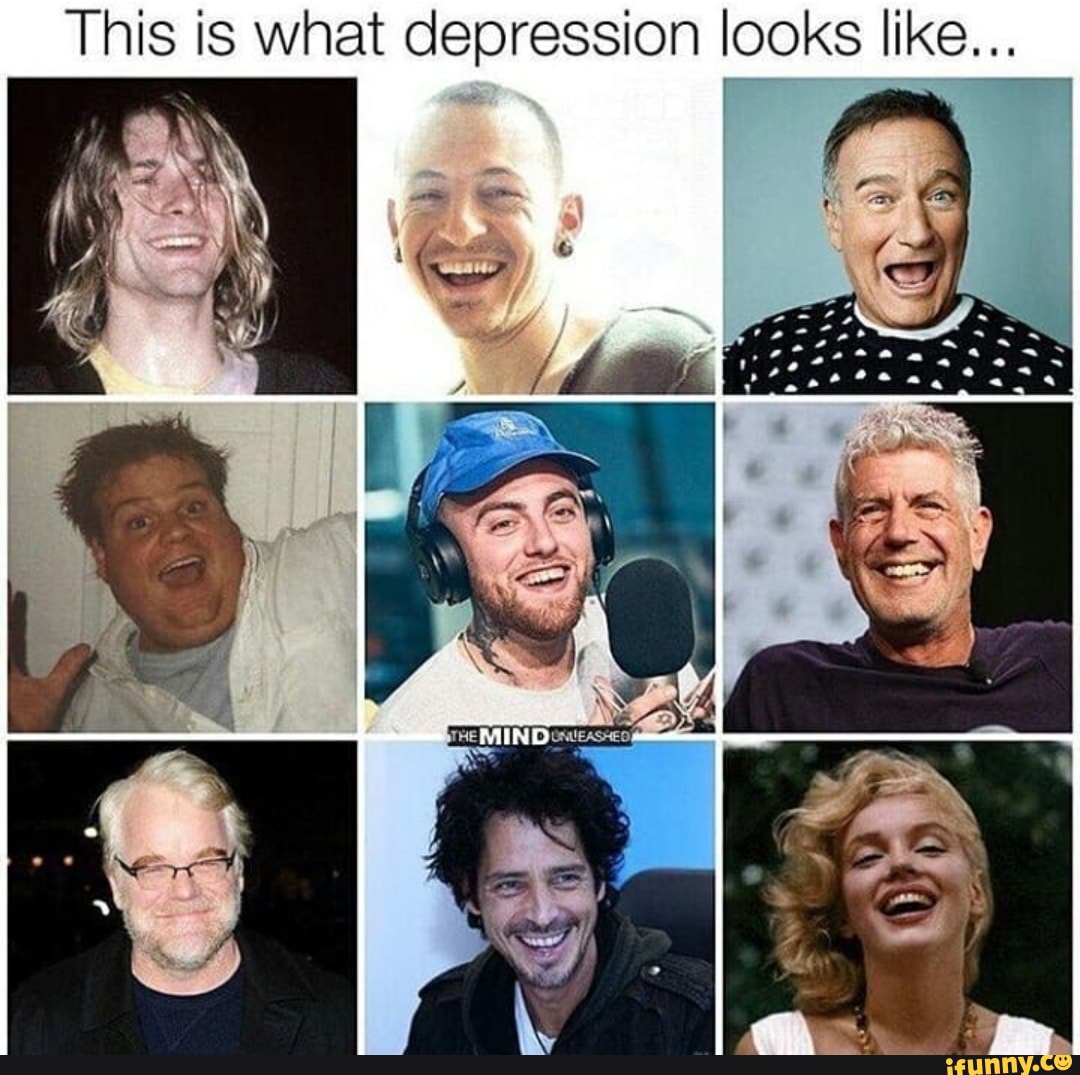
Masking can be a wierd mix of emotions. On the outside I appear to be happy, jolly, at peace and contentment, smiling... Yet on the inside I can be petrified, anxious, worried, concerned... My insides can be screaming at me when my outsides no one will know.
When I went back as a customer to buy something into the place where I used to work, I shared just a little bit of the inward mess I was in as the person I spoke to (Member of staff) who I worked with (Not closely worked with as we had different jobs) could not believe what I was going through. (I was describing the strings of partial shutdowns etc. Never had strings of them before quite like that). He just could not believe it as outwardly I was not showing any of it. Outwardly I was jolly and seemed happy.
In a previous employment I had mentioned I was suicidal. My manager said to me "You are the last person I would think would be suicidal". He just could not believe it! He said how I looked happy and jolly. (Part of masking was my sense of humour so I was always saying jokes).
Anyway... Though I write at a tangent, somehow it is relevent.
_________________
Verifying you are human. This may take a few seconds...
 21 Sep 2020, 5:50 am
(I know it may seem like on a tanget to the subject but it is how I could cope).
Certain situations when it comes to things not involving people, where I am not masking are the things that can be a bit more complicated.
The problem I believe that I hit was burnout, but also the masking could not be kept up and each time it was like my inward world fell apart. Could have been a breakdown. I don't know.
But the times I have done well I have been able to mask on top and adjust the masks to meet the situation.
Masking can be a wierd mix of emotions. On the outside I appear to be happy, jolly, at peace and contentment, smiling... Yet on the inside I can be petrified, anxious, worried, concerned... My insides can be screaming at me when my outsides no one will know.
When I went back as a customer to buy something into the place where I used to work, I shared just a little bit of the inward mess I was in as the person I spoke to (Member of staff) who I worked with (Not closely worked with as we had different jobs) could not believe what I was going through. (I was describing the strings of partial shutdowns etc. Never had strings of them before quite like that). He just could not believe it as outwardly I was not showing any of it. Outwardly I was jolly and seemed happy.
In a previous employment I had mentioned I was suicidal. My manager said to me "You are the last person I would think would be suicidal". He just could not believe it! He said how I looked happy and jolly. (Part of masking was my sense of humour so I was always saying jokes).
Anyway... Though I write at a tangent, somehow it is relevent.
You know - there is a meme:
_________________
Let's not confuse being normal with being mentally healthy.
<not moderating PPR stuff concerning East Europe>
21 Sep 2020, 7:35 am
The problem is most people have floating anxiety that latches on to certain things.
You cure that via behavior therapy you may be fine for a few days then your anxiety latches on to something else.
I.e you have anxiety that you may have cancer you go to the doctors and told all is ok. You feel great for a little while a little anxiety holiday then you might get anxious about Covid 19 or your roof collapsing etc etc. it’s never ending.
_________________
"The reasonable man adapts himself to the world; the unreasonable one persists in trying to adapt the world to himself. Therefore all progress depends upon the unreasonable man."
- George Bernie Shaw
21 Sep 2020, 8:32 am
You cure that via behavior therapy you may be fine for a few days then your anxiety latches on to something else.
I.e you have anxiety that you may have cancer you go to the doctors and told all is ok. You feel great for a little while a little anxiety holiday then you might get anxious about Covid 19 or your roof collapsing etc etc. it’s never ending.
Ya it'll just come back. You aren't dont' hve that negative contextua reactions to nots tim because negative reactions peopel have had in the past then you just get those negative reactinos
_________________
[color=#0066cc]ever changing evolving and growing
I am pieplup i have level 3 autism and a number of severe mental illnesses. I am rarely active on here anymore.
I run a discord for moderate-severely autistic people if anyone would like to join. You can also contact me on discord @Pieplup
21 Sep 2020, 8:34 am
Masking is unhealthy.
Don't do it.
Learn to accept yourself and medical anxiety doesn't go away but it lessens. Pretend 'anxiety' ie the 'anxious' emotion goes away.
I trained myself to be a completely different person for the sake of getting a job and fitting in. Didn't get a job. Didn't fit in. Just became mentally ill.
I didn't have anxiety before that. I was occasionally anxious of things, normally those things had little to do with social stuff (I have SA). So I'd have nerves before an injection or around a big dog for eg.
_________________
Not actually a girl
He/him
 21 Sep 2020, 8:42 am
When I grew up especially in Junior High School, I experienced an extreme amount of bullying, both psychological and physical abuse and it was severe. As a result as I grew into adulthood, in order to maintain my sanity, I built up a strong wall around me. Like a turtle with its shell. I rejected all CRITICISM.
I am 72 now, an ancient Aspie. One of the lessons that I learned in life was that there are two forms of criticism. These are destructive criticism and constructive criticism. And I learned to tell the difference between the two. This was a very important life lesson. So if you remember back to your brushes with bullying when you were called stupid, worthless, an idiot and a thousand other names, this is a prime example of destructive criticism. Constructive criticism comes from the heart. Others see the pain we feel and try to mend our hearts. Their criticism is out of love not hate. They are just trying to make a better you.
It is important for an Aspie to accept constructive criticism when it is offered and not be offended by it. That doesn't mean that you have to change but rather that you seriously consider the criticism that was offered and determine in your own mind if it has merit.
_________________
Author of Practical Preparations for a Coronavirus Pandemic.
A very unique plan. As Dr. Paul Thompson wrote, "This is the very best paper on the virus I have ever seen."
21 Sep 2020, 8:51 am
You cure that via behavior therapy you may be fine for a few days then your anxiety latches on to something else.
I.e you have anxiety that you may have cancer you go to the doctors and told all is ok. You feel great for a little while a little anxiety holiday then you might get anxious about Covid 19 or your roof collapsing etc etc. it’s never ending.
Ya it'll just come back. You aren't dont' hve that negative contextua reactions to nots tim because negative reactions peopel have had in the past then you just get those negative reactinos
That's the main problem - human interaction is stressful, exhausting and always can go wrong. When you're autistic, it's not a false belief to un-learn. It's a reality you have to learn ways to deal with.
_________________
Let's not confuse being normal with being mentally healthy.
<not moderating PPR stuff concerning East Europe>
 21 Sep 2020, 9:32 am
Missing prerequisites: emotional and sensory regulation, energy management.
Missing factor: harder limits, physical health.
The negative feedbacks are just excessive work done if not an unconscious yet unwise usage of energy therefore more stress and prone to anxiety, then various complications.
All mostly for the sake of keeping the psyche "safe".
No amount of positive feedbacks can convince the body and mind from lacking resources to start with, being tired soon right after, and then unable to restore said energy at it's fullest.
It still requires something smart in order to use conditioning properly.
Good luck convincing your subconscious to perceive everything as funny and not worrisome.
That even includes intrusive thoughts. 
Seriously. I already surpassed this sometime ago.
My problem really lies on something harder, not softer.
_________________
Gained Number Post Count (1).
Lose Time (n).

Lose more time here - Updates at least once a week.
ASPartOfMe
Veteran


Joined: 25 Aug 2013
Age: 68
Gender: Male
Posts: 39,637
Location: Long Island, New York
21 Sep 2020, 9:56 am
So how does this relate to, if it relates at all to Applied Behavioral Analysis therapies for autism?
_________________
“Self Acceptance is a process not a performance”
“You are autistic enough. And you always have been”
Professionally Identified and joined WP August 26, 2013
DSM 5: Autism Spectrum Disorder, DSM IV: Aspergers Moderate Severity.
21 Sep 2020, 9:58 am
Here's the way that helped me the most (I'll use the criticism and rejection example):
1. First, I waited until I wasn't particularly stressed (since stress can cause negative thoughts)
2. Before I did anything, I thought about other reasons why people might criticize me (they might misunderstand me, be uncomfortable because I act different than most people, or just be having a bad day). I reminded myself I might feel rejected when I'm criticized because of earlier experiences with people.
3. Then, I tried being myself or saying something that might lead to someone disagreeing with me or criticizing me
4. After being criticized, I told myself they might just be uncomfortable around me, simply not liked what I had to say, are objecting to what I did and not me as a person, etc. and that despite feeling worse about it, I will be able to become less sensitive if I keep being myself and think about it differently by considering other explanations than being rejected.
Since I also thought I was inferior/low self-esteem, I reminded myself that no one is perfect, that we all have weaknesses, and that seeking out criticism while I practiced thinking about it differently will help me feel better about myself and help me enjoy my life better.
It's hard at first but if you believe in yourself and keep persisting, you may be surprised how much it helps you. If you mask your differences to avoid criticism, it's hard to feel connected to other people since they don't know you and only look the person you pretend to be. Being your true autistic self is harder but you'll feel much better when you become comfortable being yourself and aren't bothered by how people react. When people like you, you'll feel closer to them and less alone since they know the real you. You can always start gradually being yourself and seeking out criticism to avoid becoming overwhelmed and giving up.
21 Sep 2020, 10:07 am
It's completely different. ABA uses operant conditioning which rewards "normal" behaviors and discourages "abnormal" behaviors so you can pretend you're like everyone else. It's great if you hate yourself, want to please other people, and don't mind ignoring your needs and feeling alone and unwanted because you're not being yourself. Pretending to be "normal" and suppressing your needs may be easier in the short-term but it will make your life much worse over the long-term and may lead to a lifetime of stress and anxiety.
The treatment for classical conditioning I described involves embracing autism and being yourself while learning why people react negatively so you won't feel worse when people criticize you. Being yourself is the only way you can be accepted and feel like you belong. While it's harder initially, it will make you life much less stressful over the long-term by reducing your stress and anxiety.
envirozentinel
Forum Moderator


Joined: 16 Sep 2012
Gender: Male
Posts: 17,226
Location: Keshron, Super-Zakhyria
21 Sep 2020, 10:14 am
This was more a problem when I was a kid growing up. I could never fit in with my peer groups, and so I felt like a ttal outcast.
I still battled to fir in later in life so I joined church youth groups and the like, and organized all sorts of parties and the like, in an attempt to fit in. At my workplace, I tried to fit in with peers by going drinking with them.
It was all a sham. But then I was only diagnosed at 45, after suffering from several years of PTSD caused by a personal traumatic event. Diagnosis set me free to be myself and realize that true friends accept me for who I am. That made a big difference. Since that time, things took an upward swing for the better. I no longer had a need to hide my true face.
_________________
Why is a trailer behind a car but ahead of a movie?
my blog:
https://sentinel63.wordpress.com/


