We might have autism theory backwards - great article
This article does not relate or deal with the cause - But with a basic explanation of what it is - The article which was published in salon.com was taken from a rather complex academic work on neuroscience called - “The Myth of Mirror Neurons: The Real Neuroscience of Communication and Cognition” by Gregory Hickok
We might have autism backwards: What “broken mirror” and “broken mentalizing” theories could have wrong
The dominant autism theories -- assuming a lack of or diminished social sensitivity -- need to be reexamined
by Gregory Hickok
Copyright © 2014 - Gregory Hickok is a professor of cognitive science at University of California, Irvine, where he directs the Center for Language Science and the Auditory and Language Neuroscience Lab. The article is fairly long and technical but well worth the read.
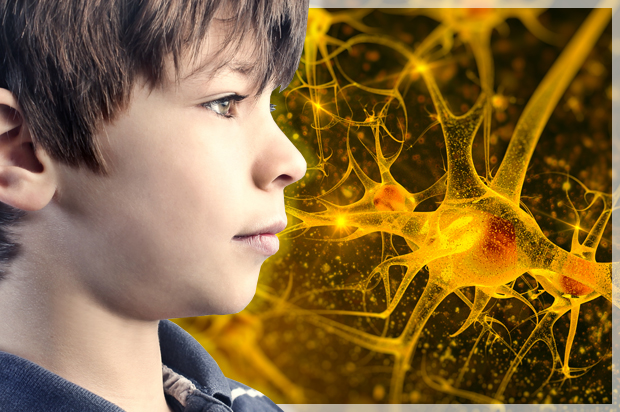
(Credit: Ollyy, vitstudio via Shutterstock/Salon)
snip:
"Here my focus is more circumscribed. I restrict the discussion to the behavioral symptoms of autism and (neuro)cognitive models for explaining those symptoms. I highlight two of the most influential hypotheses, the broken mirror theory and the broken mentalizing theory (or broken theory of mind theory—I use the terms interchangeably). Further, I have no intention of providing a thorough review of the host of experiments that have investigated the range of abilities and disabilities in autism or even provide much depth in my discussion of the cognitive theories themselves. Please consult any of the many primary sources for a broader view.
Instead I have two main goals. One is to address the basic mirror neuron-based account of autism because the theory has been rather influential and a lot is at stake given how many lives autism touches. The other goal is to highlight an alternative perspective on autism in the same way that (I hope) I’ve been able to highlight alternative perspectives on mirror neuron function, embodied cognition, and imitation. Specifically, I’m going to suggest the possibility that the dominant neurocognitive theories of autism, which assume that behavioral deficits result from lack of or diminished social sensitivity, have it wrong and in fact have it backward."
snip:
"“Deficit theories” of dysfunction are reasonable and intuitive. If an individual fails to respond normally to sound, it’s a good bet that the person has a diminished capacity to process and hear sound. He simply isn’t capable of perceiving the signal. Likewise, if another individual fails to respond normally to social stimulation, it’s a reasonable bet that the person has a diminished capacity to process social information. But consider the following thought experiment. Imagine you had a stadium rock concert–type sound system hooked up to your living room television and you attempted to watch the evening news with the sound cranked up all the way. Most likely, you would cover your ears and quickly leave. If you forced yourself to stay, you would run into at least one of three problems as you tried to listen and watch. One, the physical pain would be so extreme that you wouldn’t be able to concentrate on the message. Two, attempts to dampen the sound and ease the pain, say by sticking your fingers in your ears, would filter out many of the fine details you need to hear normally. You would perceive less well. Three, if you did manage to listen, the extreme volume would excite so many nerve fibers that it would drown out the details of the signal itself and again you would miss many things. Excess can be as detrimental to normal function as paucity."
snip:
"I agree that neither theory is satisfactory, but I’m not convinced that more subtle distinctions between types of mirror system or theory of mind operations will fare better. The problem, I suspect, is hidden in the fact that all of this discussion still centers on ideas about what is lacking in autism. Autistic people have no mirror system or no theory of mind or no empathy or no ability to process social information. These are deficiency or hypofunction theories; a good first guess, but not the only possibility. And given that they haven’t had all that much success, maybe it’s time to focus some research effort on a theory based on excess or hypersensitivity. Perhaps autistics don’t experience a socially numbed world but rather a socially intense world."
This is a somewhat long and complex article but I STRONGLY recommend reading it in full:
http://www.salon.com/2014/09/01/we_migh ... ave_wrong/
_________________
"Everyone is a genius. But if you judge a fish by its ability to climb a tree it will live its whole life believing that it is stupid."
- Albert Einstein

I think the hypersensitivity theory is accurate, but when I read how other people here experience the world, it does seem to me that both the deficit and the hypersensitivity theory are sometimes relevant. We are a complicated and very mixed group and it only looks the same on the outside, if that.
I suppose you are right. Hypersensitivity theory or as some might call it, "intense world theory" explains my situation to me - But I can't assume it explains the situation of everyone on the Spectrum.
_________________
"Everyone is a genius. But if you judge a fish by its ability to climb a tree it will live its whole life believing that it is stupid."
- Albert Einstein
What a beautiful article. Actually, this simple view of looking at autism from a much different way could completely change the way how autistic people are perceived and treated in society. This is the reason why autism/AS is viewed as a disability. It helps that I have a major obsession with human cognition.
I think a lot of people on here have complained at least once that they hate how society only sees them for what they can't do rather than can do. This is basically that in cognitive science.
Great find! I recommended everyone reading it!
btbnnyr
Veteran
Joined: 18 May 2011
Gender: Female
Posts: 7,359
Location: Lost Angleles Carmen Santiago
I think the social cognition deficit hypotheses eggsplain me better than intense world, certainly the social differences are much better eggsplain by social cognition deficits than any stretch of intense world into social domain.
_________________
Drain and plane and grain and blain your brain, and then again,
Propane and butane out of the gas main, your blain shall sustain!
CockneyRebel
Veteran
Joined: 17 Jul 2004
Age: 51
Gender: Male
Posts: 121,605
Location: In my own little country
I've read the article. It's a very good read. There are a lot of very good points in it. I think that everyone should read the article, whether or not they're on the spectrum. I hope for a future one day when the points are understood by the majority and autism is more accepted.
_________________
The Family Schlager
The point is, why does one experience social cognition difficulties? I know I can usually handle a small friendly group of familiar people but have difficulty with a loud noisy party full of strangers I don't know. I think it is simply a matter of my own life experience to recognize that hypersensitivity which causes the world to feel and appear quite intense is at the root of much of the social cognition problems I have faced.
_________________
"Everyone is a genius. But if you judge a fish by its ability to climb a tree it will live its whole life believing that it is stupid."
- Albert Einstein
btbnnyr
Veteran
Joined: 18 May 2011
Gender: Female
Posts: 7,359
Location: Lost Angleles Carmen Santiago
The point is, why does one experience social cognition difficulties? I know I can usually handle a small friendly group of familiar people but have difficulty with a loud noisy party full of strangers I don't know. I think it is simply a matter of my own life experience to recognize that hypersensitivity which causes the world to feel and appear quite intense is at the root of much of the social cognition problems I have faced.
This small group vs. loud party comparison doesn't get at social cognition.
It is what you can handle for social interaction, which is similar to what many neurotypical people can handle, as many of them would say the same, that they can handle small group but have difficulty at loud noisy party.
Some of the normal people I know don't even seem good in small friendly group ackshuly.
_________________
Drain and plane and grain and blain your brain, and then again,
Propane and butane out of the gas main, your blain shall sustain!
The point is, why does one experience social cognition difficulties? I know I can usually handle a small friendly group of familiar people but have difficulty with a loud noisy party full of strangers I don't know. I think it is simply a matter of my own life experience to recognize that hypersensitivity which causes the world to feel and appear quite intense is at the root of much of the social cognition problems I have faced.
This small group vs. loud party comparison doesn't get at social cognition.
It is what you can handle for social interaction, which is similar to what many neurotypical people can handle, as many of them would say the same, that they can handle small group but have difficulty at loud noisy party.
Some of the normal people I know don't even seem good in small friendly group ackshuly.
Most neurotypical people do fine at loud noisy parties, otherwise loud noisy parties wouldn't exist. This is thanks to the cocktail party effect, which is named exactly for that reason.
_________________
Cinnamon and sugary
Softly Spoken lies
You never know just how you look
Through other people's eyes
Autism FAQs http://www.wrongplanet.net/postt186115.html
btbnnyr
Veteran
Joined: 18 May 2011
Gender: Female
Posts: 7,359
Location: Lost Angleles Carmen Santiago
I am talking about all aspects of socializing at loud noisy parties full of people, not only being able to hear someone talk, a lot of normal people I know find it hard to socialize in such situations, they prefer and do better in small groups too.
_________________
Drain and plane and grain and blain your brain, and then again,
Propane and butane out of the gas main, your blain shall sustain!
I think that's the point of the article. Maybe the rest of the world is crazy.
_________________
Shedding your shell can be hard.
Diagnosed Level 1 autism, Tourettes + ADHD + OCD age 9, recovering Borderline personality disorder (age 16)
But most, or at least a sizable portion, don't, again otherwise such parties wouldn't exist. Obviously not liking large parties doesn't automatically make someone autistic, but that doesn't mean there is nothing to be gleaned from r2d2's account and hypersensitivity. If one is hypersensitive, they could be overwhelmed even one to one. The question is, WHY is social cognition impaired?
_________________
Cinnamon and sugary
Softly Spoken lies
You never know just how you look
Through other people's eyes
Autism FAQs http://www.wrongplanet.net/postt186115.html
| Similar Topics | |
|---|---|
| Having Autism |
27 Jul 2026, 3:08 pm |
| Autism/Agoraphobia |
30 Jul 2026, 9:57 pm |
| New here - Sobriety & autism, etc |
27 Jul 2026, 10:40 am |
| Is there any new movies or tv shows about autism? |
05 Aug 2026, 10:41 am |